Pakistan has spent close to $6 million to pursue a case against India at the Court of Arbitration in The Hague, including contributions sought by the body from India, at a time when Islamabad is grappling with a range of economic problems and implementing an austerity drive that has hit most government departments.
The Pakistan government’s budget papers for 2026-27 show that out of the Water Resources Division’s current expenditure budget of about $15.3 million (Pakistan ₹4.241 billion), more than half – or $7.9 million (Pakistan ₹2.187 billion) – has been allocated to the Pakistan Mission for Indus Waters.
In terms of Pakistan’s domestic water priorities, the budget documents show that only about $1.2 million (Pakistan ₹332.478 million) was allocated to the office of the Chief Engineering Adviser and Chairman of the Federal Flood Commission.
Nearly $7.2 million appears under the broad heading of “general” operating expenses, and the budget documents don’t specify how much of this provision will go towards international litigation.
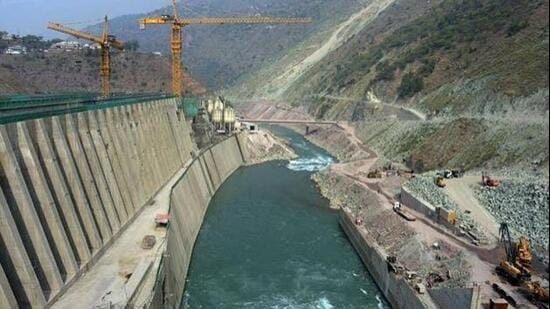
Pakistan has so far paid almost $6 million towards the Court of Arbitration proceedings in The Hague in connection with its objections to the Ratle and Kishenganga hydropower projects. Significantly, this amount includes the contribution sought by the court from India, people familiar with the matter said.
“Pakistan has been footing India’s bill too,” one person said, noting that the court’s own records show India has neither participated in the arbitration proceedings nor advanced funds sought by the court. “Pakistan has chosen to carry on regardless, paying to sustain proceedings before a body that only it has recognised,” the person said.
{{/usCountry}}“Pakistan has been footing India’s bill too,” one person said, noting that the court’s own records show India has neither participated in the arbitration proceedings nor advanced funds sought by the court. “Pakistan has chosen to carry on regardless, paying to sustain proceedings before a body that only it has recognised,” the person said.
{{/usCountry}}While India attended meetings convened by a neutral expert appointed by the World Bank to hear the issue of the Ratle and Kishenganga hydropower projects, it completely stayed away from proceedings of the Court of Arbitration, which New Delhi has consistently said it does not recognise. After India suspended the Indus Waters Treaty as part of punitive measures following the Pahalgam terror attack in 2025, it also stopped attending meetings convened by the neutral expert.
The people noted that the Pakistan Mission for Indus Waters had received more than six times the outlay for flood-related matters. “In a country struggling with poor water storage and management and high conveyance loss, Islamabad has set aside far more for the office prosecuting its case against India than for the machinery dealing with floods at home,” a second person said.
These developments come at a time when the Pakistan government’s latest austerity drive, announced on September 17, halved fuel allocations for official vehicles, prohibited the purchase of new government vehicles, restricted foreign travel and official dinners, and led to a 5% cut in non-employee expenditure.
The fiscal restraint has also impacted development spending, as provincial development plans have been cut back in the 2026-27 budget and most new federal projects have been ruled out. “At a time when Islamabad has unveiled savings in fuel, travel and routine administration, its expensive campaign at The Hague continues undisturbed,” the first person said.
The people noted a lack of transparency regarding expenses incurred by Pakistan on the international legal team, drawn mostly from leading London-based barristers’ chambers and law firms, to pursue the case at The Hague. According to the Permanent Court of Arbitration’s official information on the case, this team includes Daniel Bethlehem and Philippa Webb of Twenty Essex, Cameron Miles of 3 Verulam Buildings, lawyers from Fietta LLP, and a host of specialist technical advisers.
The people noted that Pakistan’s expenses on proceedings that have continued since August 2016 and passed through multiple hearings would have been “hardly incidental”. The second person said, “The fees paid to this team have not been made public. Pakistan’s budget papers don’t separately identify expenditure on legal representation, expert studies, preparation of pleadings, travel or accommodation.”
While the British firms themselves have not disclosed the fees charged in this case, public benchmarks give some indication of the likely expenditure. The 2026 guideline rate for a senior solicitor undertaking heavy commercial work in central London is £579 an hour. In a 2026 English Commercial Court costs ruling arising from an arbitration challenge, the successful party’s costs schedule recorded a partner’s rate of £925 an hour and a King’s Counsel brief fee of £140,158.
Pakistan has also paid almost $1.94 million towards the neutral expert’s proceedings, including contributions sought from India since it stopped participating in these proceedings after the Indus Waters Treaty was held in abeyance.
In its order on interim measures issued on August 31, 2026, the Court of Arbitration reserved the costs of the proceedings for determination in its final award. Until then, Pakistan’s expenditures will continue. The people noted that the duplicate arbitration proceedings before the neutral expert and the court in The Hague serve no practical purpose.
“This is precisely why scrutiny is necessary. A government that invokes national sacrifice to restrict fuel use, foreign travel and wedding dinners is trying to evade scrutiny by declaring its Hague campaign a national cause,” the first person said.
The case at The Hague helps to sustain the “fiction that Pakistan’s water insecurity begins across the border” and diverts attention from decades of poor storage, wasteful use and failed water governance within Pakistan, the second person said. Pakistan’s current per capita water availability has been hit by indifference and inefficiency, with the storage capacity of four major reservoirs – Tarbela, Mangla, Chashma and Warsak – having been depleted by 29% from 18.6 million acre-feet (MAF).