Pakistan on Wednesday summoned the charge d' affaires of the Indian High Commission in Islamabad, hours after New Delhi lodged a strong protest over a Pakistani warship colliding with an Indian frontline warship in the Arabian Sea.
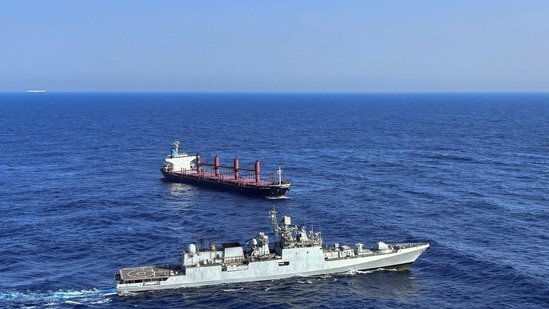
Earlier today, the charge d'affaires of the Pakistan high commission, Saad Warraich, was summoned to India's external affairs ministry over the “unacceptable and unprofessional conduct of Pakistani naval units at sea that led to a collision with a unit of the Indian Navy”, the MEA said in a statement.
The diplomatic action came after a Pakistan Navy vessel closed in on a frontline Indian Navy warship that was on a routine surveillance mission in the north Arabian Sea at high speed, officials aware of the matter said. The Pakistani vessel manoeuvred in an unprofessional and unsafe manner and this led to a collision, the officials added.
Deep Dive
What led to the collision between the Pakistani and Indian naval vessels?
How did India's Ministry of External Affairs respond to the naval collision incident?
Why did Pakistan claim the incident was a violation of international law?
Also Read | Pakistan, Indian Navy ships come head-on in international waters: What we know
Pakistan Navy was undertaking its biennial exercise, says country's foreign affairs ministry
In a statement on Wednesday, Pakistan said its navy was undertaking its biennial exercise SEASPARK-26, claiming that an Indian vessel had “carried out aggressive maneuvers in dangerously close proximity” of one of its naval ships. Islamabad claimed the incident took place in Pakistan's Exclusive Economic Zone (EEZ).
{{/usCountry}}In a statement on Wednesday, Pakistan said its navy was undertaking its biennial exercise SEASPARK-26, claiming that an Indian vessel had “carried out aggressive maneuvers in dangerously close proximity” of one of its naval ships. Islamabad claimed the incident took place in Pakistan's Exclusive Economic Zone (EEZ).
{{/usCountry}}“The incident constituted a serious violation of international law and the bilateral agreement on Advance Notice on Military Exercises, Manoeuvres and Troop Movements, 1991, and risked escalating tensions in the region,” Pakistan's ministry of foreign affairs said.
It added that the charge d' affaires of the Indian High Commission had been convey to the government of India that Islamabad “rejected” this action. “The Charge d' Affaires of the Pakistan High Commission in New Delhi will lodge the same demarche with India's Ministry of External Affairs,” Pakistan's foreign ministry said.
What did India's ministry of external affairs say?
Following the incident, India's ministry of external affairs said the incident, which took place in international waters, did not cause “any major damage”, but added that the “conduct of the Pakistani naval ship was in direct contravention of Article 10 of the Agreement between India and Pakistan on Advance Notice on Military Exercises, Manoeuvres and Troops Movements of April 1991”.
The Pakistani charge d'affaires was “advised to convey to the concerned Pakistani authorities the need for all military units to observe due care and respect the provisions of the relevant agreements between the two sides in order to prevent any repeat of such incidents.” The Indian charge d'affaires in Islamabad was instructed to lodge a similar protest with Pakistan’s foreign ministry.