The Supreme Court recently observed that daughters have an "indefeasible, legally enforceable and legitimate right" to secure educational expenses from their parents. The court further said that parents can be compelled to provide funds for their daughters' education within their means.
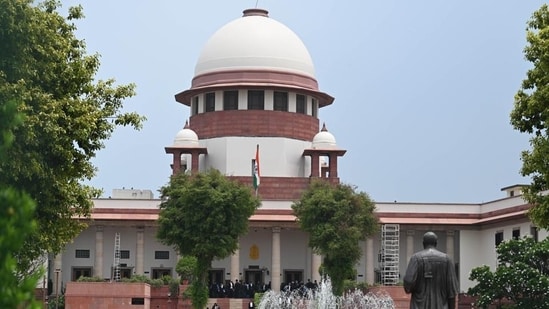
The remarks of a bench comprising Justices Surya Kant and Ujjal Bhuyan came on January 2 in a matrimonial dispute case. The daughter of an estranged couple – who was studying in Ireland – refused to accept ₹43 lakh given by her father towards her studies as a part of the total alimony being paid to her mother.
The Supreme Court further observed that the daughter has a fundamental right to pursue her education for which the parents can be compelled to cough up the funds.
"She, being the daughter, has an indefeasible, legally enforceable, lawful, and legitimate right to secure educational expenses from her parents. All that we observe is that the daughter has a fundamental right to pursue her education, for which the parents could be compelled to provide necessary funds within the limit of their financial resources," said the bench's January 2 order, reported PTI.
Also read: Arrange marriage, don’t terminate her pregnancy: HC to father of ‘mentally ill’ daughter
{{/usCountry}}Also read: Arrange marriage, don’t terminate her pregnancy: HC to father of ‘mentally ill’ daughter
{{/usCountry}}The bench said that the daughter of the parents declined the amount to maintain her dignity. She asked him to take the money back but he refused.
Court says daughter entitled to money
The court further observed that the daughter was entitled to the money.
"Respondent number 2 (daughter) has, thus, got a right to retain that amount. She need not, therefore, return that amount either to the appellant (mother) or to respondent number 1 (father), and may suitably appropriate it as she may deem fit," said the court.
Also read: Daughters can’t inherit father’s property before 1956, HC clarifies
The Supreme Court said the husband wanted to pay ₹73 lakh to his estranged wife, including ₹43 lakh for his daughter's education.
The court said the wife received ₹30 lakh as compensation. It also granted them divorce by mutual consent.
"Consequently, we invoke our powers under Article 142 of the Constitution and dissolve the marriage of the parties by granting a decree of divorce by mutual consent," it held.
Also read: ‘Daughter for a lifetime’: SC backs women’s share in parental property
The court further directed that as a result of the settlement agreement, the parties should not pursue any court case against each other, and if there was a pending case before any forum, it should be disposed of in terms of the agreement.
"The parties shall have no claim against each other in future and shall abide by the terms and conditions of the settlement agreement, which shall form part of this order," it said.
With inputs from PTI