
 E-Paper



Patrolling points do not define the Indian claim in East Ladakh LAC
The Narendra Modi government has made it clear to the Indian Army that the 65 patrolling points on Ladakh LAC do not represent the Indian claim line but only define the limits of patrolling as approved by Indira Gandhi CCS in 1976.

 Prefer HTon Google


When External Affairs Minister Subrahmanyam Jaishankar was asked about the PLA troop withdrawal from patrolling point 15 in Kugrang River on September 13, he correctly and tersely replied that it was “one problem less” with the Chinese authoritarian regime post May 2020 belligerence on the 1,597 km East Ladakh LAC.
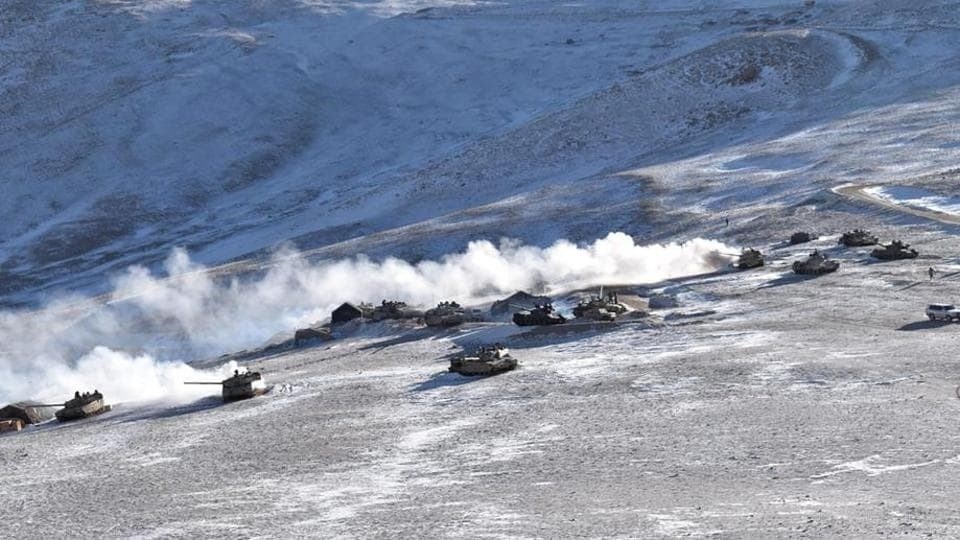
On May 17-18, 2020, the aggressive PLA under control of Chinese ruler Xi Jinping transgressed in the areas of Kugrang river, Gogra, and north banks of Pangong Tso and junked all the peace and tranquillity agreements of the past. The Indian Army bound by the 1993-1996 border agreements and subsequent Confidence Building Measures (CBMs) did not open fire as it would have led to vertical escalation like it did when brave Colonel Santosh Babu and his men taught a lesson to the Chinese at Galwan on patrolling point 14 on June 15, 2020.
Since the May 2020 transgressions, the Chinese have made new permanent structures all along the LAC, which is in violation of the past bilateral agreements and CBMs. One must recall that in 1976, the Cabinet Committee on Security under then Prime Minister Indira Gandhi had approved what was then called “Limits of Patrolling” as defined by the then Cabinet Secretary and the China Study Group (CSG) on large topographical sheets.
In East Ladakh, the then Congress government approved 65 patrolling points from Karakoram Pass to Chumar as the limits for the Indian Army to patrol and avoid confrontation with the PLA. These points are well within Indian claim line on the LAC and were defined so to maintain peace and tranquillity on the border with China, which had proved to be a superior military power in 1962 border war.
While the Narendra Modi government and the national security planners are quite clear that patrolling points do not define the Indian LAC claim in East Ladakh, the Indian Army must also not take the easy way out and only defend the LAC till these patrolling limit point on the map.
The disengagement from patrolling point 15 does not in any way restore the April 2020 status quo ante on the Ladakh LAC as the PLA must dismantle fresh military structures that have come up along the line since the aggression.
The Chinese must respect the Indian claim line in Depsang Bulge and Demchok area and restore the Indian Army’s right to patrol point 10 to 13 in the strategic bulge area as well as Charding Nullah Junction in Demchok before bilateral ties are normalized with Beijing. Simply put, the India-China LAC in East Ladakh is not defined by the patrolling points but by the Indian claim line.
Just as the Modi government showed the way by ordering its troops to take dominant positions on south Pangong Tso banks on August 29-31, 2020, and force PLA subsequently to disengage from north banks of the lake, the Indian Army must now be in the position of strength all along the 3488 km LAC as the adversary only understands the language of power not peace.
Fact is that the Indian Army has no options as the PLA will continue nibbling on the East Ladakh LAC till it has impose its 1959 line, as advocated by then Chinese Premier Chou or Zhou En-Lai, on the disputed border. China has made its intentions very clear on the disputed border, time has come from Indian Army to also do so.


