E-Paper



Chinese envoy makes a farewell call, takes back a firm message from Jaishankar
Chinese envoy Sun Weidong’s meeting with S Jaishankar came a day after the ambassador released his farewell remarks in which he made no reference to tensions on the LAC but said it is “only natural” for the two countries to have differences

 Prefer HTon Google


NEW DELHI: The normalisation of India-China relations is in the interest of the countries and the region, external affairs minister S Jaishankar said on Wednesday against the backdrop of the military standoff on the Line of Actual Control (LAC).
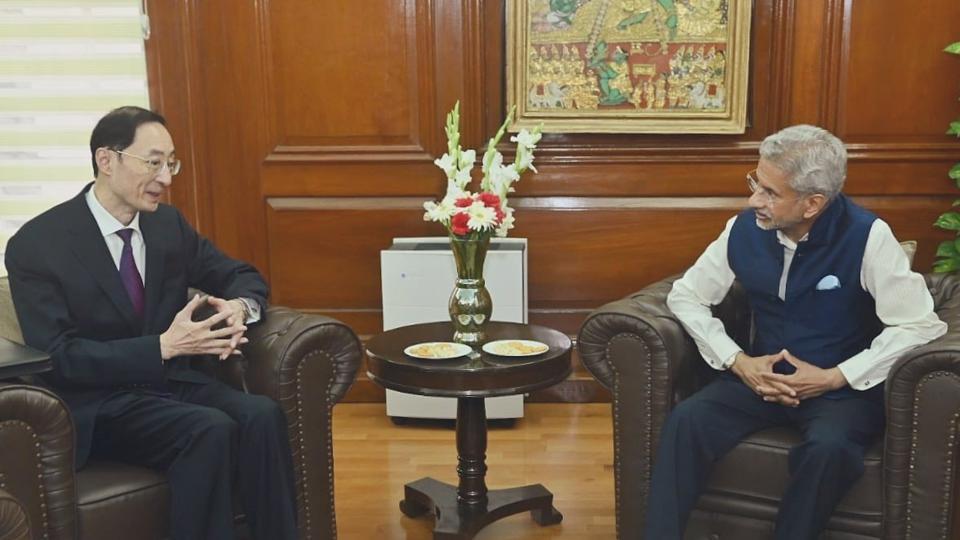
Jaishankar made the remarks when China’s outgoing ambassador, Sun Weidong, made a farewell call on him at South Block.
The meeting was held a day after Sun released his farewell remarks, in which he made no reference to tensions on the LAC but said it is “only natural” for the two countries to have differences and they should seek common ground and not allow their relationship to be defined by disagreements.
“The normalisation of India-China relations is in the interest of both countries, of Asia and the world at large,” Jaishankar said in a set of tweets.
“Emphasised that the development of India-China relations is guided by the 3 Mutuals. Peace and tranquillity in the border areas is essential,” he said.
Jaishankar has referred to the “three mutuals”, or mutual respect, mutual sensitivity and mutual interest, in the context of India-China relations in several of his recent speeches. He has also maintained that the overall bilateral relationship cannot be normalised till there is peace and tranquillity on the LAC.
In his farewell remarks on Tuesday, the Chinese envoy sought to imply that differences between New Delhi and Beijing were due to the “Western theory of geopolitics”, which he said will only lead to “competition and confrontation” and a zero-sum game.
“We should seek common ground while reserving differences and properly handle the differences. China and India are important neighbors to each other. It is only natural for China and India having some differences,” Sun said in his farewell remarks that he reiterated on Twitter on Wednesday.
“The key is how to handle the differences. We should be aware that the common interests of the two countries are greater than differences. Meanwhile, the two sides should strive to manage and resolve differences, and look for a proper solution through dialogue and consultation, instead of defining China-India relations by differences,” he added.
India-China relations are currently at an all-time low because of the dragging standoff in Ladakh sector of the LAC. The two sides have been unable to address all the friction points along the LAC despite more than two dozen rounds of diplomatic and military talks, which resulted in the withdrawal of frontline troops from both banks of Pangong Lake, Gogra and Hot Springs.