E-Paper



Plan to reduce episodic smog events across Delhi-NCR revamped
The revamp is part of a new comprehensive policy on the prevention and abatement of air pollution in the region

 Prefer HTon Google


The Commission for Air Quality Management in National Capital Region and Adjoining Areas has completely revamped the emergency-level Graded Response Action Plan (GRAP) to reduce episodic smog events across Delhi-NCR. The plan has now been linked to the Air Quality Index (AQI) or eight pollutants including PM 2.5, PM 10, and gases such as Ozone (O3), Sulphur Dioxide SO2) and Nitrogen Dioxide (NO2).
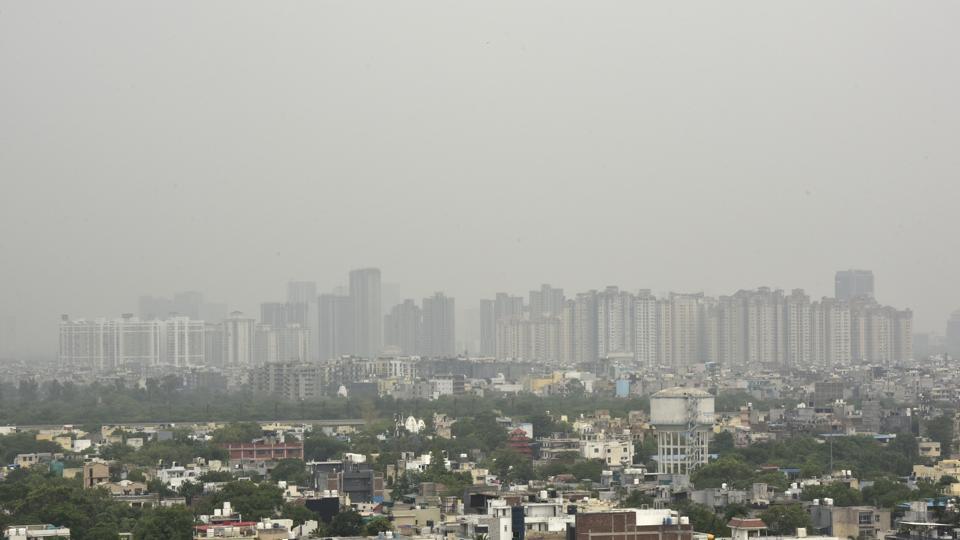
GRAP earlier kicked in only if the PM 2.5 or PM 10 concentration touched a particular threshold. The revamp is part of a new comprehensive policy on the prevention and abatement of air pollution in the region. The policy involves short-term (within 1 year), mid-term (within 2-3 years) and long-term (3-5 years) action across NCR with immediate effect, the commission said.
According to the policy, measures under the ‘very poor’, ‘severe’ and ‘severe plus’ categories will be enforced at least three days in advance. Agencies earlier waited until PM 2.5 or PM 10 concentration touched a particular threshold. Under the ‘severe plus’ category, agencies waited for PM 2.5 and PM 10 concentrations to stay above 300 and 500 micrograms per cubic metre for 48 hours or more before enforcing the measures mandated under it. Experts have maintained this defeated the purpose of an emergency-level action plan.
Under the new GRAP, the categories have been redefined as stage I or ‘poor’ (AQI between 201 and 300), stage II or ‘very poor’ (AQI between 301 and 400), stage III or ‘severe’ (AQI between 401 and 450) and the ‘severe plus’ or stage IV (if the AQI is expected to touch 450+).
The commission said it has comprehensively revisited the contours of GRAP for an effective implementation mechanism and control of the adverse air quality scenario that generally persists in NCR during the peak winter months.
“Actions under Stages II, III, and IV shall be invoked at least three days in advance of the AQI reaching the projected levels of that stage, based on the dynamic model and weather/meteorological forecast...on a day-to-day basis.” It said a subcommittee will also meet frequently and issue necessary orders for invoking provisions of GRAP based on the prevailing air quality and forecast.
The activities prohibited under the ‘very poor’ category include the use of diesel generator sets, except for emergent and essential services, as well as coal or firewood, including for tandoors in hotels, restaurants, and open eateries.
The ‘severe’ category will entail a ban on all construction and demolition activities in NCR, except for emergent or essential projects. It will also include regulating operations of industries in NCR not running on cleaner fuels to a maximum of five days per week, shutting down of brick kilns, etc, as well as a ban on mining and associated activities. Governments in Delhi-NCR can also impose restrictions on BS III petrol and BS-IV diesel light motor vehicles.
Under the ‘severe plus’ category, measures such as the ban on entry of trucks (barring those providing essential services) can be taken.
The policy says state governments can decide to allow 50% of staff strength to work from home in public, municipal and private offices under the ‘severe plus’ category. State governments may also consider additional emergency measures such as the closure of schools, colleges, and educational institutions, and plying of vehicles on an odd-even basis.
The policy was framed after the commission in December last year invited suggestions from the public and experts for a permanent solution to the air pollution problem. It then formed a nine-member expert group on January 7 to frame the policy focusing on five broad areas, including ensuring widespread access to affordable clean fuels and technology to the industry.
In addition to focusing on an air-shed approach, separate timelines and approaches have been suggested for Delhi, Gurugram, Faridabad, Sonipat, Jhajjar, Rohtak, Ghaziabad, Gautam Buddha Nagar, Baghpat, Punjab, and the non-NCR districts of Haryana for stubble burning, which is among the sources of pollution in the region.
“The policy has been shared with state governments and agencies and will be effective immediately,” said an official.