E-Paper



If we treat climate as business opportunity, we can find ways to grow: CEEW’s new CEO
Ahead of COP31 and into his new role, Abraham spoke to HT’s Jasjeev Gandhiok on the way ahead for India around climate change and the green transition

 Prefer HTon Google


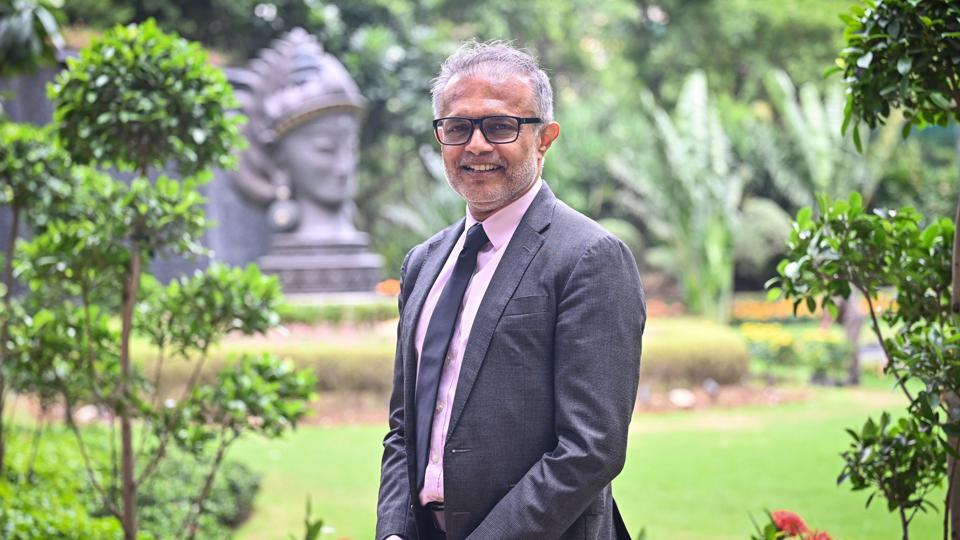
James Abraham became the new CEO of the Council on Energy, Environment and Water (CEEW) in August this year, replacing founder Arunabha Ghosh who stepped down as CEO after a 16-year stint. Abraham, who is an entrepreneur, strategist, and institution builder who has spent his career at the intersection of energy, technology, and climate, was a founding partner of the Boston Consulting Group in India from 1998 to 2009 and later co-founded SolarArise, an IPP with utility-scale solar-power plants where he helped shape India’s early solar policy and was one of the first to make solar power cheaper than coal. In 2023, he founded Mynzo Carbon, a platform to monitor nature-based investments with satellite data and AI. Ahead of COP31 and into his new role, Abraham spoke to HT’s Jasjeev Gandhiok on the way ahead for India around climate change and the green transition. Edited excerpts:
With COP31 next month. What can India realistically come away with from COP in Türkiye? Where do we need to demonstrate greater ambition of our own instead of relying on other countries or the outcome of the conference?
James: I think India already demonstrates incredible ambition. Our NDC targets are fairly aggressive, if you consider comparable - and even advanced economies. For instance, this year, we increased our commitment for how much carbon we want to capture through forestry - and we’re on track. I would say we need to be steadfast with our progress, but also do more to publicise it. We’re already leading - so why shouldn’t we talk about our leadership? We should be on the global stage, saying, “This is what we’re doing,” offering a Made in India pathway to decarbonise without compromising development, and encouraging others to step up.
I’m not sure we need to do any more than we’re already doing to be a leading, credible voice for sustainability at COP. We must transparently execute our commitments, and continue to be a champion for the Global South. As for how we must leverage COP, I think we should persist with our demand for the Loss and Damage Fund and keep raising issues around injustice, inequity, and Common but Differentiated Responsibilities (CBDR).
Many of these demands may not come to fruition at this particular COP. We should not come away disappointed if things don’t move forward. We need to hold our ground on these issues because ensuring climate justice is essential.
The government has said that we need to execute our existing targets before setting new ones. With a Global Stocktake coming up, could this be an opportunity for India to demonstrate that we’re on track and encourage other nations to step up?
Absolutely. It’s a fantastic opportunity. I hope during the Global Stocktake we demonstrate that we have set ambitious targets and are on track to achieve them. CEEW’s analysis shows India is on track to exceed its 2030 NDC target of reducing the emissions intensity of its GDP by 45%. That can encourage the rest of the world to step up.
As CEEW’s new CEO, what is one difficult climate policy conversation you want India to have right now?
We should be talking about building coalitions alongside the global process that the UNFCCC runs. I’m not sure this is necessarily a difficult conversation, but it’s an important one. I’m starting to see similarities between what we do in this country and what other countries around the world are doing. In conversations with people from Africa, for example, I’ve seen how they appreciate our ability to develop very localised, decentralised, interventions.
They recognise that what we’re doing in India can serve as a good example for their countries. There’s an opportunity to build coalitions of countries that can learn from each other, rather than relying only on approaches developed in the West.
Our local circumstances are different, of course. But many of these countries are going through a phase of economic development and growth while also navigating the climate transition. India’s experience shows how these two priorities can inform each other.
The International Solar Alliance, which India launched with France, and CEEW had the privilege of playing a foundational role in setting up, is also thinking along similar lines.
We need to build inclusive coalitions outside the main global process. The formal UN process must continue, but these partnerships can help countries learn from one another. CEEW research shows that, despite not hosting a COP in the last decade, India has led eight cooperative climate initiatives and holds a record for mobilising countries in its initiatives. This is where the real work needs to happen.
India is gradually expanding its renewable energy installed capacity, but curtailment remains a major issue. How do you view the 500 GW target for 2030, and how can we execute it? Can we utilise all the capacity we add?
We’re already at more than 300 GW of non-fossil capacity, and we have about four or five years to reach the 500 GW target. The question for me is less about reaching it and more about how quickly we can exceed it. Electricity demand in our country is rising, both because of economic growth and because we need to serve a wider population. You need electricity to provide water and give people more options to cope with extreme temperatures. We therefore need to accelerate electrification and expand our power supply. The question is how quickly we can move beyond 500 GW to meet this growing demand. CEEW research shows that if demand grows faster than projected, India may need closer to 600 GW of non-fossil capacity by 2030.
The problem, as you rightly pointed out, is curtailment. Can our grid handle it? Can we make power dispatch more flexible?
I think these are technology questions. The grid needs to be upgraded because we built it around a model of large, centralised power generation distributed to multiple demand centres.
We now have distributed power generation and distributed demand. It’s a different network architecture, but it’s not unsolvable. We know the technologies required. Our power options are also becoming more flexible. It’s no longer true that solar power is available during the day but not at night. We now have options, including storage, that can provide solar power at competitive rates when it’s needed.
We’ve already seen a weak monsoon, with rainfall 13% below the long-period average. We’ve seen states suffer, and the effects are likely to continue into the coming months. What have we learnt from El Niño in terms of handling climate extremes, and what can India do to prepare for these challenges?
When discussing climate, I always say there are two kinds of disasters. There are overnight disasters, such as floods and heatwaves, and then there are slow-onset disasters that develop over a year or several years. El Niño is one of those slow-onset events. The advantage is that we can get ahead of these disasters. We can predict what’s likely to happen and start preparing.
At CEEW, we’ve looked at four decades of El Niño events to understand how they affected us and what we can learn from them. In strong El Niño years such as 1997 and 2016, both very hot days and very warm nights rose sharply above average. We’re already looking at the October-to-February period, during which we could see significant changes in temperature and possible droughts.
You mentioned the 13% drop in monsoon rainfall compared with the long-period average. However, national averages can hide very localised issues. You may have an overall decline in rainfall, but some places could experience floods while others face droughts. CEEW’s tehsil-level study of 40 years of monsoon data found that 23% of India’s districts, including New Delhi, Bengaluru, Jaipur and Kachchh, saw a high number of both deficient and excessive rainfall years.
People live through these extremes. They don’t experience the national average.
That’s why local-level action is important. We need to understand the specific risks in each location and develop appropriate action plans. At CEEW, we’ve been working on district-level plans. But having a plan is only one part of the solution. The capacity to implement it is equally important. That brings us to the question of funding. Money has been allocated for district-level climate action plans, but it needs to reach urban local bodies because they are the ones spending it at the local level.
What do you do about health in a location where a heatwave is expected? What do you do about water in another location where shortages are emerging? These are local issues, and local authorities understand what’s needed. That’s where the money needs to go. We now need to empower local institutions to use it effectively.
We’re sitting in Delhi, and in a week or two, we’ll start seeing the effects of pollution. Why have we not been able to reduce pollution considerably? Has the National Clean Air Programme (NCAP) worked?
I think NCAP is starting to work. I’m always careful not to throw the baby out with the bathwater. Just because it hasn’t yet achieved everything we wanted doesn’t mean it isn’t moving in the right direction. We know where the sources of pollution are, and they differ across locations. We also know the actions required to address them. If construction is a major source of pollution in a particular area, for example, we know what needs to be done at construction sites.
It’s about taking action at the local level. We know the measures that need to be implemented, but we need to bring them together in the right way. I think where we haven’t made enough progress yet, or are only beginning to understand what’s needed, is translating regional regulations into individual decisions on the ground. A legislative intervention covering Delhi and the surrounding region is only the first step. The real step is enabling the person managing a construction site or driving a vehicle to make informed decisions. We need to do the hard work of shifting behaviours and attitudes.
In Gurgaon, for example, we’re equipping construction workers with data that shows them how their actions affect pollution. With that information, they can make decisions. If it’s going to be a bad day for pollution, they can decide not to bring vehicles onto a site, increase water spraying, slow down operations or stop certain construction and demolition activities. These are choices people can make when they have access to the right information. So NCAP is the first step. We need to build on it by enabling behaviour change and informed decision-making at the local level.
India and other BRICS countries recently opposed EU’s Carbon Border Adjustment Mechanism (CBAM) in the Delhi declaration. Given our renewable energy targets and net-zero ambitions, how do you view this decision and CBAM?
I think this comes under the broader question of trade. My simple view is that countries should work together on trade rather than taking unilateral action. When Europe takes a unilateral approach through CBAM, it can disadvantage countries that want to participate in the transition. A simple example is Indian exporters selling to Europe. They could suddenly face significant additional costs, even when they don’t have the ability to measure their emissions accurately.
The cost of complying with CBAM can become very high, making it difficult for exporters to meet the requirements. That’s where the argument comes in that the Global South will suffer because it doesn’t yet have access to the necessary technology. If you look at the broader issue of climate finance and loss and damage, the money should be flowing towards developing countries to help them upgrade. Instead, barriers are being created that make it harder for them to do so.
That unilateral approach doesn’t make sense. Instead, we should return to the idea of building coalitions. Countries should sit around the table and discuss what needs to be done, how technology can be exchanged and how emissions should be measured. If developing countries were part of that conversation, they could access the technology and systems needed to improve their performance. Based on the results, we could then establish appropriate targets.
How do you balance economic development with environmental protection? As we advance technology adoption, build more infrastructure and progress economically, how do we protect the environment and biodiversity?
Before I did this work, I was a solar entrepreneur. I’m a businessperson and an
economist by background. My simple answer to this question is always: get the economics right, and everything else becomes easier to address. If we approach climate action as an incredible business growth opportunity, rather than something that continuously needs regulation and philanthropy, we begin to see it differently.
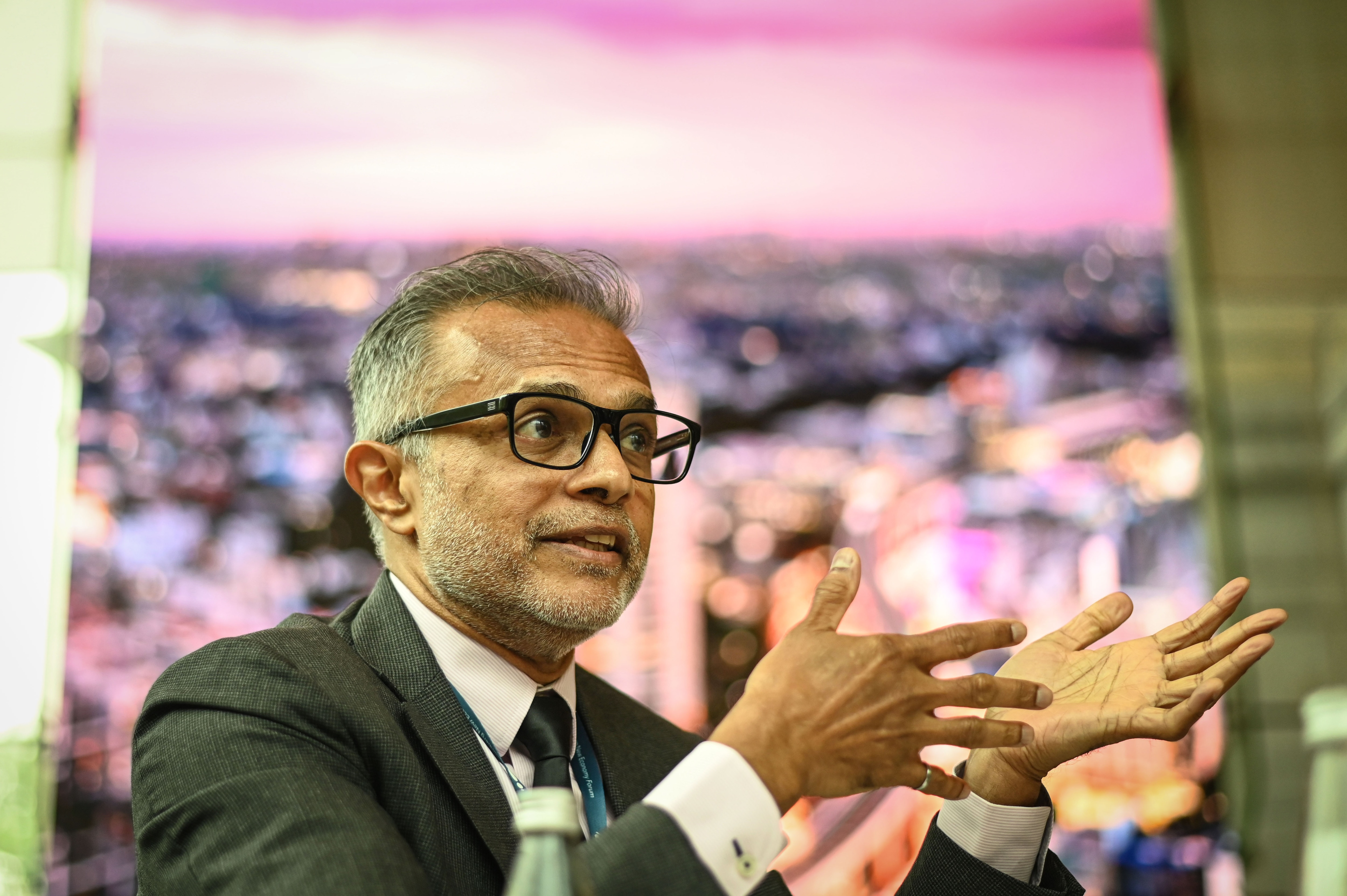
There’s an economic opportunity in almost every situation. Renewable energy is the most obvious example. Twelve or thirteen years ago, you would never have thought it would become as economically viable as it is today. It’s now competing directly with fossil-fuel alternatives. CEEW research shows that deploying 600 GW of non-fossil capacity across more states by 2030 could lower power procurement costs by up to ₹42,400 crore and create up to 1,00,000 additional jobs.
The direction of the energy transition is clear. It’s just a matter of getting it done. The same is true in other areas. Heat is an interesting example. We can develop local business models that use information from heat and health networks to create entrepreneurs at the local level who provide services and help solve these problems. If we treat climate as a business opportunity, we can find ways to grow while addressing it.