E-Paper



PM, LoP, CJI’s panel to select Chief Election Commissioner, Commissioners: SC
The panel of the Prime Minister, Leader of the Opposition, and Chief Justice of India will select the Chief Election Commissioner and Elections Commissioners until Parliament passes a law in this regard

 Prefer HTon Google


A constitution bench of the Supreme Court on Thursday revamped the selection mechanism to appoint the Chief Election Commissioner (CEC) and Election Commissioners (ECs), ruling that a panel comprising the Prime Minister, the Leader of Opposition (LoP), and the Chief Justice of India (CJI), shall appoint them until Parliament brings a law in this regard.
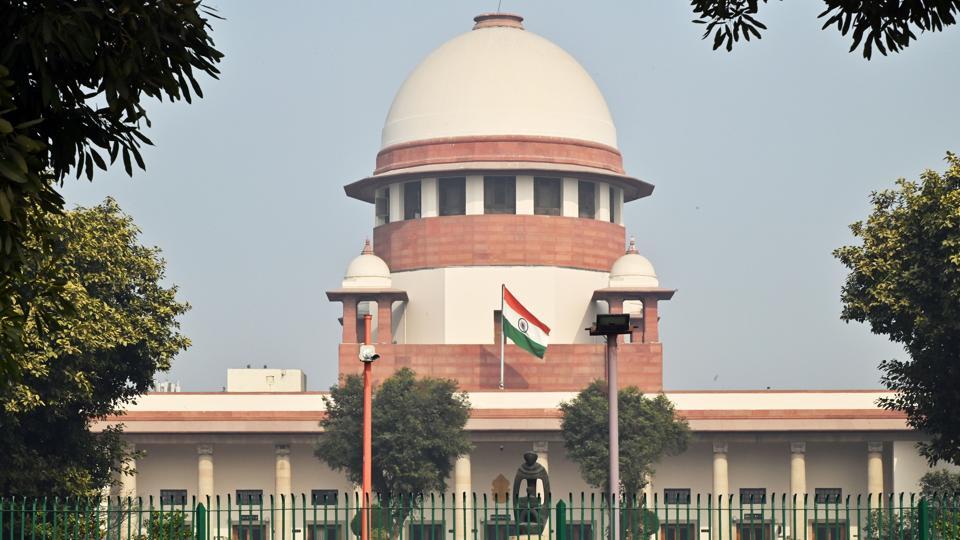
In the absence of an LoP, the leader of the single largest party in Parliament will be included in the collegium to appoint the CEC and ECs, clarified the bench headed by justice KM Joseph. The bench also comprised justices Ajay Rastogi, Aniruddha Bose, Hrishikesh Roy, and CT Ravikumar.
Presently, the Election Commission of India (ECI) is a three-member body, with a CEC and two ECs. Under Article 324(2) of the Constitution, the President is empowered to appoint the CEC and ECs. This provision further stipulates that the President, who acts on the aid and advice of the Prime Minister and the council of ministers, will make the appointments “subject to the provisions of any law made on that behalf by Parliament”.
However, with no such law having been framed to date, CEC and ECs are appointed by the Prime Minister and the council of ministers under the seal of the President. The rules for such appointments are also silent on the qualification of a candidate.
Justices Joseph and Rastogi read out their separate but concurring judgments, declaring that the independence of ECI requires a collegium with the participation of the CJI. “Purity of election process must be maintained to preserve democracy. Otherwise, it would lead to disastrous consequences,” said justice Joseph while reading out the operative part of his judgment.
The judge added that ECI must have an independent secretariat, rule-making powers as well as an independent budget to be able to function independently.
Reading out his separate judgment, justice Rastogi said that he completely agrees with justice Joseph, and added that the process of removal of ECs should be on par with CEC, who can be removed only through an impeachment process – like a judge of a constitutional court.
The judgment has come at a time when the Opposition has repeatedly questioned the independence of ECI, citing the declaration of poll dates and alleged dereliction in acting against the leaders of the ruling dispensation for violation of poll regulations.
The Supreme Court judgment on the selection of CEC and ECs bring it on par with the appointment of the CBI chief, who is also selected through the same composition of the collegium.
The court on November 24 reserved its verdict after wrapping up the arguments in a batch of four public interest litigations (PILs) that have pressed for the issuance of directives for setting up a neutral and independent selection panel for recommending names to the President for appointments as CEC and ECs.
The petitions, argued by senior counsel Gopal Sankaranarayanan and advocate Prashant Bhushan, complained that Parliament has not framed legislation despite a mandate under Article 324(2).
While hearing the matter on different dates in November, the five-judge bench grilled the Union government over the lack of regulations to guide the appointment of CEC and ECs.
At one point, it questioned the government if it was not defeating the wishes of the framers of the Constitution by not framing a law, adding the apex court could examine the necessity of having a better system.
During the proceedings, the court also lamented that successive governments have “completely destroyed” the independence of ECI by ensuring no CEC gets the full six-year term since 1996, adding the absence of a law for the appointment of ECs has resulted in an “alarming trend”.
The government retorted, telling the court that the participation of the CJI in picking ECs cannot be the only guarantee of fairness in the selection process.
While the constitution bench repeatedly illustrated since Thursday last week how the CJI’s presence can usher in impartiality to a selection process when all governments want “yes men in the poll panel,” the government, through solicitor general Tushar Mehta, called it a “fallacious” and “constitutionally impermissible” suggestion that the executive cannot make an honest selection without the help of the judiciary.
As the arguments drew to a close in the last week of November, the court asked the Centre to produce the file related to the appointment of Arun Goel as an election commissioner on November 18, even as the bench was seized of the matter.
After the file was produced before it on November 24, the bench questioned the “tearing hurry” and “haste” shown by the central government in appointing Goel, wondering if the Union law minister Kiren Rijiju followed any yardstick to zero in on Goel from the pool of four officers picked for the selection.
The bench’s poser closely followed Rijiju’s strong criticism of the apex court’s model of selecting judges through the collegium system.
In various instances around that time, the law minister commented that the Supreme Court collegium appoints people who are known to the judges; called the collegium system “opaque”; and described the Indian selection system as the only one where judges appoint judges.
To be sure, the top court clarified that it will not scrutinise the correctness of Goel’s appointment but wished to see how the government appoints CEC and ECs.