
 E-Paper



PM Modi reacts to Delhi earthquake: ‘Staying alert for possible aftershocks'
According to the National Center for Seismology, an earthquake with a magnitude of 4 struck parts of Delhi-NCR early on Monday.

 Prefer HTon Google


Prime Minister Narendra Modi responded to the earthquake tremors felt early Monday morning in Delhi and surrounding areas, urging residents to "stay calm" and remain alert for possible aftershocks. He assured that authorities are closely monitoring the situation.
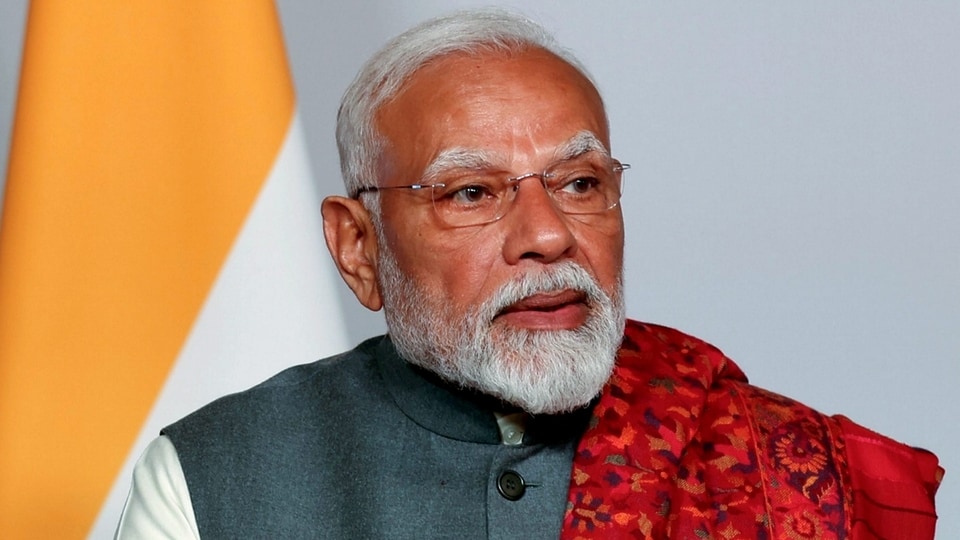
"Tremors were felt in Delhi and nearby areas. Urging everyone to stay calm and follow safety precautions, staying alert for possible aftershocks. Authorities are keeping a close watch on the situation," he wrote on X.
4.0 magnitude earthquake hits Delhi NCR
According to the National Center for Seismology, an earthquake with a magnitude of 4.0 struck parts of Delhi-NCR early on Monday.
There were no immediate reports of damage or injuries.
The earthquake, with its epicentre in New Delhi, occurred at a depth of five kilometres at 5.36 am.
The epicentre was located near Durgabai Deshmukh College of Special Education in Dhaula Kuan, an official informed PTI.
This area has a nearby lake and has experienced smaller, low-magnitude quakes every two to three years. In 2015, a 3.3 magnitude earthquake was recorded there, the official added.
A loud sound was also heard when the earthquake struck, the official noted.
Also Read | 'Most insane earthquake': How people of Delhi reacted to tremors on X
In a post on X, Delhi Police said, "We hope you all are safe, Delhi!". It urged citizens to call the emergency 112 helpline for any urgent assistance.
The strong tremors led many residents of high-rise buildings in Delhi, Noida, Greater Noida, and Ghaziabad to rush outside their homes.
Footage from PTI Videos showed people standing outside their homes across Delhi-NCR, concerned about potential aftershocks.
The National Capital Territory (NCT) of Delhi, located about 250 kilometres from the seismically active Himalayan collision zone, often experiences both distant and local tremors due to Himalayan and local seismic sources.
Delhi has experienced other tremors in recent years, including a 3.5-magnitude earthquake in northeast Delhi on April 12, 2020, and a 3.4-magnitude quake on May 10, 2020, followed by several aftershocks. A 4.4-magnitude earthquake near Rohtak on May 29, 2020, also triggered panic among residents.
Delhi is situated in Seismic Zone IV on India’s seismic zoning map, an intraplate region prone to moderate to high risks from Himalayan earthquakes.


