The world’s largest financial inclusion mission–the Pradhan Mantri Jan-Dhan Yojana (PMJDY)–crossed the 500 million mark on Monday, nine years after it was launched with over ₹2 lakh crore deposits and over 55.5% of the bank accounts belonging to women, Union finance minister Nirmala Sitharaman said.
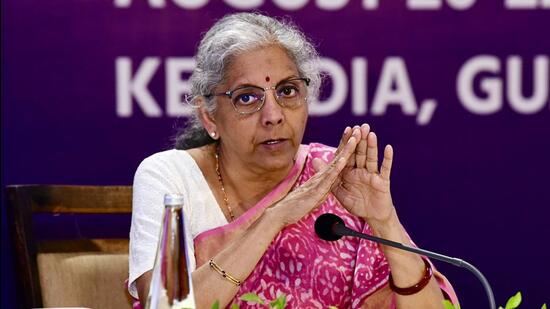
In a statement, she said the nine years of PMJDY-led interventions and digital transformation have revolutionised financial inclusion in India. She added it is heartening to note that over 500 million people have been brought into the formal banking system through the opening of Jan Dhan accounts.
“With the collaborative efforts of stakeholders, banks, insurance companies, and government officials, the PMJDY stands out as a pivotal initiative, changing the landscape of financial inclusion in the country as envisioned by Hon’ble Prime Minister Shri Narendra Modi,” Sitharaman said.
PMJDY is one of the three pillars of JAM (Jan-Dhan, Aadhaar, and mobile), the globally-acclaimed diversion-proofed subsidy delivery mechanism. By using JAM, the government transfers subsidies or social benefits directly into the bank accounts of the poor.
Of the PMJDY accounts, 55.5% belonged to women, and 67% were opened in rural and semi-urban areas. About 340 million RuPay cards have been issued to these accounts without charge, which also provides for a ₹2 lakh accident insurance cover, Sitharaman said.
Modi first spoke about this scheme in his Independence Day address on August 15, 2014, and about a festival to celebrate the liberation of the poor from a vicious cycle.
Sitharaman said financial inclusion also brings savings of the poor into the formal financial system and provides an avenue to remit money to their families in villages besides taking them out of the clutches of the usurious money lenders.
Union minister of state for finance Bhagwat Kisanrao Karad said the scheme has “reduced financial untouchability” by bringing the marginalised sections of society into the ambit of formal banking. By providing access to banking facilities to vulnerable sections of society, facilitating access to the availability of credit, providing insurance and pension coverage, and creating financial awareness, the outcomes of the scheme are far-reaching and have a multiplier effect on the economy, he added.
“The Jan Dhan-Aadhaar-Mobile (JAM) architecture has enabled [the] successful transfer of government benefits in the accounts of [the] common man seamlessly. PMJDY accounts have become [the] fulcrum of people-centric initiatives like DBT [direct benefit transfer] and have contributed towards inclusive growth of all sections of society, especially the underprivileged.”
The scheme provides basic banking facilities to the unbanked. It offers the opening of a basic savings bank deposit account with minimal paperwork, and zero balance and charges.
{{/usCountry}}The scheme provides basic banking facilities to the unbanked. It offers the opening of a basic savings bank deposit account with minimal paperwork, and zero balance and charges.
{{/usCountry}}PMJDY has been used to distribute welfare packages to the poor without any pilferage including COVID-19 financial assistance, PM-Kisan, increased wages under MGNREGA, and insurance covers. Within 10 days of the nationwide COVID lockdown, about 200 million women PMJDY accounts were credited with financial assistance of ₹500 per month for three months through DBT.
The scheme also has a Jan Dhan Darshak mobile application that provides a citizen-centric platform for locating banking touchpoints such as bank branches, ATMs, etc. Over 1.3 million banking touchpoints have been mapped on the app.