E-Paper



Nine years of Jan Dhan Yojna: A macro analysis
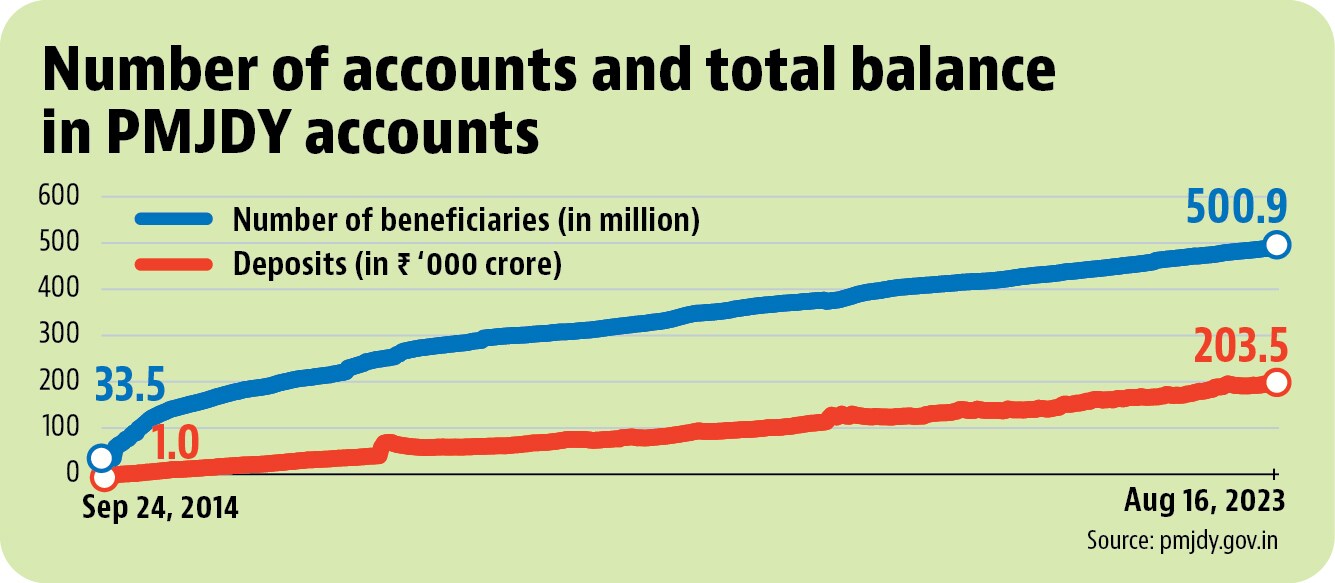
Nine years after it was rolled out, there are more than 500 million PMJDY accounts in the country with a total balance of ₹2.04 lakh crore in the accounts.
Updated on: Aug 29, 2023, 04:49:22 IST

 Prefer HTon Google
Share via


Copy link

The Pradhan Mantri Jan Dhan Yojna (PMJDY) was launched by Prime Minister Narendra Modi on 28 August 2014. Nine years after it was rolled out, there are more than 500 million PMJDY accounts in the country with a total balance of ₹2.04 lakh crore in the accounts. What are the salient features of the scheme nine years after it came into being? Here are five charts which explain this in detail.
Charts that matter
 The scheme had the strongest momentum in the first two years, but continues to enrol new beneficiariesPMJDY’s website has weekly data on the number of beneficiaries and the total amount in PMJDY accounts since September 2014. An HT analysis of this data shows that almost half of the 500 million current bank accounts under PMJDY were opened in the first two years of the scheme. While the pace of adding new accounts has slowed in the later years the increase, even in the last couple of years, is anything but insignificant.
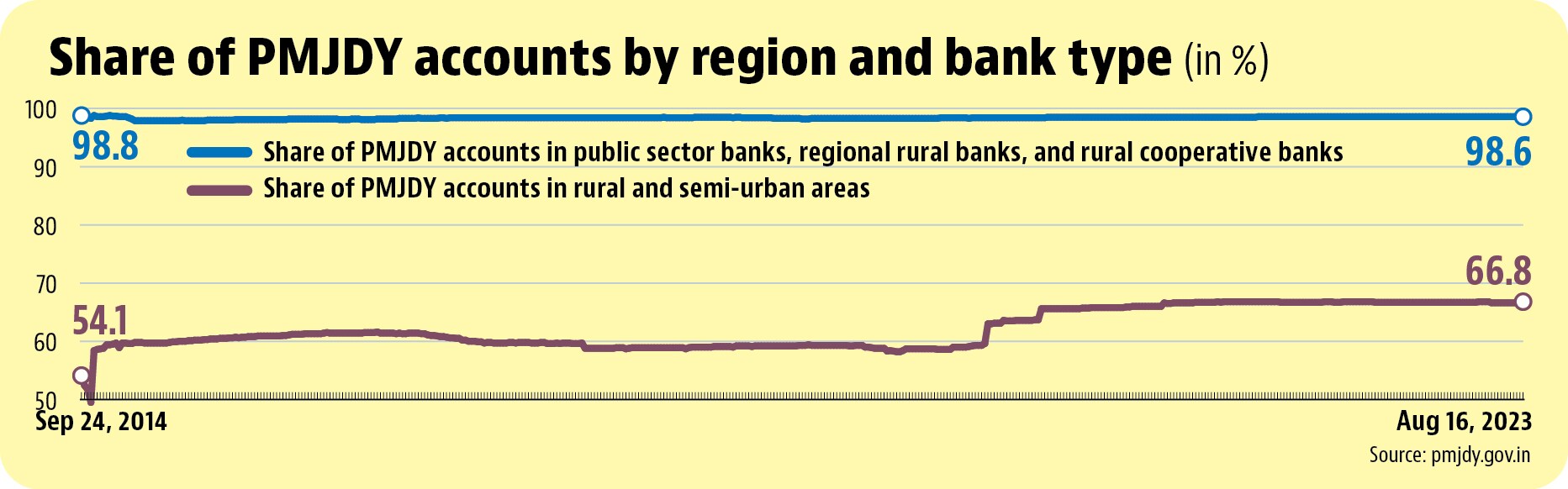
- PMJDY is a rural programme primarily driven by public sector banksPMJDY data clearly shows that the scheme has been implemented by the efforts of public sector and not private banks in the country. At no point of time has the share of public sector banks (this includes regional rural banks and rural cooperative banks) in total PMJDY accounts been less than 95%. Also, at least two-thirds of the scheme’s accounts have been in rural areas.
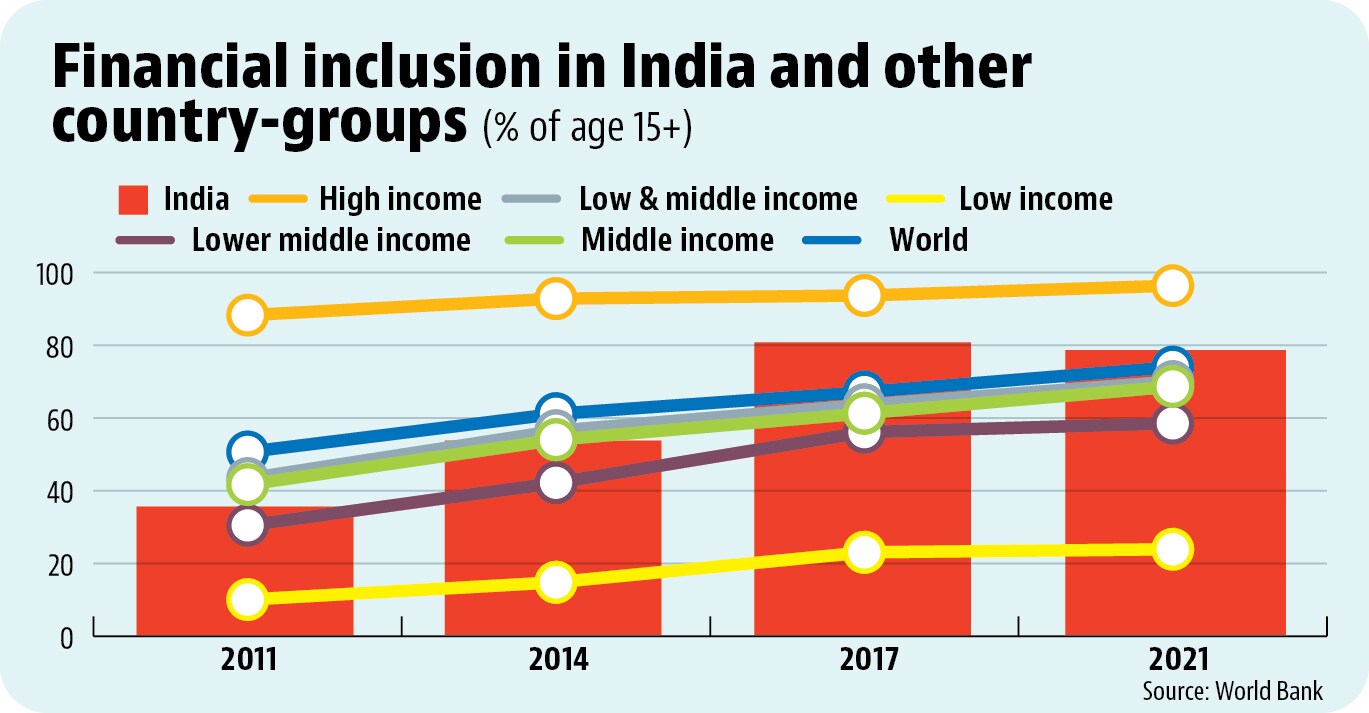
- PMJDY has given a big boost to financial inclusion in the countryData from the World Bank’s Global Findex Database shows this clearly. The share of Indians aged 15 years and above who had an independent of joint account at a bank of another type of financial institution was 35.2% in 2011. This increased to 52.8% in 2014 and 79.8% in 2017 before declining marginally to 77.3% in 2021, the latest year for which data is available in the World Development Indicator database of the World Bank. India’s financial inclusion score has gone from being significantly below the global average to slightly above the global average during this period.
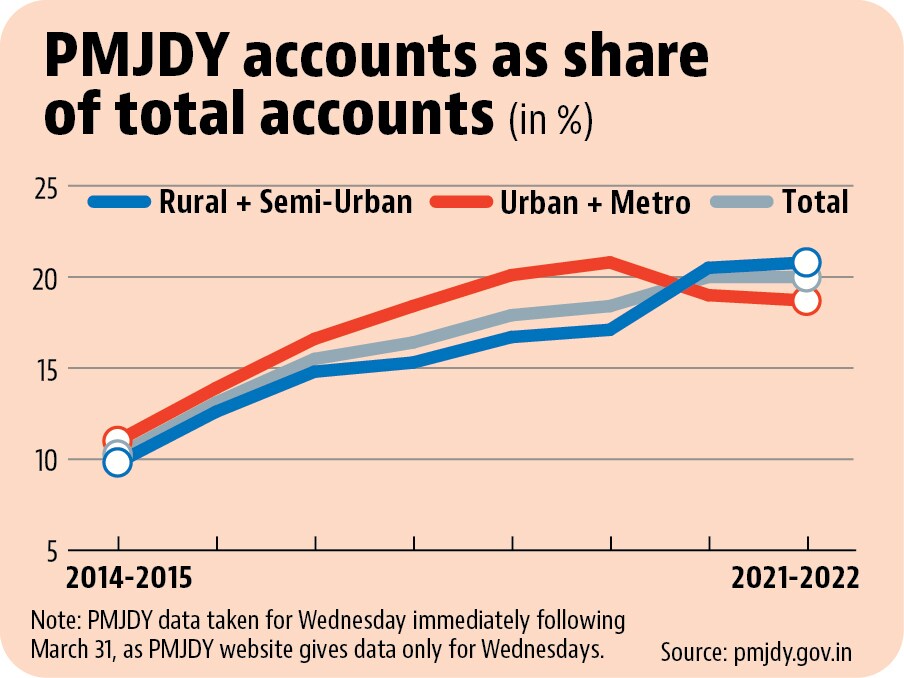
- PMJDY accounts 20% of total accounts in the country, but have just about 1% of total balanceWhile the scheme has helped in financial inclusion, the money in the accounts is a tiny fraction of the total money in savings accounts in the country. A comparison with RBI data on outstanding amount in deposits in scheduled commercial banks shows that PMJDY deposits were just 0.99% of total deposits at the end of the 2021-22 financial year. However, since PMJDY is a scheme meant for including the poor in the formal banking system, this is not surprising. What about the number of accounts? PMJDY accounts were 20% of total bank accounts in scheduled commercial banks in the country at the end of 2021-22. This is double the share at the end of 2014-15, when the scheme came into operation. Yearly data for accounts also shows that PMJDY accounts had a bigger share in total accounts in urban and metro areas than in rural and semi-urban areas up to 2019-20. This pattern has now changed in favour of rural and semi-urban areas.
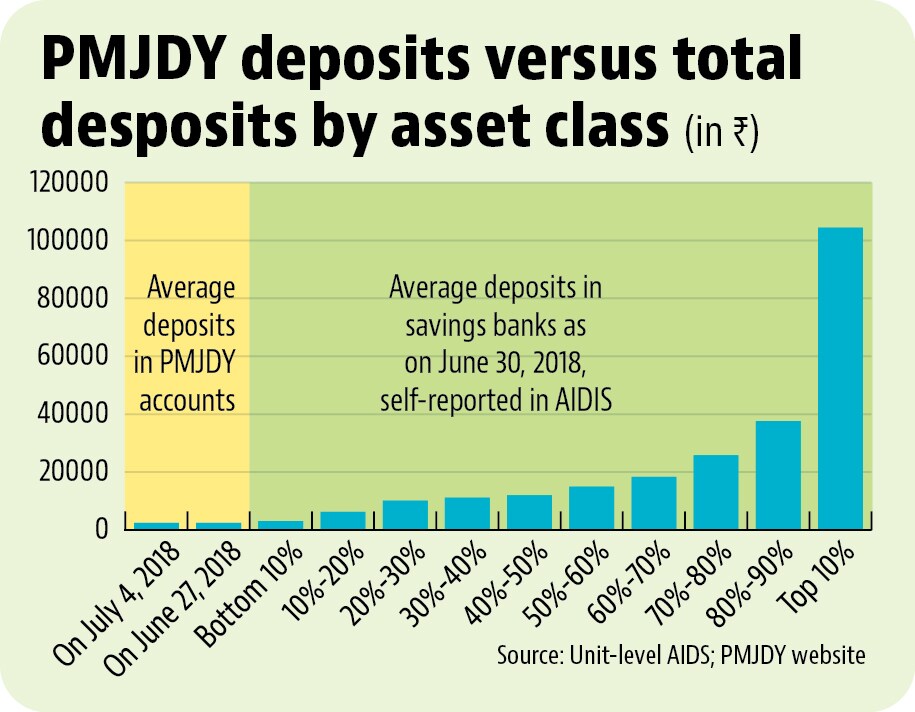
- And it is reasonable to assume that PMJDY account balances are largely on account of government transfersThe average balance in PMJDY accounts – total balance divided by number of accounts – on August 16, 2023 (the latest period for which data is available) was ₹4,062.67. Because PMJDY accounts have no minimum balance criteria one cannot say that captive deposits have played a role in the total money in PMJDY accounts. However, there is at least one piece of statistical evidence which shows that PMJDY beneficiaries do not treat these accounts as the primary place to park their savings. Data from the All India Debt and Investment Survey shows that even the bottom 10% of households (by total assets owned) had an average deposit of ₹3,087 in a savings account on 30 June 2018. This amount was more than the average balance of ₹2,486.6 at the end of June 2018 in PMJDY accounts.
- But PMJDY’s real game changing effect lies in the realm of political economyWhere the PMJDY scheme has been a real game-changer is the instant mass outreach it has provided to the government in unleashing various aspects of its Direct Benefit Transfers (DBT) scheme. From regular welfare scheme transfers to crisis period measures such as those launched during the pandemic, the government has been able to transfer money to intended beneficiaries without any delay or leakage.