
 E-Paper



Pragyan rover avoids crater, data collection key objective now: Isro
The Pragyan rover on the Chandrayaan-3 mission had to retrace its path to avoid a crater on the lunar surface. It is now safely heading on a new path. The mission is focused on maximizing findings from the lander and rover before the lunar sunset on September 6.

 Prefer HTon Google


The Pragyan rover on Sunday retraced its path to avoid a 4-metre-wide crater on the lunar surface in a delicate display of its maneuvering abilities.
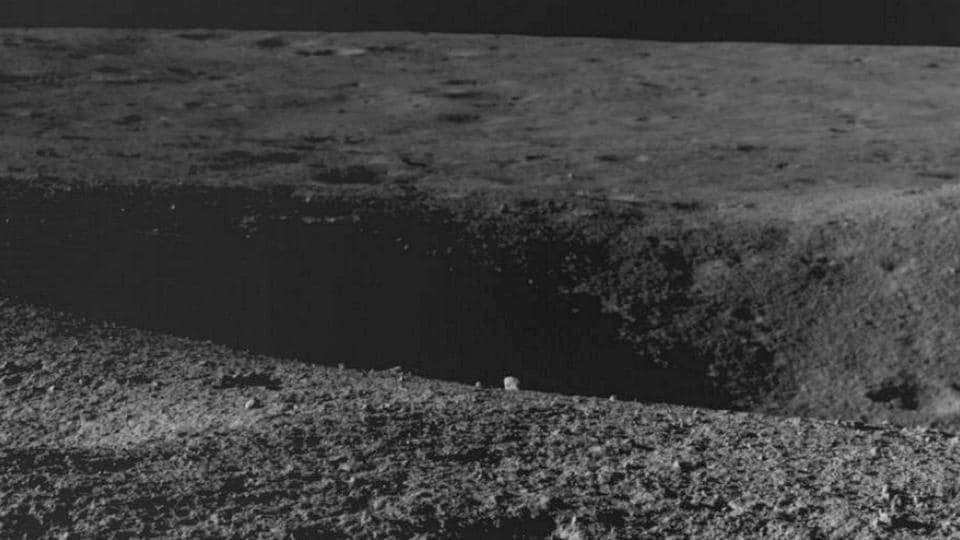
The rover is now safely heading on a new path, the Indian Space Research Organisation said in a statement on Monday.
“Chandrayaan-3 Mission: On August 27, 2023, the Rover came across a 4-meter diameter crater positioned 3 meters ahead of its location. The Rover was commanded to retrace the path. It’s now safely heading on a new path,” the statement said.
The rover is designed to avoid obstacles in the path, a senior scientist from the Chandrayaan-3 mission team said, adding that a dedicated team is monitoring its movement to steer it clear of any such obstacles.
“The rover relies on commands given to it for movement on the lunar surface. Through the navigation cameras, our teams monitor the rover’s movement and give commands to it for movement. If there is an obstacle, such as the crater that we encountered yesterday, we retract the path,” the scientist explained.
With nine more days to go for the lunar sunset when the mission life will end, the focus of the agency is maximise findings from the lander, Vikram, and rover, and optimize their operations, scientists said.
All equipment in the mission is solar powered, and the mission is scheduled to end with the lunar sunset – on September 6.
“The focus currently is on observations more than analysis. All the payloads are functional and are providing us very good data,” said Anil Bhardwaj, director, Physical Research Laboratory, one of Isro’s labs that is closely involved in the Chandrayaan-3 mission.
The agency is waiting for “ample lighting facing the lander” to get photos of the lander on the lunar surface clicked by cameras on board the rover, he said.
“A big factor on the lunar surface is lighting and the inclination, which ensures visibility. As soon as we get ample lighting facing the lander, we will be in a position to release those pictures,” Bhardwaj said.
The mission has three objectives — to demonstrate a safe and soft landing on the moon surface, to demonstrate roving abilities on the surface of moon, and to conduct in-situ scientific experiments.
Chandrayaan-3’s lander made a successful soft landing near the south pole of the moon on August 23. On Friday, the rover rolled out of the lander’s belly over a two-segment ramp. On Sunday, agency released temperature variation data observed on the lunar surface by the lander module.
Over the next nine days, the lander and the rover will conduct a series of experiments on the lunar surface, where it will analyse the chemical and mineral composition of materials — dust and rock — on the surface.


