
 E-Paper



Problem of plenty: How a bountiful harvest brought farm sector to its knees
The Consumer Price Index showed that vegetable prices fell by about 13.5% in May, as compared to the corresponding month last year. The dip in the price of pulses was even higher, at 19.5%. This led to an overall deflation of 1.05% in food prices for the first time since 2012.


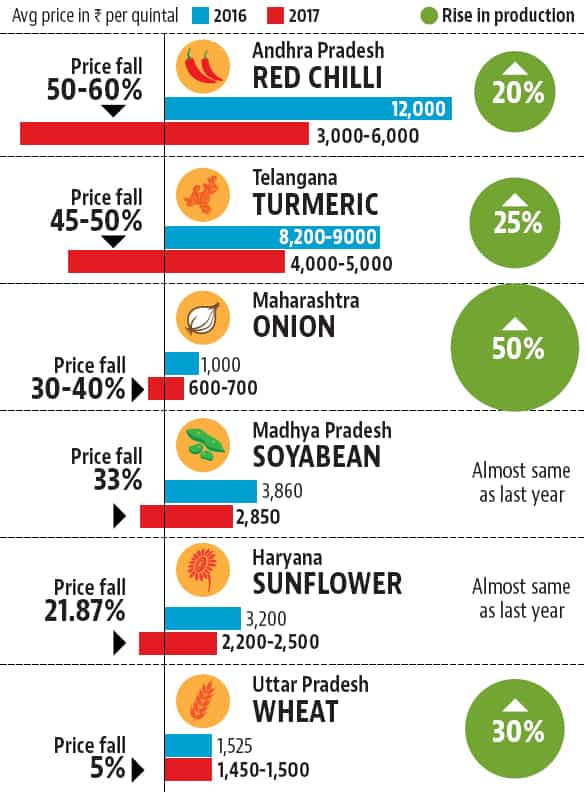
Duty-free imports and a plentiful harvest caused a near-50% dip in food item prices in the wholesale market and by 14-20% in retail, data released by the government shows. This phenomenon gave rise to violent protests by farmers in Maharashtra, Madhya Pradesh and Rajasthan.
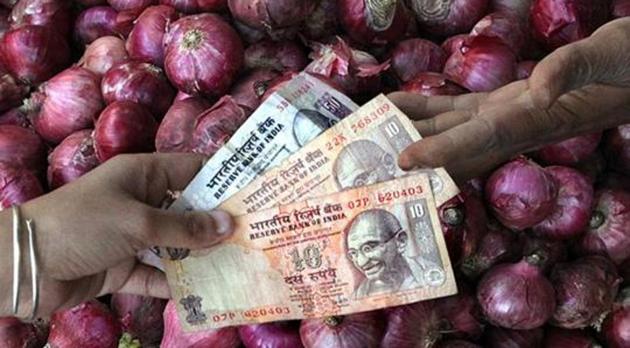
The death of six farmers in clashes with the police in Madhya Pradesh’s Mandsaur district brought the farm crisis into national focus, uniting the Opposition against the National Democratic Alliance government. The Centre, for its part, reiterated its promise of doubling farmers’ income by 2020.
The indicators of how farm produce prices crashed this year became clear on Monday, when the Consumer Price Index (CPI) was released. One can understand the reasons for farm distress in a bumper crop year by comparing CPI prices with the latest wholesale prices of pulses and vegetables in agricultural markets.
The index showed that vegetable prices fell by about 13.5% in May, as compared to the corresponding month last year. The dip in the price of pulses was even higher, at 19.5%. This led to an overall deflation of 1.05% in food prices for the first time since 2012.
The fall was higher in wholesale markets, where farmers offload their produce, with pulses and vegetables selling at nearly two-thirds (or 63%) of last year’s price. “It was a sad year for farmers despite having a bumper crop after two tough years (of drought),” observed T Haque, former head of the Commission for Agriculture Costs and Prices (CACP).
“In many states, the farmers have not even been able to recover the input costs,” he said, adding that it was the responsibility of both the Centre and the states to ensure that agriculturists are provided with a price cushion.
Highs and lows
India’s farm sector production grew by 8% this year, the highest ever.
According to agriculture ministry data, the production of pulses amounted to 22.14 million tones – 50% higher than 2014-15. Horticultural products, for their part, witnessed a growth of over 40%.
However, the high production caused an unprecedented glut in farm markets already loaded with imported food items – including pulses. The government imposed 10% duty on these items in May, after prices crashed.
In 2015-16, the Centre had allowed the import of pulses such as pigeon peas (tur dal) and lentils (mosur) to check rising prices even as the Opposition accused it of failing to control food inflation. The resultant glut in the market caused prices to come crashing, and the dip was as low as 80% for commodities such as onions and pigeon peas.
“I could not find a buyer for my produce for two whole days,” said Mandsaur farmer Rakesh Patidar, who was finally left with no option but to sell his onions for Re 1 per kg in mid-May.
Many farmers like Rakesh started growing onions after their prices skyrocketed in 2014, leading to a significant increase in its area under cultivation. Pigeon peas witnessed a similar trend in 2015 owing to crop failure.
“It seems like farmers were not looking at anything else,” said a senior agriculture ministry functionary on the record production of onion and pigeon peas. “They thought onions and pigeon peas would fetch them a good price, but they lost money instead.”
Farmers in Madhya Pradesh’s violence-hit Malwa region, who have been growing onions since 2015, are now witnessing a dip in prices for the second year in a row. The situation is similar in many parts of Maharashtra, where the state government has now announced loan waivers.
India is not the only country to have witnessed a steep fall in prices of pulses and vegetables this year. According to agriculture ministry officials, there has been an over 50% dip in prices across the globe due to a demand crunch. However, unlike India, farmers in other countries have the requisite infrastructure to store their produce and sell when prices stabilise.


