E-Paper



Proposed changes to wildlife law may hit research: Experts
One of the issues with the new system of schedules is that scientists may require two levels of permissions from the state and the Centre to collect specimens.

 Prefer HTon Google


New Delhi: Biologists and ecologists have raised concerns about the Wildlife Protection (Amendment) Act, 2022 making it difficult to carry out ecological and genetic research on a large number of species by restricting or making it difficult to collect specimens.
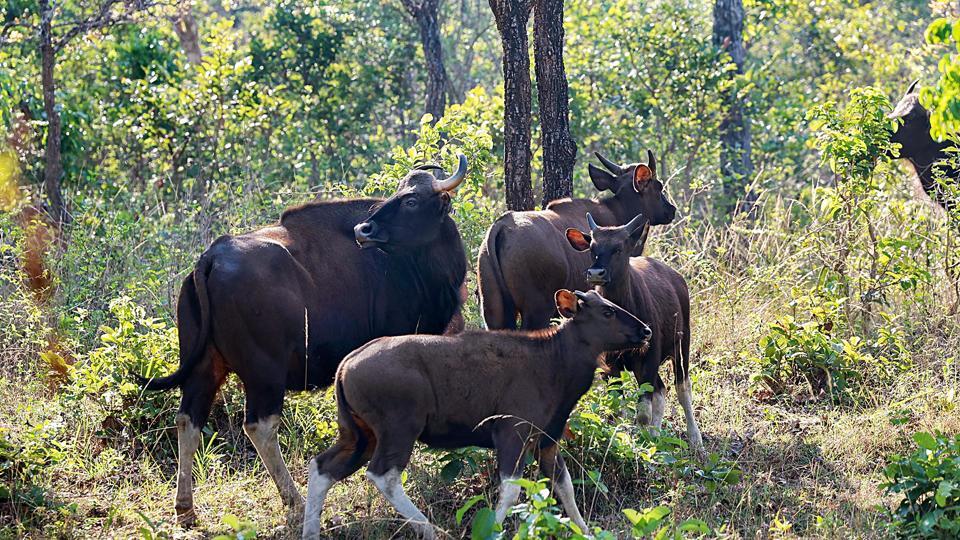
This has happened because the so-called Schedule I of the revised act has been expanded to include a large number of species.
Also Read | Submit affidavit listing identified wildlife corridors in state: Uttarakhand HC
Capturing specimens -- birds, for instance, are mist-netted, and then released -- is important to study a variety of issues, including studying how thermal stress is impacting endangered species; how their migration patterns are shifting; or even zoonoses or the transmission of pathogens from animals to humans.
Also Read | J&K’s largest wildlife protected wetland to get eco-tourism boost
The amendment bill sought to rationalise the schedules, and has created only two main levels of protection for animals -- Schedule I specifying the animal species with the highest level of protection, and Schedule II specifying the animal species with a relatively lower degree of protection.
Schedule III in the amendment act is for plant species and Schedule IV is for species protected under Convention on International Trade in Endangered Species of Wild Fauna and Flora (CITES).
Also Read | Asola Bhatti Wildlife Sanctuary in Delhi to get 2nd native seed nursery
In contrast, the original law had six schedules—Schedule I for animals with highest priority particularly endangered species; Schedule II species with a relatively lesser degree of protection; Schedule III and IV for non-endangered species; Schedule V for vermin; and schedule VI for plant species.
This rationalisation has meant the inclusion of a very large number of species in Schedule I which was meant essentially for critically endangered and endangered species.This also goes against the scientific logic of studying populations in the wild before deciding to place a species in Schedule I.
One of the issues with the new system of schedules is that scientists may require two levels of permissions from the state and the Centre to collect specimens, ecologists said. Another issue is about the new system not prioritising species as per their ecological importance, including whether they are endangered or not, whether their habitat is degraded or not , they argued.
“Any handling of animals in Schedule I requires permission from MOEFCC (environment ministry) in addition to the state. Thus, any sample collection, tagging, ringing, etc. will now require state and Central permission. Thus, research on animals on both Schedules 1 and II will become highly restricted,” said Kartik Shanker, ecologist, Centre for Ecological Sciences, Indian Institute of Science, Bangalore.
In an open letter in January, a group of ecologists pointed out that the list of species in the amendment act appears to have been created with little or no consultation. Few wildlife ecologists were aware of large-scale changes to the list of species in the schedules. Consequently, the outcomes of the new schedules are not based on science, they said.
The group of ecologists and geneticists from the Indian Institute of Science, Indian Institute of Science Education and Research (IISER), Tata Institute for Genetics and Society, Ashoka Trust for Research in Ecology and the Environment and other institutions wrote that the new schedules provide the highest degree of protection (Schedule I) to the critically endangered Great Indian Bustards but also the peafowl, which are so numerous that they are considered as agricultural pests.
“Similarly, jackals and bonnet macaques are listed in the same breath as tigers and rhinos in Schedule I. The barn owl, an extremely common bird often found nesting in the apartments in the cities, is placed in Schedule I along with the forest owlet which is rare and possibly endangered. On the other hand, the white-bellied sholakili is in Schedule 1, but the Palani laughingthrush, a bird with similar ecology and a far more restricted distribution, is in Schedule 2. The checkered keelback and rat snake, which are among India’s most widespread and common snakes, are on Schedule I while most other snakes (including rare and range-restricted ones) are on Schedule II. The ‘list’ goes on.),” the letter said.
The group underlined that far more detailed information on species is required, as the pace and intensity of climate change continues to increase. In the future, India will need to rely on specialised wildlife biologists and disease ecologists to understand rapidly emerging health threats to wildlife and humans and recommend innovative conservation plans and hence research in wildlife should be encouraged and facilitated.
“Schedule I species should be based on the status of the species in India. Are they in the threatened or endangered category of the International Union for Conservation of Nature? Then they must be included. If they are culturally important, if they are species that are commonly traded in but may not be threatened, they should also be provided Schedule I protection. There should be a very scientific basis to why a species is in Schedule I and schedules should be updated from time to time. Based on the schedules, the government should take action and pay more attention to the habitat of endangered species. The purpose is to bring species from Schedule I to II through conservation measures,” said Asad R Rahmani, former director of Bombay Natural History Society and a veteran ornithologist.
“Permission to do research should be facilitated. Research is very critical for Schedule I species. Researchers also should be very careful on how safely it can be done. The research findings should be communicated to the government so that it can inform policy. Don’t just write academic papers and forget about it. Research permissions should be simple and fast and given on a case by case basis,” added Rahmani.
“For research purposes, for the wild animals specified in Schedule I, prior permission of the Central Government is required if the animals are to be captured or their tissues, blood samples etc are to be collected from those in the wild. For wild animals which are in Schedule II, permission of the State Government is required for similar research. If there is no capture involved or any intrusion involved in the body of wild animals, Chief Wildlife Warden (CWLW) may give permission at his level. This was the position prior to amendment also,” said a statement from MoEFCC responding to the concerns raised by ecologists.
“If there is neither capture of wild animals is involved nor the research is non-invasive in the body of wild animal, CWLW may permit research…the schedules have been rationalised by majorly including the species which were listed in Schedule I and part II of Schedule II for hunting of which the penalties were same prior to amendment and mentioning individual species instead of mentioning them as groups based on the inputs received from our scientific institutions Zoological Society of India and Wildlife Institute of India (WII)… process of seeking permission for research has eased out because of classifying animals in two schedules,” the statement added.
“Categorising a larger number of species in schedule 1 is good from a conservation perspective. In India many habitats are not protected. When habitats/ forests with presence of Schedule I species are diverted, it may warrant a cautious approach. However, there needs to be a way to ensure this doesn’t become an obstacle to scientific research. There must be a transparent and time bound process of granting permissions to research projects, which are necessary to understand species and have conservation implications,” said Debadityo Sinha, lead, Climate & Ecosystems, Vidhi Centre for Legal Policy.