E-Paper



Submit affidavit listing identified wildlife corridors in state: Uttarakhand HC
The HC was hearing a public interest litigation (PIL) filed by Dehradun-based social activist Anu Pant with regard to issues related to man-animal conflict in the state

 Prefer HTon Google


The Uttarakhand high court has directed the state government to submit an affidavit within two weeks, listing the identified wildlife corridors in the state and areas where the movement of wild animals takes place.
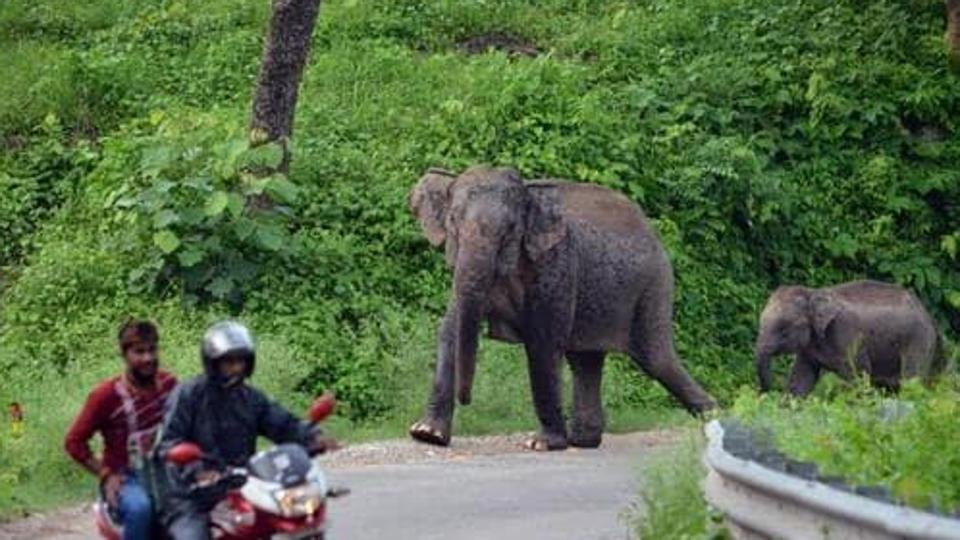
These directions were issued by division bench of chief justice Vipin Sanghi and justice Rakesh Thapliyal while hearing a public interest litigation (PIL) filed by Dehradun-based social activist Anu Pant with regard to issues related to man-animal conflict in the state.
The order was issued on Wednesday, but its copy was made available on Thursday.
RK Sudhanshu, principal secretary, the forest department appeared in person for the hearing.
Also Read: Declare elephant corridors in Corbett as ‘eco-sensitive zones’: Uttarakhand HC
The HC order stated, “At this stage, we may observe that our concern is to see that the state and its instrumentalities are looking at the problem of man-animal conflict with all seriousness and sincerity and that their officers/officials are complying with the standing orders and the standing operating procedures (SOP), which have been evolved, either by the state itself or by other authorities, such as the central government”.
Several claims of people related to compensation cases in man-animal conflict, are pending since 2016, Abhjijay Negi, counsel of the petitioner told the high court to which the latter directed the state government to expedite the disposal of the claims, one way or another, upon examination of the merits of each of such claims.
Negi apprised the HC that according to the affidavit, there are only eight veterinary doctors in service of the forest department stationed in three out of the thirteen districts of the state.
Sudhanshu apprised the high court of the fact that a large number of veterinary doctors are available in each of the districts, who have been trained by the forest department to deal with the issues related to man-animal conflict.
“Animal Husbandry department will be called upon to designate veterinary doctors for each of the districts of the state. A panel of trained veterinary doctors, with their contact details, in each district will be prepared, which will be made available to the officials dealing with such conflict and shall also be uploaded on the website of the forest department, so that information is also available to the public at large”, he told the high court.
Responding to this, the HC ordered that “‘his exercise be completed before the next date (of hearing, and compliance reported”.
The HC also maintained that one of the reasons for the increase in man-animal conflict is the release of old cattle and cows which are not yielding milk.
“Stray cattle wander into the forests and attract carnivores, such as leopards and tigers. They are easy prey for such carnivores. Such stray cattle give rise to increased man-animal conflict. It also drives the carnivores out of their core areas, into the periphery where the human habitations exist. The State should take definite and stringent measures against all such persons who release their cattle and allow them to wander into the forest areas”, the order said.
The next hearing in the matter will take place on August 17, 2023.