E-Paper



Declare elephant corridors in Corbett as ‘eco-sensitive zones’: Uttarakhand HC
The HC also directed officials to protect the already identified elephant corridors in the area, to depute competent staff on either side of the elephant corridors to ensure their safe passage

 Prefer HTon Google


Expressing serious concern over encroachments and obstructions, Uttarakhand high court directed the state government to consider declaring elephant corridors in the Jim Corbett National Park as “eco-sensitive zones” and not to allow constructions in any form like hotels, resorts and restaurants which fall within the identified corridors in the area.
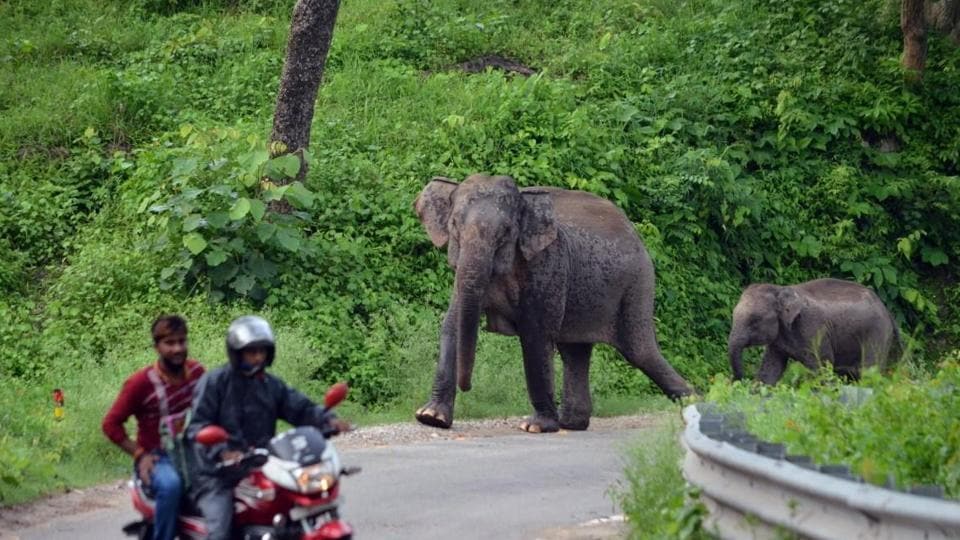
The HC also directed officials to protect the already identified elephant corridors in the area, to depute competent and sufficient staff on either side of the elephant corridors to ensure their safe passage in the night hours between 10pm and 4am and not to allow, or undertake, any further road construction which cuts across the corridors without providing adequate infrastructure to allow unobstructed and safe movement of wild elephants across such roads.
Also Read: Illegal infra in Corbett: Vigilance department gets nod to book officer, others
The directions were given by the division bench of chief justice Vipin Sanghi and justice RC Khulbe, while hearing a public interest litigation (PIL) filed by the Independent Medical Initiative Society in 2019.
The order was delivered on August 26 but its copy was made available on Wednesday evening.
The PIL has sought measures to save the elephant corridors near Corbett National Park, which include the Malani-Kota corridor, Chilkiya-Kota corridor and South Patlidoon-Chilkiya corridor to prevent any kind of disturbance in the natural movement of wild elephants using these corridors.
The HC stressed that elephants are intelligent animals and they have also tried to adapt to the changes which have come about in topology.
“They have started using areas, which are still available as a corridor for movement to cross-over the river and move from Jim Corbett National Park to the forest falling in Ramnagar division, and vice versa.
On account of the heavy traffic in Ramnagar Mohaan Road during the day, they have started crossing the road mostly in the night”, the order said.
The bench had already directed the officials concerned not to use chilli powder to prevent the movement of elephants in their corridors, the HC also restrained forest officials from using any other obstructive methods to prevent the movement of wild elephants in the corridors by using gunshots and electric fences.
The HC also directed the state government that, if necessary, it should take steps to acquire land falling in the revenue area to maintain the identified elephant corridors.
The officials concerned have been asked to file their compliance report by December 8, when the matter will be heard next.
The HC order stated, “The situation, as it appears in the present case is that the natural habitat of wild elephants- in the area aforementioned (Corbett landscape), has been encroached upon and obstructed with the construction of a road and resorts on revenue land along the Kosi river. The natural movement of elephants, which is a nomadic breed, and must move from one place to another in search of food and water, has been obstructed”.
The HC said Dushyant Mainali, counsel for the petitioner, has drawn the attention of the court to a satellite image and explained that, on either side of the Kosi river, there are forest areas.
“The elephants come to the river to meet their water requirements and also cross over the river to go to the other part of the forest.
However, on account of the construction of the road as well as the resorts along the river, the movement of elephants has been obstructed and there have been numerous instances, where man and elephant conflict has taken place… Due to construction of resorts, the corridors, traditionally used by the elephants, have been obstructed”, the order added.
There are 2026 elephants in the state currently according to the elephant census, most of them in Corbett landscape and Terai areas, where they regularly come into conflict with humans.
Many elephants have died due to train hit incidents and electrocution.
One female elephant and her calf were killed on Lalkuan-Kashipur route in US Nagar on August 18 last year after being hit by a speeding train.
In May 2018, a five-year-old female elephant died in a train-hit incident on Lalkuan-Bareilly railway track, in Nainital district.
In March 2018, an elephant had died in a similar incident near Nagla bypass on the Lalkuan-Bareilly railway line.
Ramnagar-based AG Ansari said the Corbett landscape, with nearly 1400 elephants, has three main corridors that connect Corbett Tiger Reserve with Ramnagar forests where Kosi river is located.
“This landscape is divided by a busy national highway 309, with Ramnagar forests on one side and Corbett Tiger Reserve on the other side. Elephants, who are long-ranging animals, cross this highway to reach Kosi river and areas further from Kosi. Long back, the elephant corridors started from Rajaji Tiger Reserve and passed through the Corbett landscape and reached up to Nepal. But this long corridor has been fragmented now and these elephants have been in a way trapped in the Corbett landscape. I am happy with HC order which will go a long way in saving these remaining corridors in the Corbett landscape”, he said.