Over the course of the past 18 months, consumer confidence and spending - one a measure of economic expectations and the other of incomes - have slumped. However, numbers show an oddity. People’s spending has slowed, but borrowings or retail loans are up.
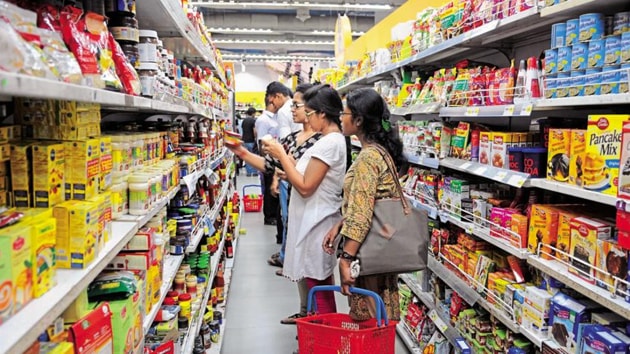
Most indicators show a fall in consumption, a sign that consumers are shy of spending. Take for instance, the fall in car sales, housing sales or even air travel.
Growth in consumption, or private final consumption expenditure as statisticians call it, decelerated to 4.1% in the first half of the current fiscal. That’s nearly half of what it was a year ago, as the official quarterly data of GDP or gross domestic product showed. This is at the root of the current economic crisis: missing demand. The country’s GDP hobbled at 4.5% in the July-September quarter, the slowest in six years.
However, private retail borrowings are up, oddly enough. It would appear that people are borrowing more, something not possible if they aren’t spending or investing. And household savings in India have touched a decade’s low. In theory, economists take saving to be the equivalent of investing since any income not spent is ultimately invested.
Here’s a quick look, year-on-year, at the decelerating growth in private consumption: Financial Year 2015: 8.4%; Financial year 2016: 7.9%; Financial Year 2017: 8.2%; Financial Year 2018: 7.4%; Financial Year 2019 (first half): 8.5%; Financial Year 2019 (second half): 7.7% and Financial Year 2020 (first half) 4.1%. Notice the sharp fall between the second half of financial year 2019 and the first half of the current fiscal.
{{/usCountry}}Here’s a quick look, year-on-year, at the decelerating growth in private consumption: Financial Year 2015: 8.4%; Financial year 2016: 7.9%; Financial Year 2017: 8.2%; Financial Year 2018: 7.4%; Financial Year 2019 (first half): 8.5%; Financial Year 2019 (second half): 7.7% and Financial Year 2020 (first half) 4.1%. Notice the sharp fall between the second half of financial year 2019 and the first half of the current fiscal.
{{/usCountry}}On the other hand, borrowing data from the Reserve Bank of India, or RBI, shows that in the first half of the current financial year, retail credit of banks grew 16.6%. That’s twice as fast as overall bank credit growth, according to Dharmakirti Joshi, chief economist at CRISIL Ltd, the ratings firm. This pace of growth in retail loans is quite in line with the average growth of the past three years.
A deeper look into how banking and non-bank credit functions reveals that while retail borrowing figures are up, actual lending to people have fallen, as we shall explain.
A credit crunch, which has stoked India’s slowdown, has meant that conventional sources of funding, such as bank loans and bonds have dried up, jolting non-banking financial firms, or shadow banks. So, shadow banks have been “securitising” their debts, especially after a massive credit shock in September 2018. This has bumped up retail credit figures, even though people aren’t borrowing.
Of retail loans disbursed by banks, a sizeable chunk went into buying ‘pools’ of loan debts of non-banks. Essentially, loans are being taken out to buy loans disbursed by non-banks to investors to hedge risks, as India battles a significant slowdown. This process, known as securitisation, has cranked up retail credit growth, even though people’s borrowings have actually fallen.
A more complex form of securitisation, known as collateral debt obligations, was actually the trigger for the 2008 financial crisis.
“About half of the securitisation transactions was home-loan receivables, while a quarter was vehicle-loan receivables and 11% microfinance-loan receivables,” Joshi says.
Minus the securitisation of retail debts, the picture becomes clear. The growth in lending after deducting securitisation pools shows retail lending, to ordinary consumers, has fallen from 16% in fiscal 2018 to 12% in 2019, which is also the slowest growth in retail credit in the last five years.
This reflects what’s happening to the real economy: people aren’t borrowing much, neither are they willing to spend – on cars, appliances or housing.