
Sign in

Rafale weaponry prompts China, Pak to alter defence posture

According to top South Block officials, with the IAF’s first Rafale squadron just one short of completion in Ambala, the Chinese have moved their so-called fifth generation fighter J-20 ahead in the Tibet and Xinjiang airbases.

Updated on: Apr 23, 2021, 06:41:21 IST
By , Hindustan Times, New Delhi
Share
Share via
  • facebook
  • twitter
  • linkedin
  • whatsapp
Copy link
  • copy link

With the Indian Air Force’s (IAF) Rafale fighter successfully test-firing the 60km range Hammer air-to-ground modular weapon in March, the air defence posture of both China and Pakistan has changed in the wake of the advent of the multi-role fighter in South Asia, according to people familiar with the matter.
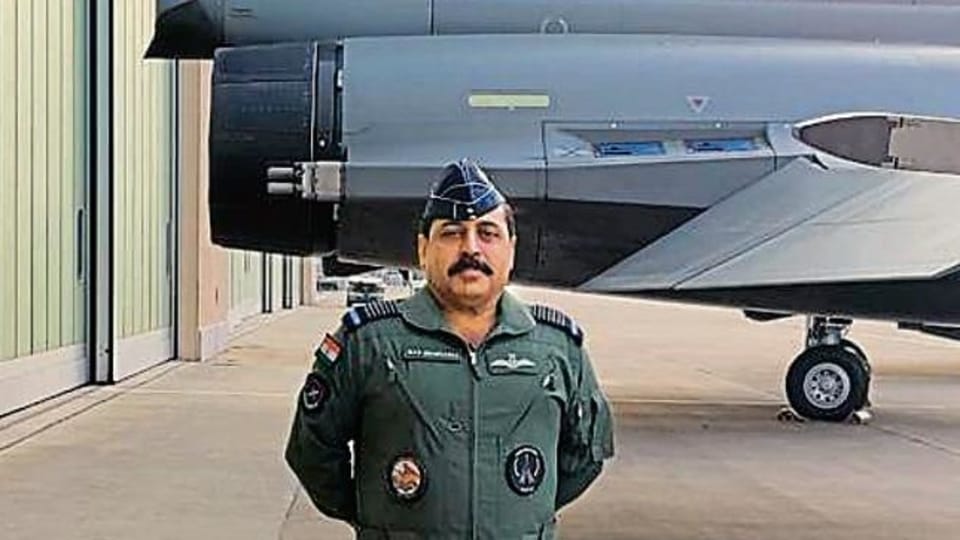
IAf chief Rakesh Bhadauria with the RB 007 fighter jet. All Rafale jets carry the RB call sign in honour of Bhadauria, who played a key role in negotiating the fighter jet deal.

The Hammer weapon secured a bunker-busting vertical hit on its target at the testing location. According to top South Block officials, with the IAF’s first Rafale squadron just one short of completion in Ambala, the Chinese have moved their so-called fifth generation fighter J-20 ahead in the Tibet and Xinjiang airbases. The Pakistanis have also moved their Chinese import JF-17 fighter in key forward bases to tackle the clear and present threat of the Rafale fighter. Although the Chinese say the J-20 is the third operational fifth-generation fighter after the US F-22 and F-35, genuine fifth-generation fighters developed by the Americans do not have a canard that further reduces the cross-section of the plane, the officials said. The Chinese J-20 has the same canard as the Rafale, which the IAF calls a 4.5-generation fighter.

The Chinese and Pakistani air posture has also undergone a change with IAF’s induction of the Rafale as the latter carries the Meteor air-to-air missile, whose range is way beyond any missile the other two forces have in their arsenal. The Hammer and Scalp air-launched cruise missile with a range of over 500km ensures that the adversary will have no early warning as the two weapons can be launched from within Indian territory and beyond visual range.

While India could only send three out of five readied fighters from the Merignac Bordeaux airbase in France on Wednesday due to unforeseen reasons, seven more fighters have been lined up for delivery to IAF next month. Although the seven fighters may come in batches of three and four, six of them will be flown to the Hashimara airbase in West Bengal via Ambala. The re-pavement and extension of the main runway at Hashimara, which sits astride the Siliguri corridor, is expected to be completed by this month-end. The Haishmara upgrade also includes blast pens and surface-to-air missile batteries to protect the vital base.

  • Shishir Gupta
    ABOUT THE AUTHOR
    Shishir Gupta

    Shishir Gupta is Executive Editor at Hindustan Times and one of India's top journalists covering national security, strategic affairs, foreign policy and geopolitics. Over the past three decades, he has extensively reported on India's military, diplomatic and security landscape, covering every major conflict and national security challenge, from the 1999 Kargil War and the 2020 East Ladakh standoff to Operation Sindoor in 2025. He has also covered major terror attacks, including the IC-814 hijacking, the 26/11 Mumbai attacks and the 2025 Pahalgam terror strike, along with numerous Pakistan-backed terrorist incidents in the Kashmir Valley and across India. He has reported on national and state elections for more than three decades. A recognised authority on strategic affairs, Gupta has covered India's nuclear programme since the Pokhran-II (Shakti series) tests in May 1998 and has written extensively on global nuclear issues, Indian diplomacy and the country's expanding global outreach. He has also reported widely on international conflicts and terrorism, with a special focus on the Indian subcontinent. Gupta has interviewed Prime Minister Narendra Modi more than four times, including Modi's first interview with the print media after becoming Prime Minister in May 2014. His other interviews include three with the Dalai Lama, as well as conversations with Benjamin Netanyahu, Amit Shah, Yogi Adityanath, S. Jaishankar, Nirmala Sitharaman and Piyush Goyal. He is the author of Indian Mujahideen: The Enemy Within (Hachette, 2011) and Himalayan Face-off: Chinese Assertion and Indian Riposte (Hachette, 2014). He was awarded the Chevening-Wolfson Joint Scholarship at Wolfson College, University of Cambridge, UK, in 1998 and participated in the International Visitor Leadership Program (IVLP) of the US State Department in 2006. He received the Ben Gurion Prize from Israel in 2011 and the K. Subrahmanyam Prize for Strategic Studies in 2015 from the Manohar Parrikar Institute for Defence Studies and Analyses (MP-IDSA). Since 2024, he has hosted Point Blank, Hindustan Times' weekly YouTube show on global geopolitics.Read More