Rahul Bajaj, chairman emeritus of Bajaj Auto and a pioneer of India’s robust automobile industry, died in Pune at the age of 83 on Saturday.
Bajaj’s iconic reign at Bajaj Auto began amid tumult when Piaggio refused to renew a licence to manufacture its scooters in India. Bajaj took up the challenge to make scooters on his own and built great Indian brands like Chetak and Super. At their peak, these scooters enjoyed a waiting period of close to a decade, giving Bajaj Auto a dominating presence in the Indian two-wheeler market.
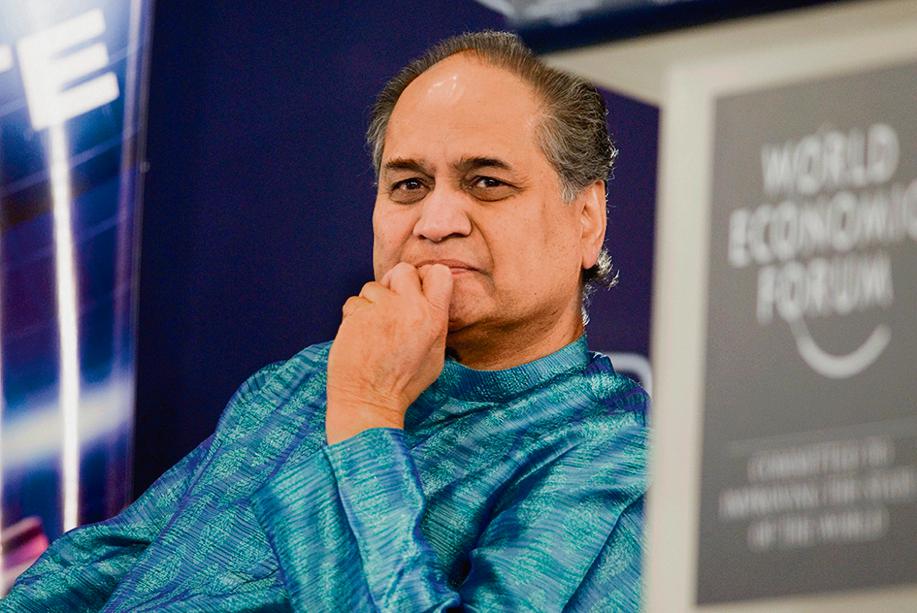
Bajaj was also the most vocal supporter of Indian industry and a key member of the Bombay Club, which lobbied against the abrupt opening up of the economy to multinational companies. He spearheaded the creation of the modern version of Confederation of Indian Industry, a lobby group, and was a founding member of the World Economic Forum, an independent organisation that focuses on developing entrepreneurship and corporate governance systems.
Significantly and in recent memory, Rahul Bajaj and his three cousins — Shekhar, Madhur and Niraj — signed an agreement outlining the family’s joint ownership of group companies and established formal processes to deal with issues related to succession, ownership and conflict resolution. The arrangement will go down in history as one of the most accomplished settlements to keep the family name going.
There are a few things that stood out about Bajaj. He was a member of the rarefied galaxy of great founders of the Indian automotive industry, along with Sumant Moolgaokar, known as the architect of Tata Motors, Keshub Mahindra, chairman emeritus of the Mahindra Group, HP Nanda, founder of the Escorts Group, V Krishnamurthy, the first chief of Maruti Udyog Ltd, and BML Munjal, founder of the Hero Group.
{{/usCountry}}There are a few things that stood out about Bajaj. He was a member of the rarefied galaxy of great founders of the Indian automotive industry, along with Sumant Moolgaokar, known as the architect of Tata Motors, Keshub Mahindra, chairman emeritus of the Mahindra Group, HP Nanda, founder of the Escorts Group, V Krishnamurthy, the first chief of Maruti Udyog Ltd, and BML Munjal, founder of the Hero Group.
{{/usCountry}}“He was one of the builders of the automotive industry,” said Venu Srinivasan, chairman, TVS Motor Co, a maker of two-wheelers. “You cannot talk about the Indian auto industry in the same breath without talking about Rahul Bajaj.”
Bajaj stood out for his forthrightness, never hesitating to call a spade a spade. Even with politicians and ministers, he spoke his mind. At the same time, he had a tremendous sense of mischief. He would make statements on big platforms, often leaving audiences in splits. He would take a crack at people and enjoyed the joke with a gleam in his eyes.
Rahul Bajaj came from the grand tradition of a freedom fighter like Jamnalal Bajaj, a man who was a close associate of Mahatma Gandhi and directly involved in the Indian freedom movement. He kept up that tradition.
Bajaj represented the best in India in post-independence aspirational India.
“He and I had some differences between our companies, but he never let personal relationships get affected or dented by anything that might happen on the business side of things,” Srinivasan said. “That was a very great quality.”
Even when Bajaj had a long waiting list for its scooters, it did not once compromise on its ethics, integrity or quality. This was India when the country was notorious for all kinds of malpractices.
Unfortunately, little is known about his charity as he never spoke about them. However, a visit to Wardha’s Bajaj Institute of Technology provides a glimpse of the institutions he built.
Bajaj was fierce in the marketplace and could not control his emotions when Hero Honda became the country’s top two-wheeler manufacturer. That was also one instance when he missed the impending wave of motorcycles in the country.
“We could see the number one crown being taken away from us in front of our eyes and we could do nothing. It was agonising for him, but he also encouraged taking rapid countermeasures to tackle the decline,” said RL Ravichandran, former CEO of Royal Enfield who spent close to a decade at Bajaj Auto, helming its sales and marketing activities.
Bajaj’s association with his dealers was a benchmark in the industry. He would spend hours over lunches with dealers at Bajaj’s factory in Akurdi in Pune. He seemed to have picked this trait from his friend and guru Brijmohan Lal Munjal.
When Bajaj could not attend a ceremony organised by Federation of Automobile Dealers Association (FADA) to honour him with a lifetime achievement award in 2012, some association members went to the Pimpri plant to meet him. He showed them the plant and a gigantic MF Hussain painting, which goes all the way up to the ceiling from the ground.
Upon hearing the dealers’ issues, he called the top management and said, “Why don’t you listen to them?”
Later he told the association members that the least that would happen is that their grievances would reach Rajiv, his son and managing director of Bajaj Auto.
“Rajiv does not like interacting with dealers as much as I do. However, he is the boss. He is running the business and giving investors excellent returns. So, I don’t question him as a chairman,” Nikunj Sanghi, past president FADA, recalled the conversation, giving a glimpse of Rahul Bajaj’s relationship with his son.
(Amrit Raj is the author of Indian Icon - A Cult Called Royal Enfield)