
 E-Paper



Rajnath Singh pitches for self-reliance in ammunition sector
Defence minister Rajnath Singh on Wednesday made a strong pitch for self-reliance in ammunition sector while asking the private players to partner with the government to cater to the requirements of the armed forces to sharpen their operation preparedness.

 Prefer HTon Google


Defence minister Rajnath Singh on Wednesday made a strong pitch for self-reliance in ammunition sector while asking the private players to partner with the government to cater to the requirements of the armed forces to sharpen their operation preparedness.
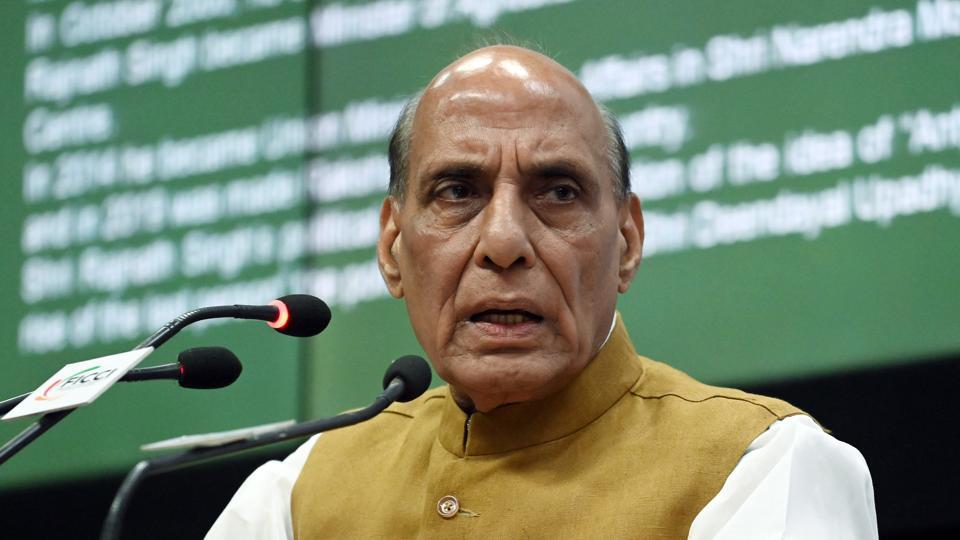
He said a healthy mix of local endeavours and foreign collaboration was the bedrock of India’s journey on the road to self-reliance in the defence manufacturing sector.
“Scientific and technological as well as the economic development of a nation is reflected in the capacity of its weapons and ammunition. For India to become a world power and one of the leading countries in defence production, we must move forward in the indigenous design, development and production of ammunition,” he said during a conference, ‘AMMO India 2022,’ jointly organised by the Federation of Indian Chambers of Commerce & Industry (FICCI) and Centre for Joint Warfare Studies.
Import substitution of ammunition, which is a recurring requirement, is a top priority for the government. It has imposed a phased ban on the import of different types of ammunition to achieve self-reliance.
Singh said precision-guided ammunition will play a key role in future warfare — equal to weapons and platforms — due to its constantly-evolving nature.
He said the use of such ammunition played a critical role during the Kargil war and the 2019 air strikes on a terror base in Pakistan’s Balakot. “Earlier, only the size and explosive capacity of bombs mattered, but now their smartness is equally important,” Singh said.
The minister went on describe the advantages of smart weapons for precision targeting.
“If any enemy base is to be destroyed, then precision ammunition will selectively target it and not any civil establishments. This is not the case with traditional ammunition. Wars are fought with the country’s military, not with its people. Through precision ammunition, destruction of civil establishments can be avoided and the values of peace and humanity in times of war can be preserved.”
He enumerated the steps taken by the government to boost ‘aatmanirbharta’ (self-reliance) in defence including curbing imports and allocating funds for domestic procurement.
The government has imposed a phased ban on the import of 310 different types of weapons, systems and ammunition (through three positive indigenisation lists) as well as earmarked ₹84,598 crore — 68 % of the military’s capital acquisition budget — for purchasing locally produced weapons and systems in 2022-23.
“Be it guided extended range rockets for Pinaka, advanced light-weight torpedo or anti-radiation missiles, there are 43 such items in the third (positive indigenisation) list. This reflects our commitment to achieve self-reliance in the field and our confidence in the research, development and manufacturing prowess of the domestic defence industry,” the minister said.
India on Tuesday cleared indigenous defence purchases worth ₹28,732 crore including armed drones, carbines, bullet-proof jackets and ammunition.
“India ranks among the top 10 countries in the world in terms of military spending, which makes it one of the most attractive markets for defence. We believe in having a healthy mix of local endeavours and foreign collaboration in this journey of self-reliance,” he added.
FICCI senior vice-president Subhrakant Panda said the ministry should begin trials of all import substitution options available in a time-bound manner to enhance the private sector’s participation.
“Indigenisation through handholding is the way to go,” he said.


