
 E-Paper



Rana Man Singh: Nehru’s architect who designed Shanti Van
Shanti Van was established in 1964 around the spot where the last rites of the first Prime Minister of India were performed.

 Prefer HTon Google


The year was 1949. Then Prime Minister of newly independent India, Jawaharlal Nehru, was visiting the US. While he was in New York, a young man Rana Man Singh met him. Singh was then working with the great architect Frank Lloyd Wright. He had moved to the US after studying at the JJ School of Art in Bombay. During their meeting, Nehru urged Singh to return to home and contribute to the building of a new India. The idea resonated with Singh, who returned to Delhi in 1951. One day, he met Nehru at Teen Murti House. Nehru recognised him and said he would soon be put to work. A few days later, Singh joined the Central Public Works Department (CPWD). Years later, Singh would be tasked with landscaping Nehru’s memorial, Shanti Van.
Singh also designed several other important buildings across the country. Bal Bhavan (1953), Buddha Jayanti Park (1956), the Nehru Memorial Museum and Library (NMML) (1964), and the Nehru Planetarium (1980), are among his works in Delhi. Buddha Jayanti Park is considered a milestone in Singh’s career. It was developed in 1959 to commemorate the 2500th anniversary of Lord Buddha’s Parinirvana. The government had allocated 300 acres of land for this park, and Nehru himself entrusted Singh with this project.
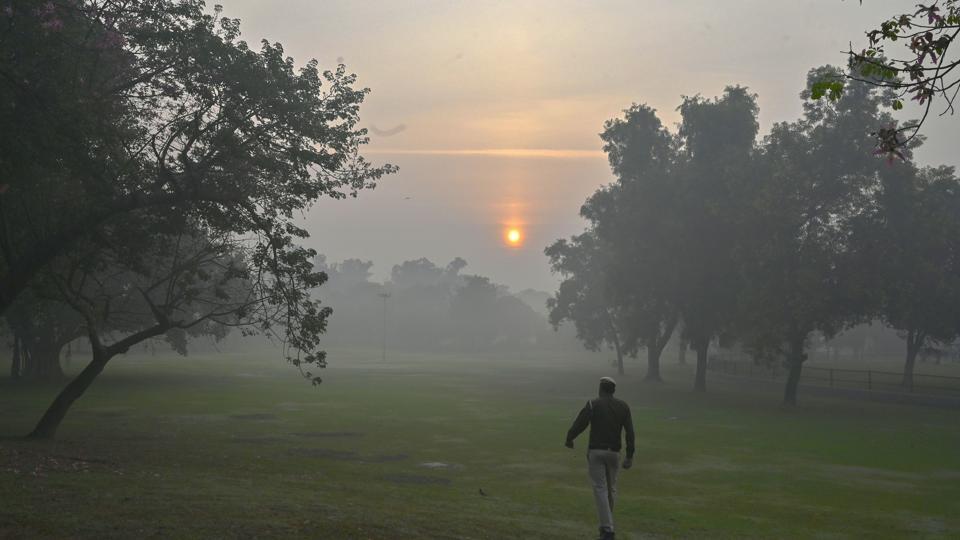
On Tuesday (May 27), people from all walks of life visited Shanti Van to pay tribute to Nehru on his death anniversary. Upon entering the complex, they would have felt the incessant din of Mahatma Gandhi Road fade away. The atmosphere of Shanti Van is profoundly calm. In the morning, when the first rays of the sun touch the green spread along the banks of the Yamuna, Shanti Van appears even more enchanting. The chirping of birds, the gentle breeze, and the sound of the flowing Yamuna transform this place into a meditative sanctuary.
Shanti Van was established in 1964 around the spot where the last rites of the first Prime Minister of India were performed. The name Shanti Van (forest of peace) reflects the peaceful and inclusive vision Nehru espoused throughout his life. Thousands of birds inhabit the countless trees here, their chirping beginning at dawn. You will see dozens of squirrels scurrying about all day. Awash with the colours of blooming roses, jasmine, marigolds, and other flowers, Shanti Van is one of Delhi’s most peaceful havens amidst its bustling life. Nehru’s samadhi is a simple black stone platform.
For the past one and a half to two decades, Brother Solomon George has been reading excerpts from the Bible at the interfaith prayer meetings held here on November 14th and May 27th. George occasionally visits to sit here, finding solace in the greenery and tranquillity. Besides him, many others come to Shanti Van to spend a few moments in its serene environment. Shanti Van is maintained by the Central Public Works Department.
Singh specifically had Neem and Peepal trees planted here, reflecting Nehru’s love for Indian culture and environmental conservation. Buddha Jayanti Park also boasts numerous Neem and Peepal trees. The design of Shanti Van maintains harmony with the environment. Its greenery and open spaces not only provide aesthetic beauty but also symbolise Nehru’s principles of peace and non-alignment. There are no grand monuments or excessive decorations. Situated on the banks of the Yamuna, its natural beauty is further enhanced. The calm flow of the river and the surrounding natural scenery offer spiritual peace.
Beyond Shanti Van, Singh designed buildings and spaces that stand out as unique and unparalleled due to their distinctive designs. His buildings allow ample sunlight and fresh air. When designing the Nehru Memorial Library, he kept the capital’s arid climate in mind. Hence the strong focus on landscaping: You will find greenery at every turn here, which undoubtedly provides relief in summer.
Singh was entrusted with designing the NMML in the Teen Murti complex in 1964. His primary task was to design the library, seminar rooms, and auditorium. Teen Murti House was designed by Robert Tor Russell, who also designed Safdarjung Airport, Connaught Place, Western Court, and Eastern Court. Singh knew that his work would be compared to Russell’s: He didn’t disappoint.
Singh designed the NMML in such a way that visitors to the library and other parts of the building would always have a view of the beautiful gardens. For this, he incorporated ample window space in the two-story building. Those reading in the library can see the greenery outside, and once someone studies here, they rarely find other places appealing. Many of his contemporaries were influenced by Edwin Lutyens or the French architect Le Corbusier, but Singh constantly sought to create something original. His work bears no overt influence from others.
Rana Man Singh passed away in 2012.
Vivek Shukla is the author of Gandhi’s Delhi. The views expressed are personal.


