
 E-Paper



Religious texts cited in Supreme Court in Ram temple case
Resuming his arguments, senior advocate CS Vaidyanathan relied on the Skanda Purana, an ancient Hindu text, to show that the earliest reference to Ram janmabhoomi is in the Puranas.

 Prefer HTon Google


Lawyers representing the deity Ram Lalla Virajman on Wednesday produced documentary evidence by the way of old religious texts, travelogues and gazettes in the Supreme Court to show that there was a temple at the disputed site in Ayodhya and that for hundreds of years, people have believed the site to be the place of birth of Lord Ram.
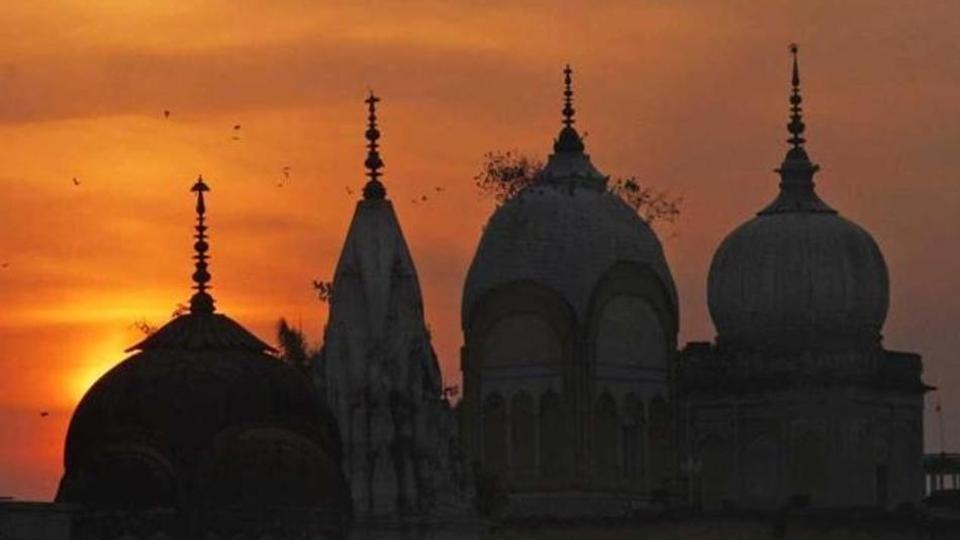
Resuming his arguments in the contentious BabriMasjid-Ramjanmabhoomi case on sixth day of the hearing, senior advocate CS Vaidyanathan relied on the Skanda Purana, an ancient Hindu text, to show that the earliest reference to Ram janmabhoomi is in the Puranas. The earliest known version of the Skanda Purana dates back to the sixth century CE. He added that the “reference to the documents is not to establish a historical fact but to show the faith and belief of people during the time.”
Making his arguments before a five judge bench of Chief Justice Ranjan Gogoi, and Justices SA Bobde, Ashok Bhushan, DY Chandrachud and S Abdul Nazeer, Vaidyanathan, the lawyer submitted that the material shows that “divinity of the place of birth is a belief and there was a temple at the disputed site”.
He added that a “mosque was built on the ruins of the temple and to say that it is not proved and that the land does not belong to anyone is wrong. If it is built on a ruins of a temple it can’t be a mosque, as this is contrary to Shariat law.”
Relying on travelogues, the lawyer cited works by, William Finch, Joseph Tiefenthaler, Montgomery Martin from the 17th, 18th, and 19th centuries respectively. The lawyer submitted that there are two versions on the demolition of temple in Ayodhya — that it was done by Babar or by Aurangazeb — but added that the fact remains that the temple was demolished and a mosque built over it.
He also relied heavily on the Faizabad’s Commissioner report of 1950, which clearly “records the fact that there were 14 pillars at the disputed site with illustrations of Hindu gods and symbols”. “And there cannot be a mosque which has pillar with images of Hindu gods,” he added.


