India’s move to impose retaliatory tariffs on the United States could worsen the trade-related problems between the two countries because the Trump administration is not in a mood to relent on international trade and may not shy away from a confrontation, according to trade analysts in Washington and New Delhi who asked not to be named.
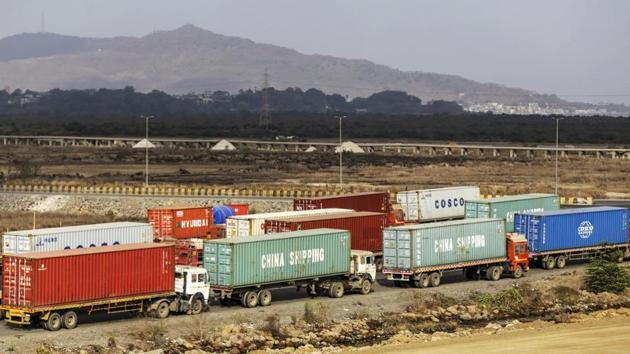
The trade deficit between India and the US stood at roughly $21.3 billion in India’s favour in 2018. Though some trade between the two countries has increased in recent months, the problem largely hovers around three issues that could have long-term implications, the analysts contended.
The first is the disagreement over medical devices. India, in 2017, put certain cost caps on certain procedural and remedial equipment largely to benefit poorer patients. The most important among the devices was the cap on stents, which affected large US multinationals such as Abbot and Boston Scientific. India’s medical devices market is estimated to be about $5 billion, and one fallout of the cap on priensure ces is the non-availability of drugeluting stents in India. Even as the two sides try to hammer out a deal, this is an issue that could also impact India’s booming medical tourism sector.
Second, on the investment front, India’s recent rules on e-commerce have inconvenienced Us-based firms Walmart and Amazon, which run India’s top two e-commerce marketplaces. Walmart, in 2018, completed a $16 billion acquisition of Flipkart. India’s new e-commerce rules say that online marketplaces must treat all vendors equally by providing the same terms. This effectively stops these companies from forcing sellers to feature products exclusively on their platforms, thereby limiting control over inventory. It’s an issues that has become another irritant between the countries.
{{/usCountry}}Second, on the investment front, India’s recent rules on e-commerce have inconvenienced Us-based firms Walmart and Amazon, which run India’s top two e-commerce marketplaces. Walmart, in 2018, completed a $16 billion acquisition of Flipkart. India’s new e-commerce rules say that online marketplaces must treat all vendors equally by providing the same terms. This effectively stops these companies from forcing sellers to feature products exclusively on their platforms, thereby limiting control over inventory. It’s an issues that has become another irritant between the countries.
{{/usCountry}}Third, data localization rules by the Reserve Bank of India (RBI) -- all system providers must that the entire data related to payment systems are stored in a system only in India to ensure better monitoring of service operators – have become a point of contention.
In April, the US criticised the norms, describing them as discriminatory and trade-distortive. “India has recently promulgated a number of data localisation requirements that would serve as significant barriers to digital trade between the US and India,” the US Trade Representative’s 2019 National Trade Estimate Report on Foreign Trade Barriers said. It added that the costs of data-intensive services for suppliers were being raised by forcing the construction of unnecessary, redundant data centres and preventing local firms from taking advantage of the best available global services.
In this backdrop, on June 1, US President Donald Trump issued the presidential proclamation and withdrew preferential duty benefits — Generalised System of Preferences (GSP) — to India.
The trade analysts cited above said that a retaliatory tariffs response by India may be good from a political standpoint, but could inflict long-term damage to trade between the two countries.