E-Paper



Rights of people in Xinjiang should be respected: India
MEA spokesperson Arindam Bagchi said India had taken note of the assessment made by the Office of the UN High Commissioner for Human Rights of “human rights concerns” in the Xinjiang Uyghur Autonomous Region.

 Prefer HTon Google


India on Friday formally commented on the situation in China’s Xinjiang region for the first time, saying the human rights of the people of the area “should be respected and guaranteed”.
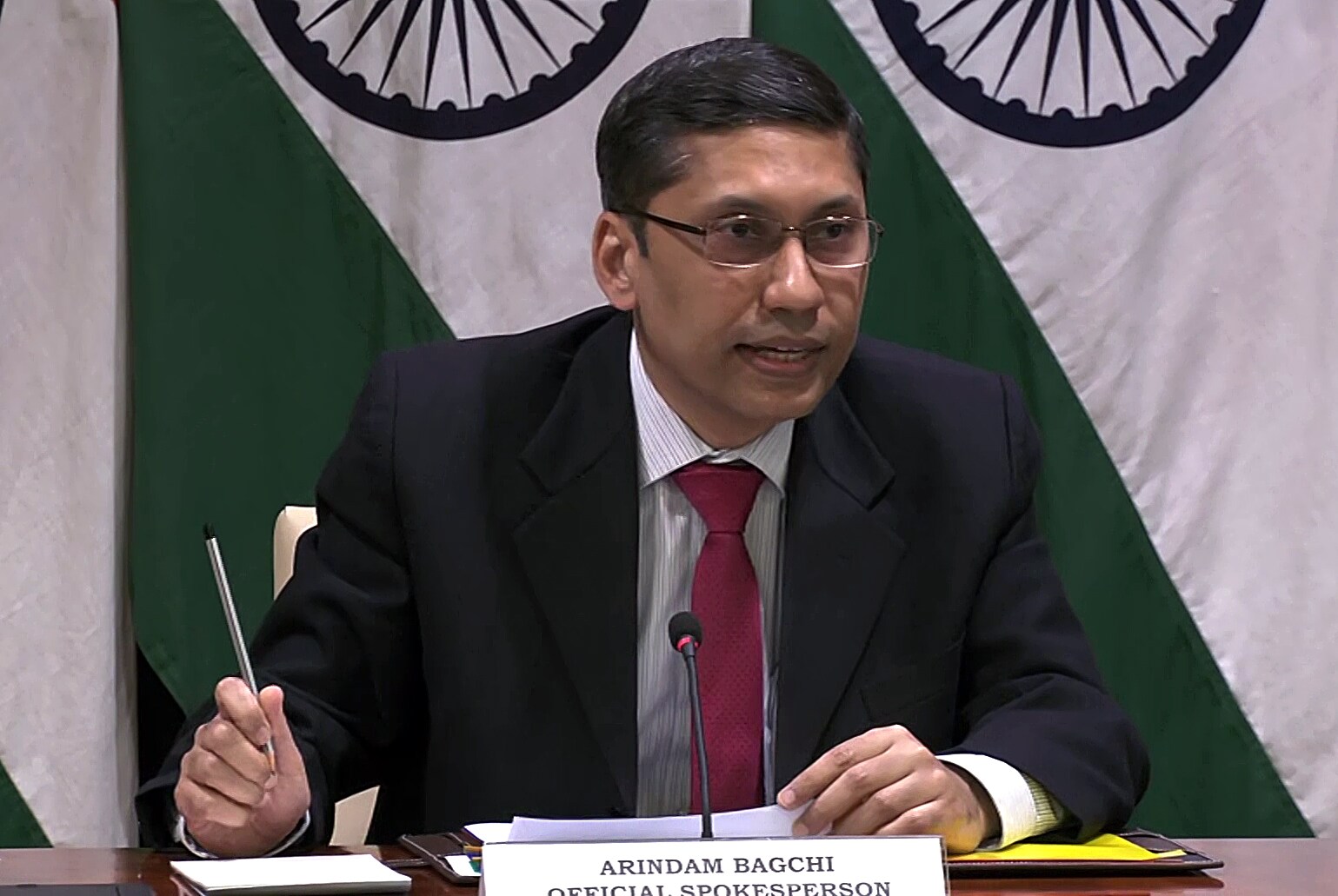
The remarks by external affairs ministry spokesperson Arindam Bagchi at a regular news briefing came a day after India abstained on a draft resolution at the United Nations Human Rights Council (UNHRC) seeking a debate on the human rights situation in Xinjiang region.
Bagchi said India had taken note of the assessment made by the Office of the UN High Commissioner for Human Rights (OHCHR) of “human rights concerns” in the Xinjiang Uyghur Autonomous Region.
“The human rights of the people of Xinjiang Uyghur Autonomous Region should be respected and guaranteed. We hope that the relevant party will address the situation objectively and properly,” he said.
The development comes at a time when India-China ties are at an all-time low because of the military standoff on the Line of Actual Control (LAC) that began in May 2020.
Bagchi, who was responding to a question on India’s abstention in the vote at the UNHRC on Thursday, said India “remains committed to upholding all human rights”.
Explaining the country’s decision to abstain on the resolution seeking a debate on the situation in Xinjiang, he said: “India’s vote is in line with its long-held position that country-specific resolutions are never helpful. India favours a dialogue to deal with such issues.”
The vote ultimately went in favour of China, with 19 members of UNHRC opposing the resolution, and 11 members, including India, Malaysia and Ukraine, abstaining. The resolution was supported by France, Germany, Japan and the Netherlands.
The resolution on Xinjiang was presented by a group comprising Canada, Denmark, Finland, Iceland, Norway, Sweden, the UK and the US, and was co-sponsored by other countries such as Turkey.
The resolution was a follow-up to a recent report by former UN High Commissioner for Human Rights Michelle Bachelet, which said China has committed “serious human rights violations” in Xinjiang in the name of countering terrorism and extremism. The report had called on Beijing to speedily release “all individuals arbitrarily deprived of their liberty”.
The report further said that “allegations of patterns of torture, or ill-treatment, including forced medical treatment and adverse conditions of detention, are credible, as are allegations of individual incidents of sexual and gender-based violence”.
Expert comment putting India’s statement in context would be good.