
 E-Paper



Roadmap for theatre commands to be unveiled at Lucknow military commanders conference
CDS Chauhan has the blueprint of the 3 theatre command ready and is waiting for the Narendra Modi government to give final approval.

 Prefer HTon Google


New Delhi: Defence minister Rajnath Singh and Chief of Defence Staff Gen Anil Chauhan will sensitize the three military chiefs and all the commander-in-chief's about the impending change in military structures with theatre commands expected to kick in as early as this year. While Gen Chauhan will address the first ever Joint Combined Commanders Conference today at Lucknow, Defence Minister Rajnath Singh and local MP will address the armed forces chiefs and top commanders tomorrow.
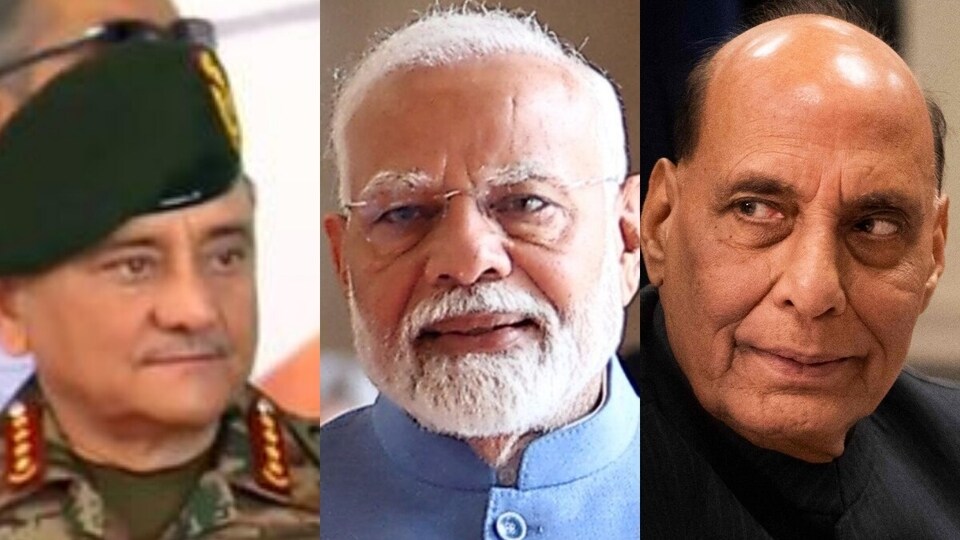
After detailed discussions with the three services from top commanders to the cutting edge level, CDS Chauhan has the blueprint of the three theatre command ready and is waiting for the Narendra Modi government to give final approval. The Northern Theatre Command will be based in Lucknow with operational role against principal adversary China; the western theatre command will be based in Jaipur with operational role against Islamic Republic of Pakistan and the maritime theatre command will be based in Thiruvananthapuram with operational role in the Indian Ocean and will include India’s littoral territories.
Even though the armed forces are nervous about the impending change, there is a strong need to synergize the three services at the operational level and inculcate jointness among the Army, Navy and the Air Force. This is because future battles will be fought in all three dimensions simultaneously with long range stand-off weapons taking a fair share of both resources and battle management strategy. The era of air land battles is over and it is high time that the Indian armed forces got rid of the colonial mindset that has creeped into their DNA and came up with new battle tactics suited to the Indian sub-continent. The over-reliance on battle doctrines of the P-5 powers needs to be shed by the commanders including the jargon.
While India’s principal adversary China has five functioning theatre commands and so does the US, Indian armed forces are still to get over from their imperial hangover as the military chiefs are just not willing to relinquish unbridled power. However, it is equally important that the theatre commands should be based on a military doctrine and mission and not just be created as reforms are in vogue.
The theatre commands will bring a much-needed revolution into the Indian armed forces as all the theatre commanders will have an operational role with staff roles including training and acquisition being handled by the Service Headquarters. The theatre commanders will be equal in rank to the military chiefs and will take direct orders from the political leadership rather than a bureaucrat.
Before CDS, military chiefs and top commanders reached Lucknow, the theatre commands had been discussed at both the Defence Minister and national security planners level and the final document would co-opt all the key changes suggested by them. Given the global instability with wars in Gaza, Ukraine, Chinese aggression in South-China Sea and political turmoil in the neighborhood, it is important that the Indian armed forces respond to any future crisis in unison.


