E-Paper



Row after 3-year-old sick girl made to 'fast unto death' by parents in MP
The issue came to the limelight after the Golden Book of World Records declared the child 'youngest person to vow the Jain ritual Santhara'.

 Prefer HTon Google


A three-year-old girl suffering from a terminal brain tumour died after her parents initiated her into Santhara, a centuries-old Jain ritual of fasting unto death, sparking outrage and renewed scrutiny over the practice - especially in the context of minors.
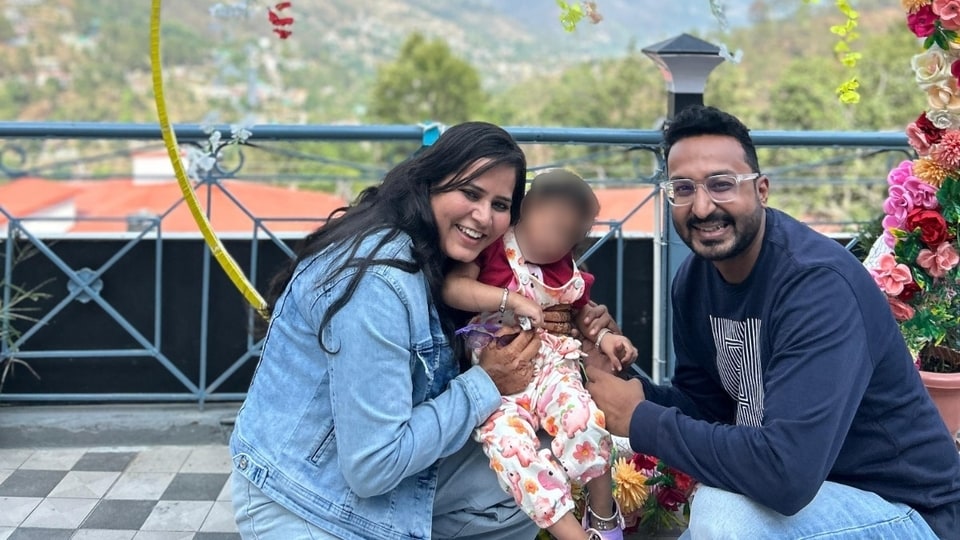
The incident occurred on March 21 in Indore but drew attention this week after the Golden Book of World Records issued a certificate declaring the child, Viyana Jain, the "youngest person in the world to vow the Jain ritual Santhara." Her parents, Piyush Jain (35) and Varsha Jain (32), both IT professionals, said they acted on the advice of a spiritual leader, Jain monk Rajesh Muni Maharaj.
Santhara, also known as Sallekhana or Samadhi Maran, is a religious vow of voluntary death by gradually renouncing food and water, seen in Jainism as a way to purify the soul. Though upheld by the Supreme Court in 2015 after a Rajasthan High Court ruling had declared it a form of suicide, the legality and ethics of involving minors remain in murky territory.

According to the parents, Viyana had been diagnosed with a brain tumour in December last year. After undergoing surgery in Mumbai in January, her condition briefly improved before deteriorating again in March. On March 21, after medical attempts to stabilize her failed, the family turned to spiritual intervention.
“Maharaj ji saw my daughter's condition and told us that the girl's end is near and she should be given the Santhara vow,” Piyush Jain said. “This fast holds a lot of significance in Jainism. After thinking about it, we finally agreed.”
Viyana’s mother said their daughter had been unable to eat or drink for several days prior. “We were watching her suffer. It was a very painful decision. I want my daughter to be happy in her next birth,” she said tearfully.
The ceremony began at 9. 25 pm on March 21 at the monk’s ashram in Indore. Viyana died at 10.05 pm, just 40 minutes after the initiation began.
While the parents described the ritual as a spiritual farewell, child rights advocates and medical professionals have raised serious concerns.
“This is a religious practice meant for fully conscious adults, typically the elderly,” said Omkar Singh, a member of the Madhya Pradesh Child Rights Commission. “The toddler could not have possibly consented. We are examining whether this constitutes a violation of child protection laws and will act accordingly.”
Medical experts have also criticized the decision. “She should have been in a hospital receiving palliative care,” said a senior doctor familiar with the case. “The child was already in critical condition. Santhara is an enormous physical and psychological ordeal even for an adult. A toddler cannot comprehend or withstand such an act.”
Retired high court judge Abhay Jain Gohil acknowledged the complexity of the case. “Every year hundreds of adults take the Santhara vow. It is legal. But this was a minor. If the girl was already dying, it may be hard to prosecute, but it still raises critical moral and legal questions.”
The Golden Book of World Records’ decision to honor the event with a certificate has also drawn backlash, with critics calling it “deeply irresponsible” and an endorsement of non-consensual ritual involving children.
As the debate intensifies, the Madhya Pradesh Child Rights Commission has said it will soon decide whether to recommend legal action against the parents or the spiritual leader involved.