
 E-Paper



RSS offshoot wants more funds for MNREGA, specific stimulus for vulnerable sections
The Swadeshi Jagran Manch has demanded a stimulus to sectors most affected by the Covid-19 induced lockdowns i.e., construction, fishing, horticulture, etc--- in terms of soft loans; package for employment linked incentives (ELI) to strengthen the MSME sector and Reserve Bank of India to announce need based moratoriums to suit every sector of the economy.


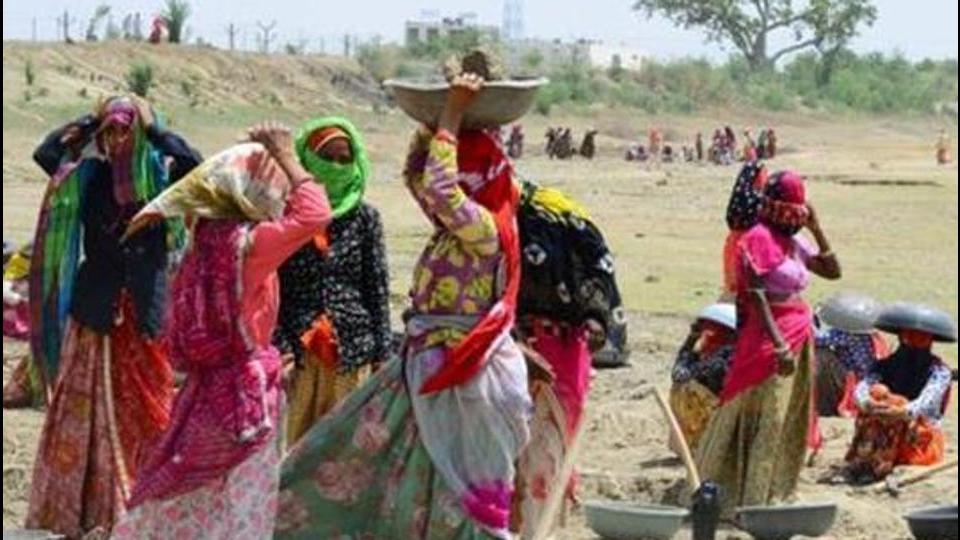
The Swadeshi Jagran Manch (SJM), an offshoot of the Rashtriya Swayamsevak Sangh (RSS) has urged the Union government to substantially increase the fund allocation for MNREGA to support rural employment and take measures other than providing free food grains to help vulnerable sections cope with the consequences of the second wave of the Covid-19 pandemic.
At its two day national council meeting that concluded on Sunday, the SJM passed a resolution seeking the extension of the Emergency Credit Line Guarantee Scheme for a few more months and its scope further expanded to other pandemic-hit sectors.
India has reported 28.2 million infections and 3.40 lakh fatalities so far. Referring to an ILO report that said in 2020, 8.8% of global working hours were lost relative to the fourth quarter of 2019, which is equivalent to 255 million full-time jobs lost, the SJM has pointed out that India has also struggled with job losses.
“Bharat (India), the world’s sixth-largest economy has also been hit hard by the pandemic last year as its GDP contracted by 7.9%. Country braced the first wave of the outbreak and made some impressive recovery but onset of more severe second wave in April 2021 has wiped out the previous economic gains and dented the economic recovery. Union Government has given more freedom to state governments to take appropriate decisions based on local situations...Nevertheless, 100 million jobs were lost during the nationwide April-May 2020 lockdown, and during the month of May 2021, 15.3 million jobs were lost which hits 18% jobless rate in urban areas of Bharat,” the SJM resolution said.
It has therefore, demanded a stimulus to sectors most affected by the Covid-19 induced lockdowns i.e., construction, fishing, horticulture, etc.--- in terms of soft loans; package for employment linked incentives (ELI) to strengthen the MSME sector and Reserve Bank of India to clearly announce need based moratoriums to suit every sector of the economy and direct the banks for liberal monetary support.
The SJM that pitches for indigenous production and has been at the forefront of demanding a ban on Chinese products has listed studies to indicate the economic impact of the second wave. It has also underlined how employment avenues have been hard hit.
“Corporate and business houses should fully support to manage the difficult situation by liberal contribution for Covid relief, payment of salaries to employees without retrenchment and timely payment of dues to MSMEs and private health care providers should realise that this is not the time for making profits and ensure treatment with minimum cost,” the resolution says.
A focus on rural economy and indigenous production has been a core demand of the RSS offshoots including the SJM. Over the years the RSS has nudged the Union government to adopt rural economy centric policies to create avenues for employment and to cut dependence on imports.
Reiterating their stand, the resolution said, “The pandemic has removed the illusion that urbanisation is a measure of development. It has been conclusively proved that with the aid of technology, substantial economic activity can be carried out from remote or rural areas also thereby providing opportunity for a more dispersed and decentralised growth model with substantial employment contribution.”


