
 E-Paper



S-400, Akash, electronic war: How India's air-defence systems protect skies from Pakistan ceasefire violations
In response to cross-border shelling and drone attacks from Pakistan, the Indian Army has been employing the air defence systems.

 Prefer HTon Google


Amid the heightened Indo-Pak hostilities, air defence systems have played a key role in protecting India’s airspace. These systems have been crucial in detecting, tracking and neutralising aerial threats like aircrafts, drones and missiles.
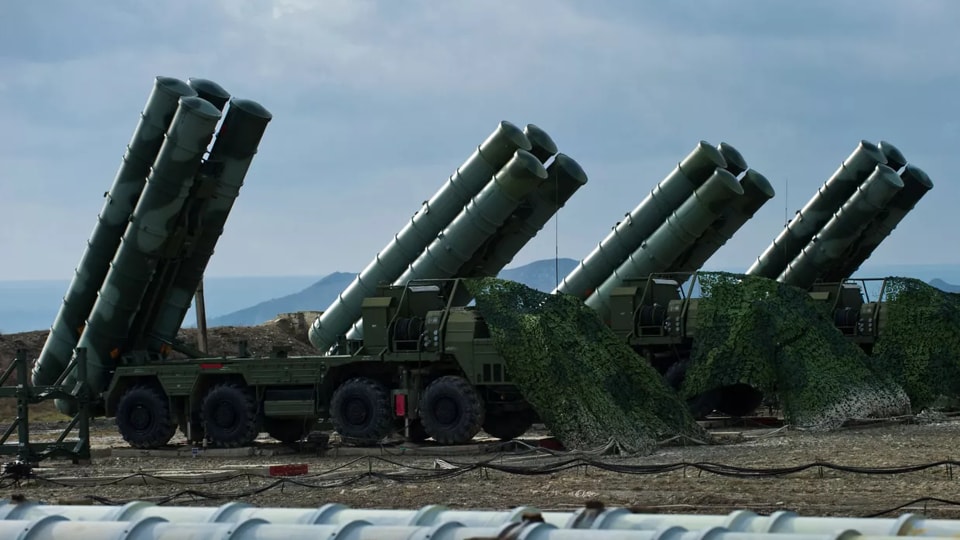
The air defence systems used to counter Pakistan’s response to Operation Sindoor have been designed to use a network of radars, control centers, artillery, and both aircraft and ground-based missiles. Meanwhile, detection, tacking and interception is managed through the command control and communication (C3).
Also Read: 'Vikram Misri a decent, honest man working tirelessly for nation': Owaisi
S-400, Akash, anti-aircraft guns, fighter jets and electronic warfare system
In response to cross-border shelling and drone attacks from Pakistan, the Indian Army has been employing the air defence systems and it has proved to be highly successful.
As soon as a threat is detected, the interception phase begins which sees fighter jets take on enemy aircraft while surface-to-air missiles (S-400 and Akash) take on incoming threats. Anti-aircraft guns are also used by the Indian Army, to target low-altitude threats. Meanwhile, enemy communication is also jammed through an electronic warfare system.
The S-400 is of Russian-origin, and can detect, destroy hostile strategic bombers, jets, spy planes, missiles and drones at a range of 380 kilometres. Meanwhile, the shoulder-fired Igla-S missiles have an interception range of 6km.
Akash surface-to-air missile system
The Akash surface-to-air missile system is Indian-made and has been designed to detect, destroy aerial targets with accuracy. During the ongoing escalation, the system intercepted multiple threats successfully, and was hailed by military experts.
The ceasefire between India and Pakistan was announced on Saturday, and it began from 5:00 PM IST. But hours later, Pakistan violated the agreement and triggered cross-border firing once again. Blackouts were observed in many border districts in India and normalcy has resumed post midnight.
The ongoing hostilities began with the Pahalgam terror attack last month, which took the life of 26 civilians. The attack’s responsibility was claimed by The Resistance Front (TRF), an offshoot of Lashkar-e-Taiba. In response, India launched Operation Sindoor and successfully struck terror camps in Pakistan.


