
 E-Paper



SC denies seniority quota for higher judicial service
The Supreme Court ruled that length of service cannot create quotas for judicial appointments, emphasizing merit over seniority in promotions to higher judiciary.

 Prefer HTon Google


A five-judge bench of the Supreme Court on Wednesday held that length of service cannot be a criteria to create a separate quota for officers in appointment to the higher judicial service, as it would amount to sacrificing merit.
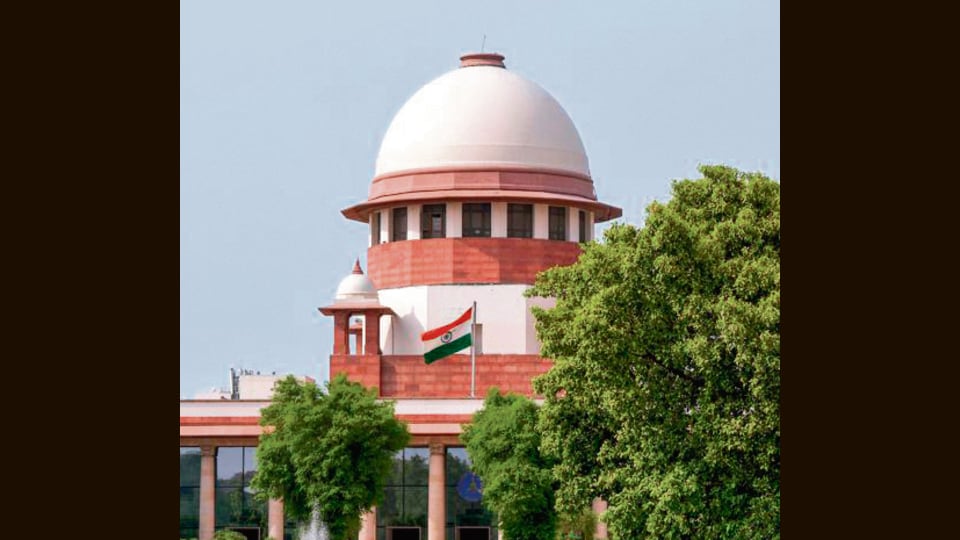
The bench, headed by Chief Justice of India (CJI) Bhushan R Gavai pronounced the decision while considering whether the judges serving in the lower rungs of judiciary should be given benefit of their experience as a judicial officer to get accelerated promotion to become District Judge, compared to their other counterparts from the bar, who enter the high judicial services (HJS) either by direct recruitment or by writing an examination called the limited departmental competitive examinations (LDCE).
“In our view, there is no basis to consider the previous experience as a civil judge as an intelligible differentia creating a reasonable classification to favour regular promotees (RP) or LDCEs in the selection for higher grade scales or appointment as Principal District Judges,” said the bench, also comprising justices Surya Kant, Vikram Nath, K VInod Chandran and Joymalya Bagchi.
The unanimous verdict held, “We have no reason to doubt that creating quotas for fixation in the Selection Grade and Super Time Scale within the cadre of District Judges based on the prior service in the lower rungs of the judiciary would be iniquitous and would result in sacrificing merit.”
The court had considered the issue in an ongoing litigation by the All India Judges Association (AIJA), pending since 1989 where a series of orders have been passed on recruitment of district judicial officers, in order to preserve judicial independence in matters of appointments and promote efficiency in service.
In these proceedings, senior advocate Siddharth Bhatnagar assisting the court as amicus curiae had last year moved an application pointing out that the direct recruit (DR) into the HJS are stealing a march over RPs as a result of which there is a lot of “heartburn” among them for remaining stagnant in service with hardly any career progression despite so many years in service.
The application, initially heard by a three-judge bench headed by CJI Gavai, was later referred to a Constitution Bench as it involved the question whether the court could create a quota for RPs despite the Constitution placing the power of supervision over district courts and their appointment with the respective high courts.
While several high courts, including that of Allahabad, Punjab & Haryana, argued that the Supreme Court should adopt a “hands off” approach and allow high courts to regulate these appointments, the five-judge bench clarified that laying down uniform guidelines is a power the top court can exercise under its extraordinary constitutional power under Article 142.
On comparing the data across the high courts, the bench said, “The statistical data is disparate and does not provide a substantial basis to find such discontentment and heartburn of RPs in the HJS, to be justified,” as it held that any decision passed on the amicus’ note will be counterproductive.
Further, the court found that as per the present appointment criteria, the appointment to HJS is based on 50:25:25 ratio with RPs getting the lion’s share, followed by 25% each for LDCEs and DRs.
The court noted that early this year, it had held that judicial officers having seven years practice both in judiciary and bar will be eligible to appear for the examination for HJS. This opened further avenues for them to have a shot at the top.
It held, “Perceived discontentment and heartburn without something more in the form of a legal claim, illegal denial, or at least a legitimate expectation cannot result in creating an artificial classification of members within a cadre.”
The court went on to lay guidelines on roster by directing that the seniority of officers within the HJS shall be determined through an annual 4-point roster, in the repeating sequence of 2 RPs, 1 LDCE, and 1 DR. At the same time, the bench said, “These guidelines do not foreclose the powers of the High Court; instead, they establish a homogenous framework within which each high court, as a Constitutional court, can exercise superintendence over the judicial services.”
Moreover, the court noted that in the AIJA case, about six judgments have been issued from time to time realising the importance of keeping the judiciary independent and transparent in a democracy.
“The series of AIJA decisions thus acknowledges and recognises the fact that in a democracy, the role of the judiciary is truly indispensable. For the efficient functioning of the rule of law and to ensure that our democracy prospers, it is de reiguer (demanded by custom) that we nurture an efficient, strong, and enlightened judiciary.
It left it open for high courts to provide preferential treatment to any group within the HJS on compelling reasons based on the particular facts and circumstances of each state, coupled along with available data and statistics.
In several HCs, RPs shared major positions in HJS and high courts while in other states, the DRs had a major say. The court found there is no “common malady of disproportionate representation of DRs in the HJS” which can be said to impact the career prospects to the promotees.
The court said that HJS is based on the merit-cum-seniority within the cadre and the length of service or performance cannot determine who is to succeed. “Individual career aspirations are a normal incidence of service, accentuated only by better performance; they are not connected to the objective of an independent and strengthened judiciary and cannot guide the shape of the rules of seniority,” the bench said.
The court directed states and union territories to undertake appropriate amendments in their respective statutory rules, in consultation with the High Court, within three months. It, however, clarified that the judgment does not intend to adjudicate or resolve any inter se seniority dispute among RPs, LDCEs and DRs and the same shall not be construed as an avenue to reopen or unsettle inter se seniorities.


