
 E-Paper



SC drops authorship in quota verdict for entry-level judicial officers
The Supreme Court's Constitution bench ruled on judicial officer quotas without assigning authorship, marking a rare departure from tradition since 2019.

 Prefer HTon Google


Breaking from convention, a Constitution bench of the Supreme Court on Wednesday chose not to ascribe authorship to its ruling relating to quota for entry-level judicial officers in appointments to the district judge cadre -- the first time the top court has chosen to do so since the 2019 Ayodhya verdict.
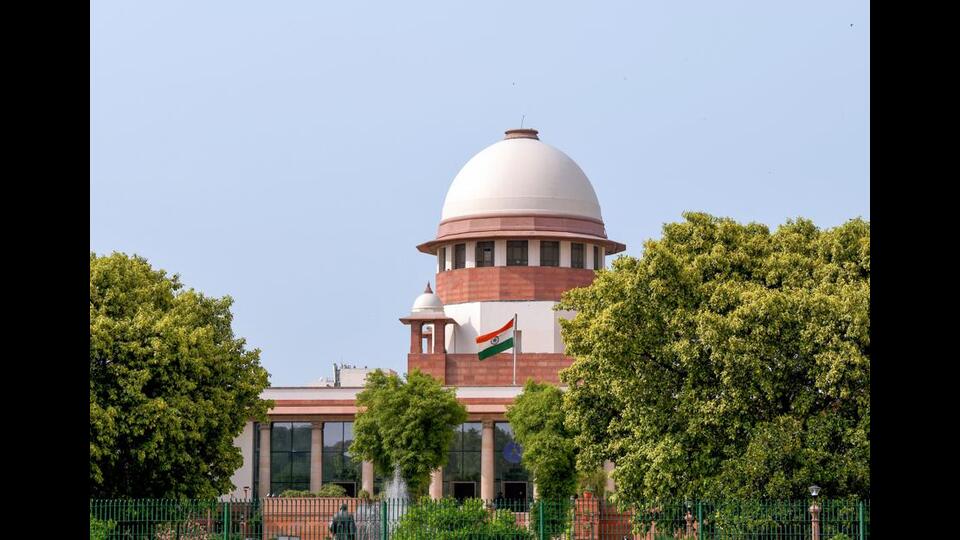
Although Chief Justice of India Bhushan R Gavai read out the operative portion of the verdict, he made it clear that no individual judge has been credited as the author. The idea, he said, was to emphasise that the five-judge bench had spoken as one, without attributing the reasoning to any single member. The bench also included justices Surya Kant, Vikram Nath, K Vinod Chandran and Joymalya Bagchi.
The CJI also expressed gratitude to his fellow judges on the bench who contributed to the judgment. “I am thankful to all my brother judges who have contributed to this judgment,” said CJI Gavai.
The CJI added that in deference to the wishes to the fellow judges, it was decided that no particular name would be mentioned as the author of the judgment.
This rare move departs from the judiciary’s convention of assigning authorship to one or more judges delivering a verdict. The last time the Supreme Court issued a judgment without identifying an author was the 2019 Ayodhya ruling, delivered by a bench comprising then CJI Ranjan Gogoi and justices Sharad A Bobde, Dhananjaya Y Chandrachud, Ashok Bhushan and S Abdul Nazeer.
Justice Chandrachud later explained that the Ayodhya bench made a unanimous decision to treat it as a “judgment of the court” given the dispute’s emotionally charged history. “All of us stood together not only in the ultimate outcome but in the reasons indicated in the judgment,” he told news agency PTI after assuming office as CJI.
The 2019 verdict, running into 1,045 pages, finally settled a dispute that had lingered for over a century. While paving the way for a Ram temple at the contested site, the court also directed the allocation of a separate five-acre plot within Ayodhya for the construction of a mosque. .



