The Supreme Court on Monday sought the responses of the Centre and the Manipur government to a petition challenging the constitutional validity of the inner line permit (ILP) system which controls the entry to Manipur of people who are not residents, and prohibits them from conducting business without a special permit.
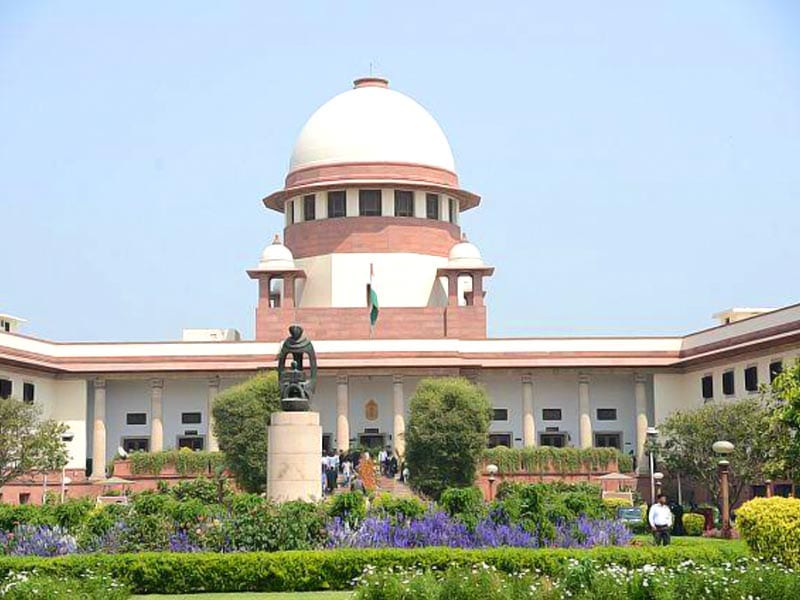
A bench of justices S Abdul Nazeer and Krishna Murari issued notices on a petition filed by a Kolkata-based sociocultural organisation Amra Bangalee.
The petition challenged the decision of the Centre in 2019 to extend the ILP system in Manipur by way of an order promulgated by the President. It also challenged permit guidelines issued by the state government restricting the entry of outsiders, and imposing curbs on them with respect to business activity and land purchase.
Terming the law and accompanying regulations to be violative of the constitutionally guaranteed freedoms of equality (Article 14), life and liberty (Article 21), non-discrimination (Article 15) and movement and trade (Article 19), the petition filed through advocate Fuzail Ahmad Ayyubi said: “The effect of ILP system in Manipur is that no person who is not a resident of the state is permitted to enter the state or engage in business without applying for a special permit known as ILP.”
The inner line is an arbitrarily decided territory, the petition contended, adding: “These legislations create an embargo on the right of free movement of citizens and their right to freely carry out trade and occupation within the territory of India, guaranteed under Article 19.”
{{/usCountry}}The inner line is an arbitrarily decided territory, the petition contended, adding: “These legislations create an embargo on the right of free movement of citizens and their right to freely carry out trade and occupation within the territory of India, guaranteed under Article 19.”
{{/usCountry}}Describing the law as part of the colonial legacy introduced under the Bengal Eastern Frontier Regulation (BEFR) of 1873, advocate Ayyubi said that this regulation was enacted during British rule to create a monopoly by prohibiting Indians from engaging in trade with the local tribal population. “The said restriction is continued post-Independence as well under the guise of protecting interests of tribal areas.”
BEFR was retained by way of a 1950 order, and made applicable to most of North-East region. In 2019, an amendment was made to the Adaptation of Laws Order 1950 to extend it to Manipur besides Arunachal Pradesh, Mizoram and areas of districts of Nagaland as notified from time to time. The 1950 order applied to certain districts in the above states.
Although, the 2019 amendment did not contain any Statement of Objects and Reasons, at the time of moving the amendment, the government said that it was meant to protect the indigenous population in these states.
Expert quote