
 E-Paper



SC offers relief to Badals in alleged forgery case of dual party constitution
The Badals, along with senior SAD leader Daljit Singh Cheema, had approached the top court against an order passed by the Punjab high court on August 27 last year refusing to set aside the criminal complaint


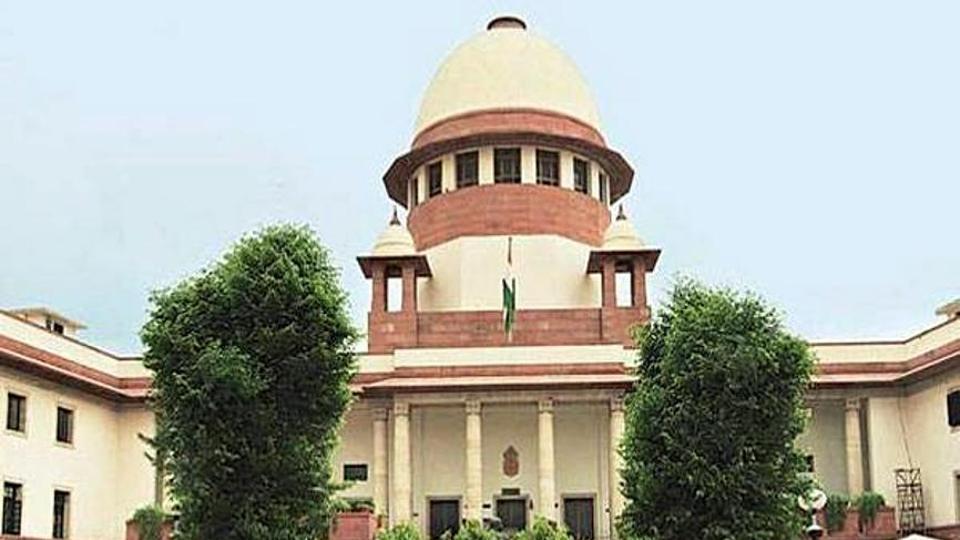
The Supreme Court on Tuesday stayed proceedings in an alleged case of forgery and cheating against former Punjab chief ministers and Shiromani Akali Dal (SAD) leaders Parkash Singh Badal and Sukhbir Singh Badal that’s pending before a Hoshiarpur court in Punjab.
The Badals, along with senior SAD leader Daljit Singh Cheema, had approached the top court against an order passed by the Punjab high court on August 27 last year refusing to set aside the criminal complaint and stay the summoning order issued to them by the additional chief judicial magistrate of Hoshiarpur on November 4, 2019.
Staying the proceedings in the 2019 complaint, the SC bench of justices S Abdul Nazeer and V Ramasubramanian issued notice on the three separate pleas seeking response from the complainant in the case – Hoshiarpur resident Balwant Singh Khera.
The complaint alleged that SAD gave a false undertaking before the Election Commission of India stating allegiance to the principles of secularism when it was essentially a religious outfit. Khera alleged in his complaint submitted to the trial court that a “forged and fabricated constitution” was filed before the Election Commission of India with a view to “defraud the citizens of India”.
He further stated that the party had two sets of constitutions – one that was filed with the Gurdwara Election Commission and another with the Election Commission of India.
Also Read: ‘Forgery’ case: Sukhbir Badal exempted from personal appearance in court
Interestingly, 94-year-old Parkash Singh Badal was not named in the complaint filed by Khera. However, he was sought to be added as an accused by the complainant subsequently in 2017. But the trial court rejected this application to add more accused. Yet, the ACJM, Hoshiarpur issued summoning orders against the veteran leader along with Sukhbir Badal and Daljit Singh Cheema.
On his part, Sukhbir Badal claimed that in 1989 when the party filed registration documents with the EC, he was neither a signatory nor named in the documents.
The complaint filed before the Hoshiarpur court sought prosecution of the accused under offences of forgery (Sections 463, 465, 466, 467, 471), forgery for purpose of cheating (Section 468) and fabricating false evidence (Sections 191, 192) of the Indian Penal Code.
Appearing for the Badals, senior advocates RS Cheema and KV Vishwanathan told the apex court that merely because a political outfit is contesting elections to a Gurudwara Committee does not mean it is not secular.
They pointed out that the allegations of forgery and cheating were not made out as the constitution of the party, as submitted to the Election Commission while applying for registration in August 1989. It was subsequently amended in June 2004 by incorporating the provisions of Section 29-A of the Representation of Peoples Act, 1951 which requires all political parties to “bear true faith and allegiance to the principles of secularism”.
In their petition filed through law firm Karanjawala & Co, the Badals said, “The high court, in passing the impugned order, overlooked the abuse of process of court by the complainant in filing of the complaint in malafide manner by concealment of material fact that the complainant (Khera) was consistently trying to seek de-recognition of SAD in civil proceedings between 2004-08 before the EC, Delhi high court and Supreme Court. Having failed in that attempt, he resorted to filing of the complaint at a belated stage.”
Further, it was submitted on behalf of Badals that Section 29-A does not require a political party to amend its constitution. However, the party voluntarily amended its constitution in 2004.
Khera was represented in court by advocate Indira Unninayar who submitted that the high court rightly dismissed the petition filed by the three SAD leaders. She opposed grant of any stay of proceedings. However, the court agreed to hear her arguments on the next date of hearing.


