
 E-Paper



SC refers plea on including political parties under PoSH Act to Election Commission
The bench observed that the ECI, being responsible for the registration and regulation of political parties, is the natural forum for such grievances

 Prefer HTon Google


The Supreme Court on Monday asked a petitioner seeking the inclusion of political parties under the Sexual Harassment of Women at Workplace (Prevention, Prohibition, and Redressal) Act, 2013 (PoSH Act) to approach the Election Commission of India (ECI) first, emphasising that it is the appropriate authority to address the matter.
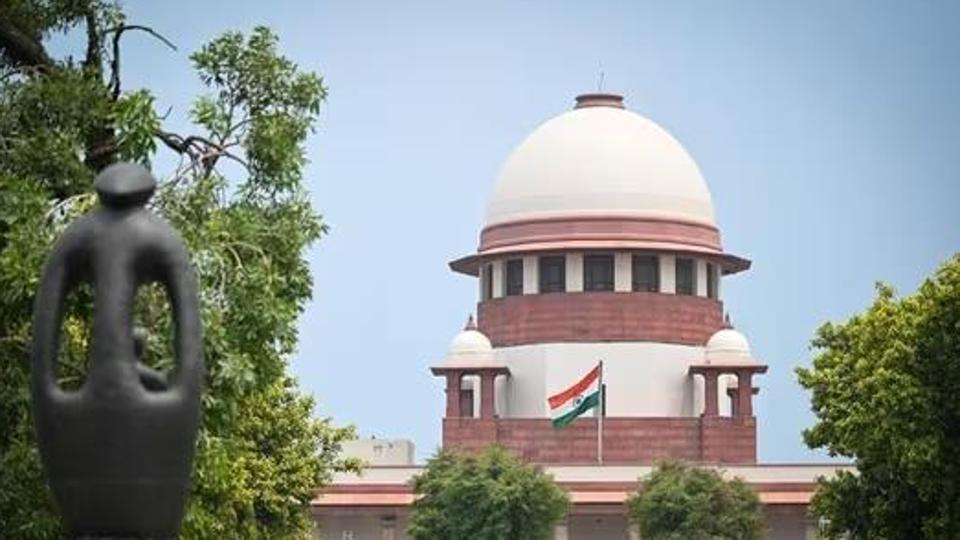
A bench comprising justices Surya Kant and Manmohan observed that the ECI, being responsible for the registration and regulation of political parties, is the natural forum for such grievances. The court recorded the statement of senior counsel Shobha Gupta, who appeared for petitioner Yogamaya MG, that her client would move the ECI and, if necessary, approach a suitable legal forum should her concerns remain unresolved.
The petition, filed as a public interest litigation (PIL), argued for the application of the PoSH Act to political parties, citing their lack of compliance with the law’s provisions, particularly the constitution of Internal Complaints Committees (ICCs) to handle sexual harassment complaints. The plea named prominent political parties, including the Congress, Bharatiya Janata Party (BJP), Trinamool Congress (TMC), Aam Aadmi Party (AAP) and Communist Party of India (Marxist) (CPI-M), among others, as respondents.
Gupta informed the bench that the plea was rooted in the absence of a standardised grievance mechanism across political organisations. She argued that this gap left women vulnerable in political spaces.
Also Read: SC will take up Places of Worship pleas on December 12
“The lack of transparency, inadequate structures, and inconsistent implementation of ICCs perpetuate a culture that fails to prioritize women’s safety and empowerment,” stated the petition.
During the hearing, the bench also referred to a Kerala high court ruling that previously declined to apply the PoSH Act to political parties, reasoning that there was no employer-employee relationship within such entities. However, the petitioner sought a broader interpretation of the terms “workplace” and “employer” under the Act to include political parties, given their expansive and influential role in Indian society.
The PIL detailed specific lapses across parties.
The CPI(M) was noted to have ICCs with external members in place, while the BJP and Congress admitted to inadequacies, with complaints often routed to disciplinary committees or state-level offices rather than dedicated ICCs. The AAP was flagged for its lack of transparency about existing mechanisms, and the All-India Professional Congress, a Congress-affiliated body, was identified as having an ICC, but its jurisdiction did not extend to the broader party framework.
The petition argued that such inconsistencies undermine the intent of the PoSH Act and contribute to a culture of impunity in addressing sexual harassment. It stated that the absence of a robust and transparent redressal mechanism within political parties “leads to inadequate reporting and addressing of sexual harassment cases, perpetuates varied levels of protection for victims, and tolerates or ignores such incidents.”
With millions of members and significant influence in shaping public life, political parties, the petitioner contended, must be brought under the ambit of the law to ensure women’s safety in political spaces.



