The Supreme Court on Friday refused to interfere with an administrative order of the Allahabad high court chief justice withdrawing a bunch of cases related to the Kashi Vishwanath-Gyanvapi dispute from a particular bench over concerns of “judicial propriety and discipline”.
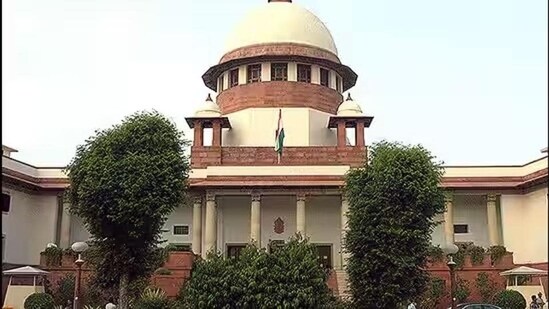
“There are reasons given by the high court chief justice...Some of the reasons in his order brought a sense of disquiet in our minds. We will not interfere with this order,” a bench, led by Chief Justice of India Dhananjaya Y Chandrachud, told senior counsel Huzefa Ahmadi, who appeared for the managing committee of the Gyanvapi mosque.
Ahmadi complained that the order of the HC chief justice was “unfair” as it cast aspersion on a judge who was adjudicating the batch of suits. The senior counsel said that the proceedings before the particular judge were continuing for more than two years with the consent of both sides and that the case was suddenly shifted to another judge after the Hindu side complained.
But the bench, also comprising justices JB Pardiwala and Manoj Misra, pointed out that there were several reasons flagged by the HC chief justice in withdrawing the matter from the particular judge and that the HC chief justices must have freedom to pass such administrative orders.
{{/usCountry}}But the bench, also comprising justices JB Pardiwala and Manoj Misra, pointed out that there were several reasons flagged by the HC chief justice in withdrawing the matter from the particular judge and that the HC chief justices must have freedom to pass such administrative orders.
{{/usCountry}}“You tell us why did the judge keep the case records in his chamber? It is always sent to the registry. It’s not kept in the chamber of a judge after adjourning the case...There are 75 dates and no decision on a small issue like this,” added the bench, citing the HC chief justice’s order that the records of these cases were never sent to the parent section in the registry for the procedures to be followed for listing of the cases in terms of the applicable orders, both on the administrative side and the judicial side.
The CJI added that the 2013 circular regarding change in the roster of the judges and appropriate nomination from the HC chief justice was put in place when he was the chief justice of the high court. “Otherwise, what used to happen was that a judge continues to be in cession of a matter even after his or her roster changes,” said the bench, declining to interfere.
Read Here: Varanasi court grants ASI time till Nov 17 to submit Gyanvapi survey report
The August order of the HC chief justice had underlined that though the single judge ceased to have jurisdiction in the matter as per roster, he continued to get the case listed before him without the parties or the registry obtaining appropriate directions from the chief justice.
The Gyanvapi mosque dispute had first reached a Varanasi court in 1991, when the Kashi Vishwanath Mandir Trust, along with some priests, sought the removal of the mosque from the site and the transfer of possession of the land to the Hindu community. The suit claimed that it was built atop the original Kashi Vishwanath temple. The legal suit coincided with the peak of the Ram Janmabhoomi-Babri Masjid issue in Ayodhya.
In 1998, the mosque management committee filed an application seeking dismissal of dismissal of the suit, citing provisions of the 1991 Places of Worship Act. The Act locks the position or “religious identity” of any place of worship as it existed on August 15, 1947, with the exception of Ram Janmabhoomi-Babri Masjid. While a Varanasi civil court dismissed the plea in 1998, the Allahabad high court stayed the proceedings before the civil court the same year after the mosque management committee moved in appeal. The matter lay dormant—until the resolution of the Ayodhya title dispute in 2019 when the Supreme Court ruled in favour of the Hindu side.
In 2021, a fresh suit was filed by some Hindu women, pressing for their right to worship deities inside the Gyanvapi mosque complex. At least seven more suits followed, with some of them demanding title rights over the land where the mosque stands.
While the 1991 suit remains pending at the stage of admissibility, the 2021 suits have led to a spate of effective orders, including a scientific survey by the Archaeological Survey of India (ASI) to ascertain whether the mosque was built atop a temple. The suit filed in 2021 has also been held to be maintainable both by the Varanasi district court and the high court even as the mosque management committee’s appeal against these orders are pending before the Supreme Court.
Through its petition, the mosque management committee endeavours to bar all claims over the access to the mosque or title of the Gyanvapi complex, relying on the 1991 law. The 1991 Act has, however, not prevented a spree of litigations in recent months, which include several suits regarding the Gyanvapi mosque in Varanasi and Sri Krishna Janmabhoomi-Shahi Idgah dispute in Mathura. While the Varanasi district judge is holding a joint trial of eight suits claiming the existence of Hindu idols inside the Gyanvapi mosque, there are 10 suits pending before a Mathura trial judge relating to Sri Krishna Janmabhoomi-Shahi Idgah dispute. Meanwhile, a batch of petitions – some seeking to scrap the 1991 Act and some others asking for tight enforcement of the same law, have remained pending before the top court since March 2021.