The Supreme Court on Thursday directed that no coercive action be taken against a woman journalist accused of making casteist remarks against Delhi Police assistant commissioner of police (ACP) Vivek Bhagat, after she alleged that the case against her was a counterblast to her complaint accusing the officer of sexual harassment during a protest in the Capital.
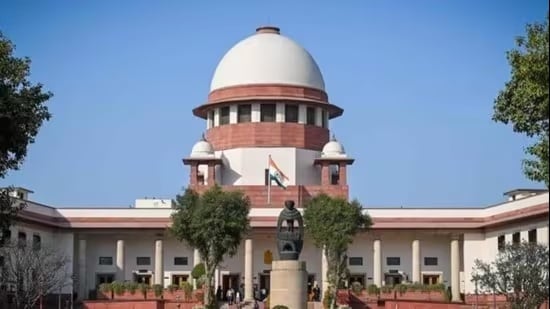
The order came on a day the Delhi High Court declined to hear urgently the journalist’s plea challenging the FIR against her for allegedly making casteist remarks, publicly humiliating Bhagat and obstructing him from discharging his official duties.
A bench of Chief Justice of India (CJI) Surya Kant and Justice Joymalya Bagchi was hearing a petition filed by the Network of Women in Media, India (NWMI), which flagged allegations of violence and sexual harassment faced by women journalists covering protests in Delhi on October 10 and earlier.
The petitioner, represented by senior advocate Indira Jaising, was allowed to submit in a sealed cover the identities of all women journalists who were victims and wished to submit complaints in writing. Jaising said that since the allegation was against police personnel, an independent commission be constituted, comprising predominantly former women judges, Indian Police Service (IPS) officers, eminent citizens and social activists.
The court said, “Meanwhile, no coercive action be taken against the journalist,” and further allowed Jaising to submit in a sealed cover her suggestions on persons who could be part of the committee. “There are allegations against certain police officers. We are considering whether there must be an independent committee to probe them,” the court remarked.
{{/usCountry}}The court said, “Meanwhile, no coercive action be taken against the journalist,” and further allowed Jaising to submit in a sealed cover her suggestions on persons who could be part of the committee. “There are allegations against certain police officers. We are considering whether there must be an independent committee to probe them,” the court remarked.
{{/usCountry}}Also read: Delhi ACP Vivek Bhagat, accused of sexual harassment by journalist, claims she made casteist remarks
Debate over protections for journalists covering protests
The court also raised questions about the scope of protections that should be extended to journalists covering protests, noting that the issue involved both the right to free speech and the right to practise a profession.
“Journalists will require an extra category of protection. There are two rights involved – right to free speech and right to practice profession. But we must also keep in mind whether anybody with a mike and mobile can claim to be a journalist.” It said that there are accredited journalists, persons employed as journalists with news organisations, freelance journalists, and influencers, adding that the question of whether Article 19(1)(a) of the Constitution empowers every citizen to claim to be a journalist required detailed examination.
Solicitor general Tushar Mehta, appearing for the police, told the court to await its response before taking any decision on constituting an independent commission. On the journalist’s allegation against the officer, Mehta said, “Difficulty is that in the present era of mobile technology, everybody is a journalist. I am not on this lady but there is a version that the video she has produced (alleging harassment) could be AI generated.”
Also read: Woman journalist who accused Delhi ACP of sexual harassment booked under SC/ST Act
Jaising said that a standard operating procedure must be in place, as women journalists faced no obstacles while covering events from war zones, but faced violence and harassment while covering protests at Jantar Mantar. “There is no national protocol on how to deal with such cases. We do not want any coercive action to be taken against any woman journalist alleging harassment” she said.
Mehta opposed a blanket order, arguing that it would be too broad and that the concerns of women police personnel who might themselves face allegations of harassment also needed consideration. “Passing an order of no FIR against lady journalists will be too wide a relief,” he said.
Senior advocate Gaurav Bhatia, appearing in one of the petitions, submitted that on October 12, when Leader of Opposition Rahul Gandhi, along with other Opposition leaders, stormed into the precincts of the Supreme Court with a huge gathering of lawyers, a woman journalist who was three months pregnant was allegedly pushed by Gandhi. She suffered injuries and had to be hospitalised. Mehta also said that it was strange that Jaising was not raising the concern of this woman journalist.
Jaising accused Bhatia of attempting to “bring politics” into the proceedings. “We cannot take suo motu cognisance on an oral submission. If there is a petition, we will examine,” the bench said.
Also read: 'Har galli Jantar Mantar': Farmers, women, youth form joint platform against SIR
Delhi High Court hearing and the FIR
Earlier in the day, the Delhi High Court bench of acting chief justice Nitin Sambre and justice Sanjay Sharma, which took up the matter of the journalist alleging harassment by ACP Bhagat, turned down her lawyer’s request for an urgent hearing on Thursday. However, the bench agreed to hear the matter on Friday.
The FIR, seen by HT and registered on Tuesday, booked the journalist and two others under sections 221 (obstructing a public servant), 356(2) (defamation) and 3(5) (joint liability) of the Bharatiya Nyaya Sanhita, along with provisions of the Scheduled Castes and Scheduled Tribes (Prevention of Atrocities) Act.
The petition stated that the FIR was a “pure misuse of power” by the police authorities and a counterblast to the October 3 complaint at Parliament Street police station.
Also read: Jantar Mantar played host to varying degrees of discontent
“Said allegations are baseless, devoid of merit and actuated by mala fides, being a clear counterblast to the complaint of sexual assault lodged by the Petitioner against the Respondent No. 2, so as to dissuade, extort, humiliate and intimidate the petitioner,” the petition said.
It also questioned the timing of the police action, pointing to an alleged 10-day delay in reporting the incident underlying the FIR, compared with the registration of the case within half an hour of the information being supplied. The petition said no FIR had been registered on her sexual harassment complaint.
The controversy dates to October 3, when the woman journalist said she was recording the detention of a Left activist at the protest when Bhagat allegedly touched her inappropriately and pushed her. Bhagat has denied the allegations. The police forwarded her complaint to the crime branch for an “impartial inquiry”.