
 E-Paper



SC seeks views of Centre, states on prison reforms report in three weeks
Supreme Court will examine recommendations on prison reforms, including overcrowding, medical facilities, and vocational training.

 Prefer HTon Google


New Delhi: The Supreme Court on Tuesday agreed to examine recommendations on prison reforms made by a committee headed by a former top court judge formed in 2018 to examine problem ailing jails across the country and to address gaps in medical and other facilities for prisoners and recommend solutions.
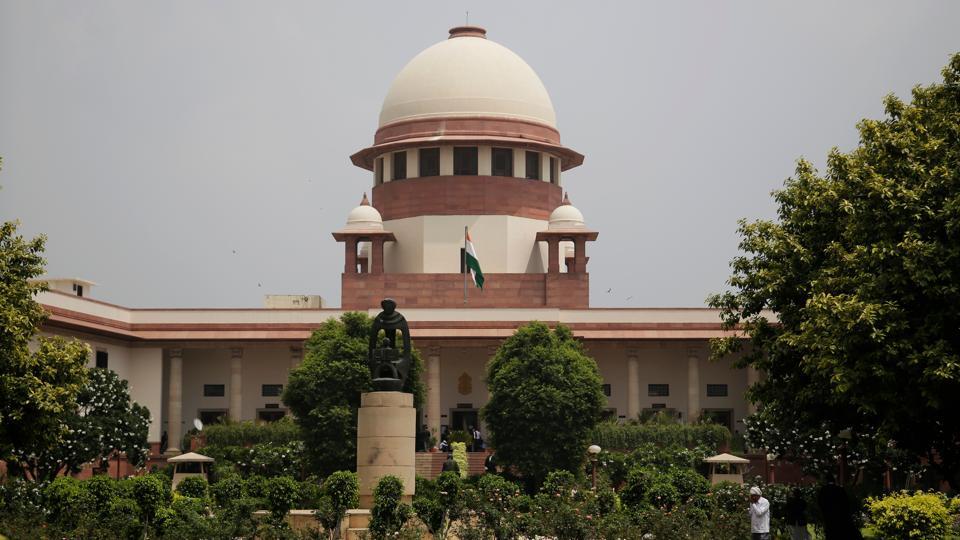
The committee constituted by the Supreme Court in a suo motu petition in 2018 submitted a confidential report to the Supreme Court in December 2022 on the issue of overcrowding of jails, condition of women and children in jails, transgender prisoners, death row convicts, and juvenile correctional institutions.
A bench of justices Hima Kohli and Rajesh Bindal on Tuesday directed the report to be made public and asked advocate Gaurav Agarwal, appearing as amicus curiae assisting the Court in the matter, to supply the contents of the report to Centre and all states and union territories.
Also Read | Day after Centre’s affidavit in Supreme Court, Nitish Kumar’s biting comeback
Posting the matter on September 26 to consider the recommendations by the committee, the bench said that it will first consider the issues pertaining to women and children, transgender prisoners and death row convicts and later address the other issues.
In addition, the court felt the need to include three other issues in the ambit of reforms and asked Centre and respective states to inform about the availability of medical facilities for inmates in jail, particularly with regard to tele-medicine and doctor consultation through video conferencing to do away with the hassle of taking prisoners to panel hospitals.
Also Read | Don’t deny remission solely on trial judge’s opinion: Supreme Court
The other issue flagged by the bench related to vocational training for prisoners to enable their re-integration into society and lastly, the availability of information technology infrastructure within jails to enable prisoners to have video calls with family members. A period of three weeks was granted for the Centre and states to respond on these issues.
Initially, the court wished to ask the court-appointed Committee to collate information on these three aspects but Agarwal infromed the court that the committee’s tenure came to an end in December. It was headed by former Supreme Court judge, justice (retd) Amitava Roy along with two other members.
The Justice Roy-led committee also addressed pressing concerns within jail of violence between inmates, unnatural deaths of prisoners, concept of semi-open and open jails, and vacancies in prison staff and correctional administration.
The report dealt with less-explored themes of psychosocial aspects of women prisoners, separate in infrastructure, including toilets for transgender prisoners, need for medical facilities for sick and old prisoners, and treatment for death row convicts.
The bench said that a related issue not dealt with by the committee focused on replanning and relocation of jails.
The bench said, “Old jails in cities are mostly single-storeyed. These can be converted into multi-storeyed as jails will not be having additional space to expand.” The bench also added that jails can be situated out of the city. In Delhi, for instance, the court said that the jails were earlier meant to be in the outskirts but were now in the middle of the cities. “This will mean states have to locate lands to relocate jails,” the bench added.
It was in September 2018, the top court formed the committee and gave it an onerous task of studying jails in each state and UT and frame suggestions based on 17 terms of reference. The Court also told Agarwal to study the best practices in several jails and frame suggestions under the ambit of the suggestions made by the committee.


