
 E-Paper



School students’ enrolment dips by 3.7mn in 1 year: Edu ministry
The analysis of UDISE plus reports between 2022-23 and 2023-24, shows enrolment declined marginally across gender groups, social categories, & education levels

 Prefer HTon Google


Though India witnessed an increase of over 5,000 schools from 1.466 million in 2022-23 to 1.471 million in 2023-24, the enrolment of school students has declined by over 3.7 million (1.47%) from 251.7 million to 248 million in the same period, according to the UDISE-plus data released by the education ministry.
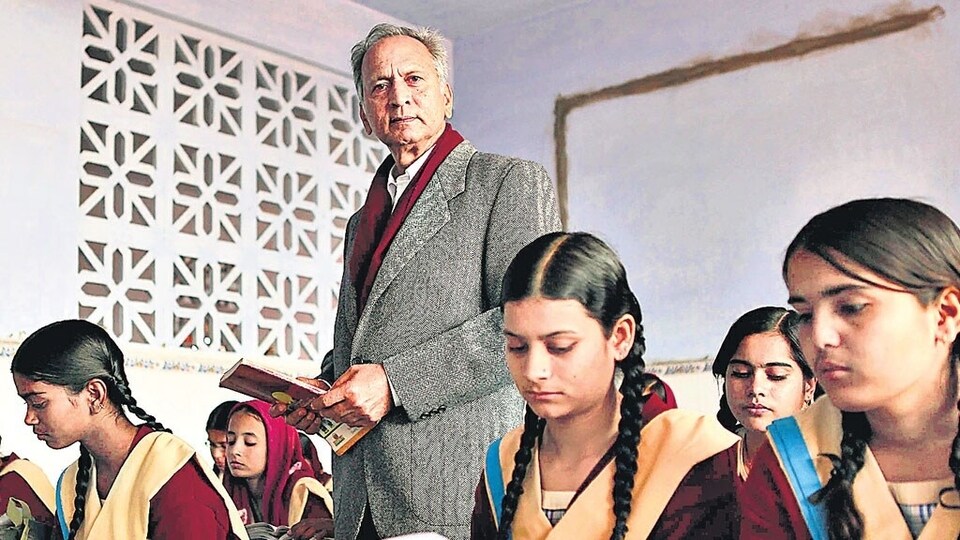
The analysis of UDISE plus reports between 2022-23 and 2023-24, shows that the enrolment declined marginally across gender groups, social categories, and education levels. For instance, enrolment of girl students has dropped by 1.6 million and boy students by about 2.1 million from 2022-23 to 2023-24. The enrolment of other backwards category (OBC) students declined sharply by more than 2.5 million, Scheduled Caste (SC) category students by 1.2 million and Scheduled Tribes (ST) category students by 200,000 between 2022-23 and 2023-24. While the enrolment of Muslim students dropped by over 100,000, the enrolment of students from all minority communities saw a decline of 300,000 in the same period.
However, the drop-out rate — it captures how many children leave school midway — improved across all categories, according to the report.
“The difficulties in documentation process for admission coupled with difficulties in getting pre-matric and post-matric scholarship by OBC, SC and ST students prevent some students from these marginalised groups to access education. To prevent students from leaving schools, the school administrations should help students in getting required documents for admission and government should make it easier for students to avail themselves of scholarships,” said Beena Pallical of National Campaign on Dalit Human Rights, a collaboration of Dalit human rights activists and academicians.
The Unified District Information System for Education (UDISE) plus is a data aggregation platform managed by the Department of School Education and Literacy (DoSEL), ministry of education, designed to compile school education data from across the nation. It is one of the largest management information systems covering more than 1.472 million schools, 9.8 million teachers and 248 million children.
Since 2022-23, the UDISE plus report follows a 5+3+3+4 schooling structure, as defined in the National Education Policy (NEP) 2020, according to which children spend five years in the foundational stage, three years in the preparatory stage, three years in the middle stage, and four years in the secondary stage. “With effect from UDISE+ 2022-23, data fields are completely aligned with the recommendations of NEP 2020,” the education ministry stated in its UDISE plus 2023-24 report.
The sharpest decline in student enrolment at the educational level was observed at the secondary stage (Classes 9 to 12), with a reduction of 1.7 million students in 2023-24 compared to the previous year. During the same period, the foundational stage (pre-primary to Class 2) saw a drop of approximately 900,000 students, while the preparatory stage (Classes 2 to 5) recorded a decrease of 700,000 students, and the middle stage (Classes 6 to 8) experienced a decline of over 300,000 students.
Education ministry officials did not respond to HT’s queries seeking comment.
The Gross Enrolment Ratio (GER), which compares the enrolment in a specific level of education to the population of the age group that is age-appropriate for that level of education, also witnessed a minor dip at all levels except at the secondary level. While the GER at foundational level stands at 41.5% in 2023-24 compared to 41.9% in 2022-23, it dropped to 96.5% in 2023-24 from 96.9% in 2022-23 at the preparatory level, and stood at 89.5% in 2034-24 compared to 90% at middle level.
The UDISE plus data shows that GER for Classes 9 to 12 has improved from 57.1% in 2022-23 to 66.5% in 2023-24. The NEP 2020 goals aim to achieve 100% GER at secondary level.
However, the drop-out rate, which captures the percentage of students who leave classes before completion, improved across all levels of education. For instance, the drop-out rate for classes 1 to 5 has improved to 3.7% in 2023-24 from 8.7% in 2022-23; for classes 6 to 8 to 5.2% from 8.1%; and for classes 9 to 12 to 10.9% from 13.8%. The drop-out rate at foundational stage (pre-primary to Class 2) stood at zero for the second consecutive year.
“The zero-dropout rate at foundational level is mainly due to admission of students from Anganwadi, standalone private pre-primary school directly to class 1 in recognized schools,” the ministry said in its UDISE plus 2023-24 report.
UDISE plus report also said that 91.7% schools in India have electricity connection, 98.3% have drinking water facility and 98.3% have toilet facility.


