Sign in

West Bengal: Seat-wise data reveals skew in adjudication cuts

WB saw a net deletion of 6.2 million voters between pre-SIR to pre-adjudication exercise; another 2.7 million have been deleted in the adjudication exercise.

Updated on: Apr 10, 2026, 21:44:41 IST
By , ,
Share
Share via
  • facebook
  • twitter
  • linkedin
  • whatsapp
Copy link
  • copy link

Two days after the Election Commission of India (ECI) released district-wise electoral roll data after the adjudication exercise, it also released the more disaggregated and politically salient numbers at the assembly constituency (AC) level for West Bengal.
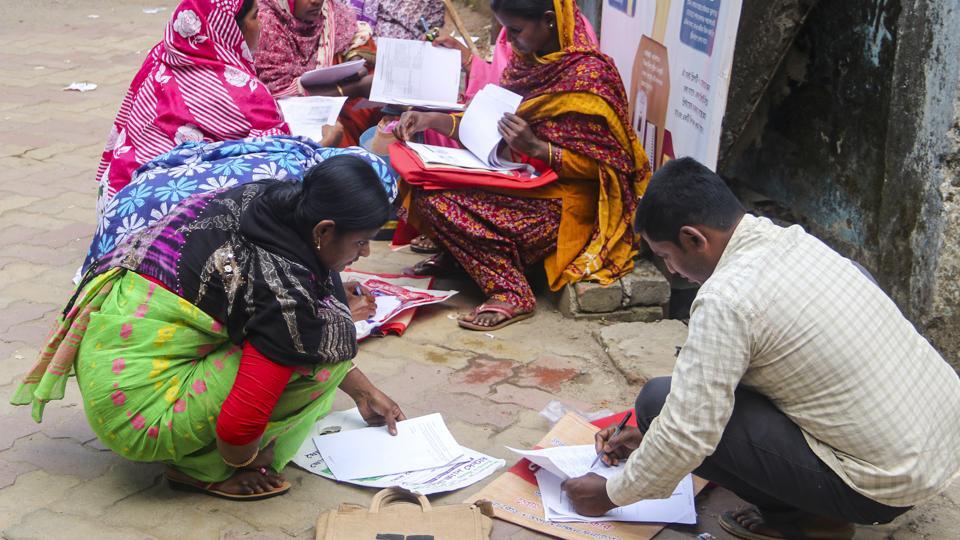
People wait to submit petitions before the Special Tribunal after their names were deleted from the Special Intensive Revision final voter list in West Bengal. (PTI)

The statistics only magnify the skew in voter deletions in the adjudication exercise in comparison to the pre-adjudication Special Intensive Revision Exercise (SIR) in the state. For context, 13 states and Union territories have undergone SIR so far (although the final roll is awaited in Uttar Pradesh), and Assam underwent a Special Revision (SR) exercise. But West Bengal is the only state that underwent a special adjudication exercise after the SIR process.

The state saw a net deletion of 6.2 million voters between pre-SIR to pre-adjudication exercise, and another 2.7 million have been deleted in the adjudication exercise, taking the total net deletions to 8.9 million. To be sure, the final elector count for the state before the election could still change because of new voters being added and the fate of 22,163 voters, who are still to be adjudicated.

That said, how is the adjudication process different from the pre-adjudication SIR process in West Bengal? Here is what the data shows.

Adjudication deletions are more skewed at the AC level

West Bengal saw 8.1% of its pre-SIR electors being deleted in the SIR exercise before adjudication and another 3.9% of the pre-adjudication roll during the adjudication process. The degree of skewness in these two rounds of deletions, however, is very different and the adjudication deletions are significantly more concentrated in fewer ACs than pre-adjudication ones. A look at the decile-wise deletions–from bottom to top 10% across ACs–shows this clearly. The lowest 10% deletions before the adjudication process were under 3.59% (D1) and the highest 10% deletions were above 15.2% (D9), giving a ratio of 4.2 between D1 and D9. D1 and D9 for the deletions from the pre-adjudication roll to the post-adjudication roll are 0.31% and 7.93%, a ratio of 25.8. (See Chart 1)

One big reason for the bigger skew in deletions during adjudications is the disproportionate deletions which have happened in ACs which are likely Muslim dominated. HT put together a list of 67 ACs which saw at least one Muslim MLA being elected in the 2011, 2016 and 2021 assembly elections in West Bengal. This would suggest a significant number of Muslim electors in the AC. Pre-2011 ACs are not comparable with the current ones because the 2008 delimitation process led to a change in AC boundaries. These 67 ACs had a share of 23% in the state’s pre-SIR elector roll. They saw a 19.1% state-wise share in pre-SIR to pre-adjudication removal of voters, somewhat in line with their pre-SIR share in total electors. But they had 46% share in electors being put under adjudication and now account for 40.5% of the deletions under the adjudication process. To be sure, these ACs have not seen a drastic fall in their elector-share in the state, which continues to be 22.6% as of now. (See Chart 2)

That said, the pre-adjudication deletions, or deletions post-adjudication do not seem to suggest a relation with either victory margins at the AC level in the latest (2024) election in the state or party-wise winners. (See Charts 3A, 3B).


The SIR deletions in West Bengal
  • Abhishek Jha
    ABOUT THE AUTHOR
    Abhishek Jha

    Abhishek Jha is Assistant Editor-Data at Hindustan Times. He uses statistical programming to generate newsworthy insights from large datasets. He is part of the team that produces Number Theory, a daily data story feature of the paper’s print edition. Since March 2024, he has been writing Weather Bee, a weekly column for the Hindustan Times website. He is a chemical engineer by training, who specialises in stories related to weather, climate, and the environment. Jha has been at HT since 2018, where he offers data-driven perspective and analysis on politics, environment, weather, climate, economy and society. His work includes data coverage of elections in India and abroad, including the 2019 and 2024 Lok Sabha elections; the disasters and extreme weather resulting from changing climate, such as floods, droughts, heat waves, cold waves, and dwindling snow cap in the Himalayas; the factors that drive poor air quality in northern India; the changing patterns of land use; the Covid-19 pandemic and its impact on labour market conditions; the changing pattern of consumer spending seen in the new consumer spending surveys; and social norms seen in the surveys such as the National Family Health Survey.Read More

  • Roshan Kishore
    ABOUT THE AUTHOR
    Roshan Kishore

    Roshan Kishore is the Data and Political Economy Editor at Hindustan Times. He heads the newsroom's data journalism team, which produces Number Theory, a daily data-driven feature for the print edition and the HT app. Number Theory uses data analysis and story-telling based on it to add value to the newsroom’s daily coverage by putting stories in a larger context on a range of issues, including politics, macroeconomy, markets, global affairs and climate. Under his leadership HT’s data journalism work has established itself as a niche product in Indian journalism and pushed the boundaries of marrying academic rigour with news sense and speed. Along with writing and editing data stories, he has also been writing a weekly political economy column called Terms of Trade for HT Premium. A trained economist with an MPhil degree from Jawaharlal Nehru University, Kishore has also been a visiting fellow at the Centre for Advanced Studies of India (CASI) at the University of Pennsylvania. Along with his journalistic work, his writings have also appeared in journals such as the Economic and Political Weekly and working papers for CASI and UNESCAP.Read More

  • Nishant Ranjan
    ABOUT THE AUTHOR
    Nishant Ranjan

    Nishant Ranjan has been working as a data journalist with Hindustan Times since 2023. In this short period, he has established a niche for creating original datasets and utilising them to produce journalistic work that pushes the boundaries of journalism. The list of datasets and stories done by him include the following: a dataset of all 717 chief ministers India has had since 1952, a dataset of all 3,350 members of India’s council of ministers, a dataset of all 190 deputy chief ministers in India and a dataset of all 279 Supreme Court judges in India (1950-2025). He has also profiled each elected Muslim MLA/MP since 1952. He is a mining engineer by training who decided to pursue a Master's in Development Studies from TISS after working in a coal mine for 10 months. He also worked as a research associate at the Centre for Policy Research, researching local governance in India. He also has a keen interest in analyzing electoral politics and political executives in India.Read More

Get the latest India News, breaking headlines and real-time updates from across the country. Stay informed about politics, government policies, crime, weather major national developments and Karnataka Bandh LIVE.