
 E-Paper



Secret-ariat: How govt moves offices, in the dead of night
The ministries of home affairs, external affairs, petroleum and natural gas, DoPT and rural development have been allocated space in the building

 Prefer HTon Google


Government departments and ministries are moving offices under cover of darkness, with mobile phone bans, signed evidence seals and escorts being central to a mammoth administrative relocation exercise from colonial-era buildings to the modern new Common Central Secretariat building in the heart of India’s capital.
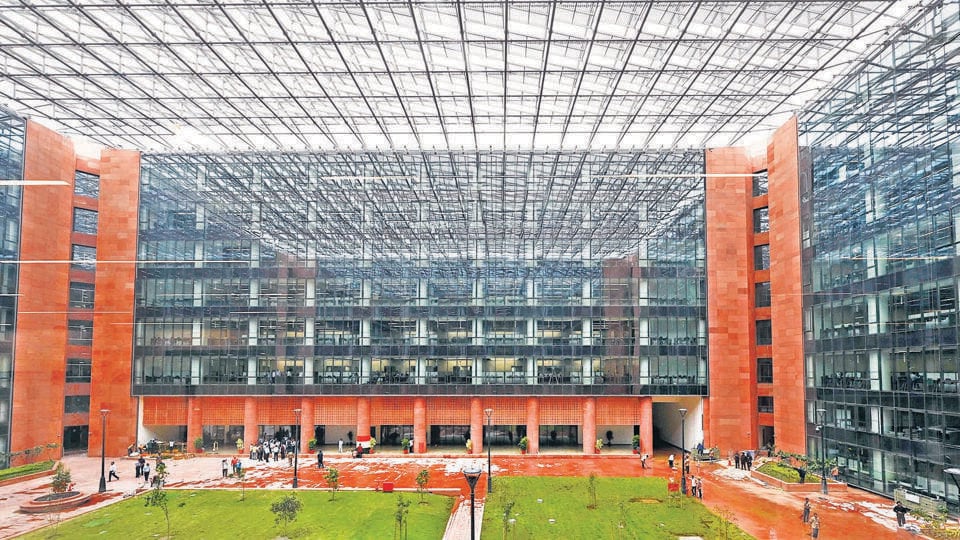
According to people privy to the secretive exercise, officials of the rank of section officer or assistant section officer are overseeing the meticulously planned transfer of offices, especially sensitive files that can feature from routine administrative correspondence to pending cabinet proposals, each containing hierarchical file notings that document every decision-making step across India’s gigantic bureaucratic apparatus.
The ministry of housing and urban affairs approved the relocation of seven ministries and departments to CCS-03 on June 1. The ministries of home affairs, external affairs, petroleum and natural gas, the department of personnel and training (DoPT), and rural development have been allocated space in the building.
Of these, the ministries of home affairs, petroleum and natural gas, DoPT, and micro, small and medium enterprises have already completed their moves.
“Documents are a matter of record. It has file notings of every officer in the hierarchy before a decision is taken. Even losing one file means a probe or even an FIR,” said one official involved in the process. “For each department, nodal officers were appointed, who further appointed people to oversee the physical handling and transport of the documents.”
These officials are joined by personnel of the Secretariat Security Force and the Central Industrial Security Force (CISF), who ensure security amid the logistical exercise.
The security measures include sealing trucks with tamper-evident tape, prohibiting mobile phones for private packers inside the offices to prevent photography of sensitive files, and requiring officers to sign sealed portions of cartons containing particularly sensitive materials. Between 20 and 50 files are packed in each bundle, with the most sensitive documents receiving bubble wrap protection.
Some of the ministries then make some tweaks on their own. For instance, the rural development ministry, in a memo ahead of its scheduled move in August, issued internal circulars specifying that transportation must use trucks with closed bodies for safety, with designated officers appointed before any electronic equipment is disconnected, one of the people said.
A second person involved in the shifting process explained one such exercise: “The transporters along with the packers came inside but were not allowed to bring mobile phones. About 20-50 files were packed in each bundle. Depending on the sensitivity of the bubble-wrapped computer system or the files, the dealing hand officer also signed the sealed taped portion of the cartons.”
“It was like a security convoy for the documents,” this person added.
The CISF has assumed responsibility for CCS-3 security, with an additional 700 personnel sanctioned specifically for the 10 Common Central Secretariat buildings that will eventually house all 51 central government ministries.
CCTV systems underwent dry runs 2-3 days before each shift, ensuring continuous surveillance coverage from the moment documents arrive at the new facilities.
The Prime Minister’s Office is expected to relocate from South Block to the newly constructed Executive Enclave 1 by the end of September, with the people cited above indicating even stricter security protocols for this high-profile move.
Though the contractors involved in the transportation are private, it is unclear if those involved in PMO relocation would be private or from the government.
The office consolidation represents a significant shift from the current arrangement, where ministries operate from buildings constructed across different eras. For decades, these ministries have been working from colonial-era buildings such as the North and South Blocks, while 22 ministries currently occupy the existing Secretariat Building housing 41,000 employees.
Others were scattered across post-independence structures including Udyog Bhawan, Nirman Bhawan, Shastri Bhawan, Rail Bhawan, and Krishi Bhawan, built between 1956 and 1968.
The Central Vista redevelopment, valued at ₹20,000 crore, aims to modernise India’s administrative infrastructure whilst consolidating government operations. Key components already operational include the new Parliament building, which hosted its first session in September 2023, the redeveloped Kartavya Path (formerly Rajpath) opened in September 2022, and the Vice-President’s enclave completed in April 2024.
The project, officials say, embodies the government’s administrative reform agenda: co-locating ministries will improve inter-ministerial coordination, accelerate policy execution, and create a more responsive administrative ecosystem.


