The Delhi high court ruled on Mnday that the ‘right to be forgotten’ is an essential part of the fundamental right to privacy guaranteed under Article 21 of the Constitution and said people should not be forced to suffer lasting damage to their reputation and personal lives simply because information about them continues to remain searchable online.
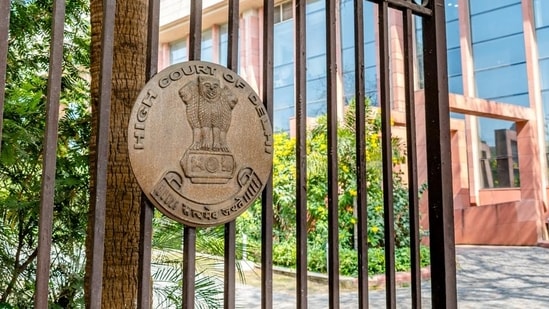
The ruling came while deciding a group of petitions that sought the de-indexing, de-linking, or removal of online content, Bar and Bench reported. The petitioners argued that the right to privacy includes the ‘right to be forgotten’.
What did the court say?
Justice Sachin Datta said that in the digital era, privacy is not limited to keeping information secret. It also includes a person's ability to control how their personal information is shared and accessed.
"The right to be forgotten thus reflects the evolution of privacy in response to the permanence of online information. In a society where digital records are virtually indelible, the ability to seek erasure ensures that informational self-determination remains effective. It protects individuals from perpetual exposure to past events that may no longer bear relevance, while preserving their dignity and autonomy in the society,” the high court said.
It observed that informational privacy includes informational self-determination, which gives individuals the authority to decide what information about them is made public, who can access it, and the purpose for which it is used.
{{/usCountry}}It observed that informational privacy includes informational self-determination, which gives individuals the authority to decide what information about them is made public, who can access it, and the purpose for which it is used.
{{/usCountry}}It said that information that remains permanently available online can negatively affect a person's job prospects, career growth, social reputation, personal relationships, and overall dignity.
While discussing the need to balance privacy rights and the principle of open justice, the court said transparency in judicial proceedings does not require individuals to remain permanently identifiable through name-based internet searches.
The court observed that when an acquittal is difficult to find in search results, while allegations, arrests, or accusations continue to appear prominently online, such a situation cannot be treated as a feature of open justice.
De-indexing, masking constitutionally valid, says HC
The court held that de-indexing and masking are constitutionally valid measures that help balance privacy rights and public access to court records. The high court said that de-indexing does not remove information or judicial records. Instead, it only prevents them from being easily located through name-based searches.
Likewise, masking involves removing names and personal identifiers from publicly available digital records while keeping the original judicial records intact in court archives.
Justice Datta said that masking does not amount to censorship and does not alter the reasoning, conclusions, or precedential value of judgments. Instead, it ensures that a person's name does not become the primary search tool through which sensitive court records are easily accessed by the general public.
The high court also said that when a person has been acquitted, discharged, or otherwise cleared by a competent court, continuing to link that individual's name to allegations online may cause excessive harm to their dignity and reputation.
It said that the "shadow of crime" should not be allowed to replace the "shadow of dignity" after the legal process has vindicated an individual.
The court said that when de-indexing is justified, such directions can extend to all domains and versions of a search engine.
It added that a remedy that can be bypassed simply by switching to a different domain suffix cannot be considered effective protection of the fundamental right to informational privacy.
With inputs from ANI