The National High Speed Rail Corporation Limited (NHSRCL), nodal agency for the 508-km Mumbai-Ahmedabad bullet train project, has started relocating the Western Railway’s structures in Vadodara that are falling in the project area.
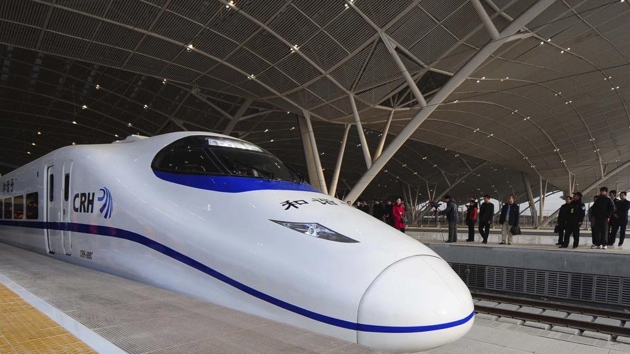
A senior NHSRCL official told IANS, structures of the Western Railway, like cabins and offices, falling in area sanctioned for the high-speed rail corridor, were being relocated. In the coming days, more such structures would be relocated in Ahmedabad, Sabarmati and Vadodara, the official added.
Railway lines along the Vadodara yard, falling in the high-speed train route, would also be shifted, the official said.
The NHSRCL has handed over some structures of the route relay interlocking cabin type ‘C’ and ‘D’ to the Western Railway in Vadodara. Relocating of buildings was agreed by the Western Railway in its agreement with the NHSRCL.
Prime Minister Narendra Modi and his Japanese counterpart Shinzo Abe laid the foundation stone for the ₹1.08 lakh crore ($17 billion) high-speed rail project, partially funded by Japan, on September 14, 2017.
The Japan International Cooperation Agency (JICA) and the Indian Railways Ministry had signed a memorandum of understanding.
{{/usCountry}}The Japan International Cooperation Agency (JICA) and the Indian Railways Ministry had signed a memorandum of understanding.
{{/usCountry}}The NHSRCL, which has acquired 39 per cent of the 1,380 hectares of land required, is hopeful of acquiring a major chunk of the rest by the end of year.
The bullet trains are expected to run at 320 km per hour, covering the 508-km stretch in about two hours. Trains now plying on the route take over seven hours to travel the distance and planes about an hour.
The Railways, which aims to complete the project by 2022, had floated tenders for tunnelling work, including testing and commissioning of the double line high-speed railway using the tunnel boring machine and the New Austrian tunnelling method between the underground stations from Bandra-Kurla Complex and Shilphata in Maharashtra.
According to the official, a 21-km tunnel will be built between Boisar in Maharashtra and the Bandra-Kurla Complex, 7 km of which will be under the sea.