E-Paper



Something wrong if lawyers don’t want to be HC judges due to retirement age: SC
BJP leader and lawyer Ashwini Upadhyay had filed a PIL, seeking appropriate direction to the Union government for increasing the retirement age of high court judges from 62 to 65. The judges in the Supreme Court retire at 65

 Prefer HTon Google


There is something wrong in their thinking if lawyers do not want to become judges because of the retirement age, observed the Supreme Court on Monday while rejecting a plea on increasing retirement age of high court judges from 62 to 65.
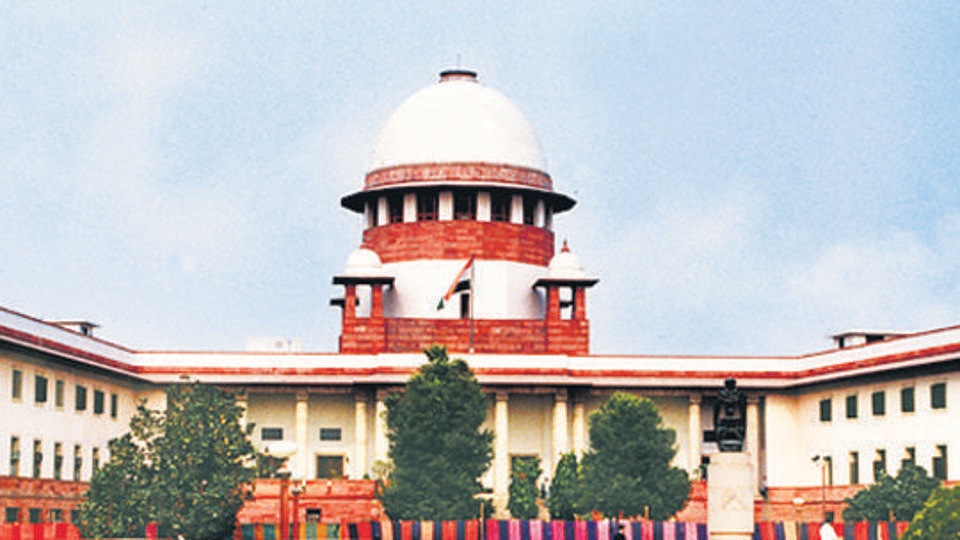
A bench, headed by Chief Justice of India (CJI) SA Bobde, was amused when petitioner in the case, Ashwini Upadhyay, submitted that he knew “some very fine lawyers” who did not want to become judges in the high courts because the retirement age was 62.
“What are you saying? There is something wrong in their thinking of they don’t want to become judges... And you call them the finest lawyers!” commented the bench, which also included justices AS Bopanna and V Ramasubramanian.
Bharatiya Janata Party leader and lawyer Upadhyay had filed a public interest litigation (PIL), seeking appropriate direction to the Union government for increasing the retirement age of high court judges from 62 to 65. The judges in the Supreme Court retire at 65.
Also Read | Plea in SC seeks direction to Centre to open vaccinations for all citizens
Upadhyay, during the hearing on Monday, said that since a high court is also a constitutional court like the Supreme Court, there should be uniformity in their retirement age.
“Both are constitutional courts and are also the courts of record. The Supreme Court as well as the high courts are the protector of the fundamental rights. The judges of both courts also take similar oath of office. Why should high courts judges retire early? Let there be uniformity,” he said.
The bench asked Upadhyay if he had consulted the judges in the high courts whether they wanted to be retired at 65 instead of 62. “Have you asked them? How are you concerned? Why do you want the retirement age to go up?” it asked Upadhyay.
The lawyer replied that having the difference in the retirement age appeared to be irrational but the court disagreed. “How is this irrational? There is a provision in the Constitution which has fixed the age of retirement. There has to be some reason for it. You cannot simply say it is irrational,” remarked the bench.
Upadhyay then sought to withdraw the petition with the liberty to move his plea as a representation with the Law Commission of India. The court, however, declined to accede to this plea either. “You have also filed a petition in this court to fill up the vacancy in the Law Commission and make it functional. Once you succeed in that petition, you can go to the Law Commission,” it said.
Upadhyay’s PIL had stated that uniformity in the retirement age was not only necessary to reduce pendency of cases but also essential to attract and retain the best legal talent in the bench.
“If there was uniformity in retirement age, the judges of the high court will discharge judicial work more independently and without any expectation to move to the Supreme Court,” it submitted.
The PIL added that to minimise the apprehension of subordination between the Supreme Court and high courts also, it was appropriate to equate the retirement age of high court judges with that of the Supreme Court judges.