E-Paper



Soon, medical colleges may need drug-resistant TB centres to get recognised
The government has proposed making drug-resistant tuberculosis centres mandatory for a medical college to get recognition. The move is aimed at ensuring that patients have access to a facility nearby, correct diagnosis is made and appropriate treatment is started in time.

 Prefer HTon Google


Opening centres to treat drug-resistant (DR) tuberculosis could soon be made mandatory for medical colleges applying for recognition. The Union health ministry has written to the Medical Council of India (MCI), proposing to make it a prerequisite for the recognition of a medical college in the country.
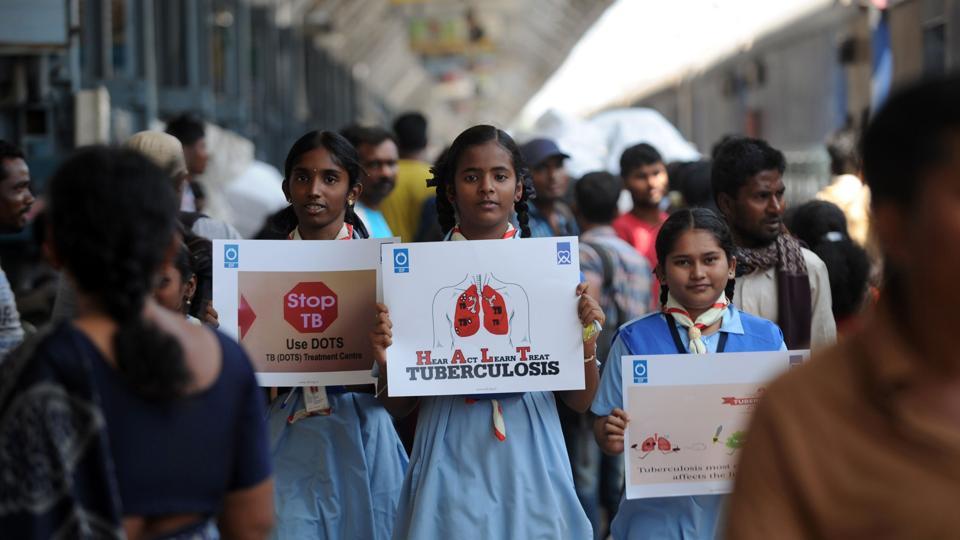
An estimated 1,47,000 people suffer from multi-drug resistant (MDR) TB in India, and there are many who are infected but not diagnosed or on treatment and run the risk of infecting others.
The move is aimed at ensuring that patients suffering from drug-resistant TB have access to a facility nearby and correct diagnosis is made and appropriate treatment is started in time, which is a part of the government’s ‘End TB by 2025’ strategy.
In a letter to the MCI last month, health secretary Preeti Sudan requested the MCI to “incorporate the obligatory requirement of establishing DR-TB centre for treatment initiation of DR-TB patients as per revised national TB control programme guidelines at each medical college for recognition of medical college”.
India, with 27.9 lakh tuberculosis cases, 4.23 lakh disease-related deaths, and an average of 211 new infections diagnosed per 100,000 people, has the highest number of tuberculosis patients across the globe. There are currently 147 MDR-TB treatment centres, and with the addition of this new clause the ministry hopes to create enough centres for treatment to be readily accessible as MDR TB requires a different and more extensive treatment regimen.
As part of its End TB strategy, the health ministry is formulating several innovative interventions, with special focus on drug-resistant TB. These include making use of its 4.5 lakh Directly Observed Treatment, Short-Course (DOTS) providers for advocacy and active case finding.
The ministry will also start mapping slums to identify TB cases and put positive ones on treatment.
States have also been asked to identify two blocks in each district to make it TB-free within a year, as a part of its disease elimination strategy. The Centre will also rank districts on disease prevalence to get an exact idea of disease distribution.
A concrete project implementation plan should be ready by the end of April or mid-May.
“Our target is to eliminate TB by 2025, so we have to act now. The system is already in place, but we need to make it more structured to be able to achieve the target,” said Sanjeeva Kumar, additional secretary (health).