E-Paper



Sri Lankan Prez Rajapaksa's 2 big challenges. And what he's doing to survive
Credit rating agencies have already warned of a potential default on Sri Lanka’s foreign debt of $51 billion, and the government hasn’t been able to raise more loans because of credit downgrades

 Prefer HTon Google


NEW DELHI: A bridge financing arrangement and accommodation between the Gotabaya Rajapaksa administration and the opposition are expected to be crucial for Sri Lanka’s efforts to cope with the country’s worst economic and political crisis in decades.
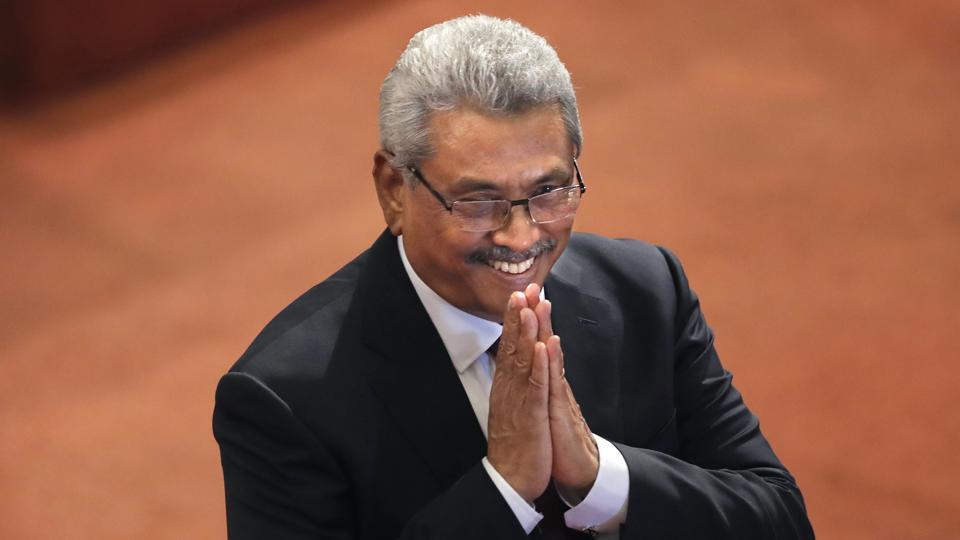
Though the Sri Lankan government has dropped its earlier reluctance to seek a bailout from the International Monetary Fund (IMF), the process for negotiating an arrangement with the Washington-based institution is expected to take at least six months, if not more. In the interim, the government will have to work out some sort of bridge financing arrangement to take care of immediate economic concerns.
It is in this context that the Sri Lankan government has made a request for a loan of $1 billion and a line of credit of $1.5 billion to China and sought another $1-billion financial assistance package from India, people familiar with the matter said.
The more pressing issue is of the government of President Gotabaya Rajapaksa reaching an understanding with the opposition parties, which have so far rejected an offer to join a unity government. The opposition is instead pressing for the President’s resignation over worsening shortages of food, fuel and medicines in the island nation of 22 million people.
Also Read: The Sri Lanka economic crisis explained in 5 charts
Though Rajapaksa issued a notification on Tuesday revoking the proclamation of a state of emergency, a minister has ruled out the president’s resignation. The people cited above said the ruling Rajapaksa clan does not appear to be in the mood to share power with the opposition or dilute its hold on power.
Rating agencies have already warned of a potential default on Sri Lanka’s foreign debt of $51 billion, and the government hasn’t been able to raise more loans because of credit downgrades. The crisis itself has been the culmination of various factors, including massive loans taken by the government over the past decade, the fallout of a sudden ban on chemical fertilisers that affected agricultural output, the slashing of taxes that hit government revenues, and the impact of Covid-19 on the crucial tourism sector.
India has so far provided Sri Lanka financial assistance worth almost $2.5 billion, including a $500-million line of credit in February for fuel purchases and another $1-billion line of credit in March for buying food, medicines and other essential items. India has provided a currency swap of $400 million under the Saarc facility and deferred the payment of $515 million to the Asian Clearing Union.
“The two lines of credit worth $1.5 billion are under implementation and the fifth and sixth consignment of petrol and diesel have been delivered this week. The delivery of rice is starting,” said India’s high commissioner to Colombo, Gopal Baglay.
The diesel supplied by India is crucial as it is used to run thermal power plants at a time when Sri Lanka is grappling with crippling power cuts.
“There are some more requests from the Sri Lankan side and we will see what we can do,” Baglay said.
Prime Minister Narendra Modi said last month that India “would continue to stand with the friendly people of Sri Lanka”. External affairs ministry spokesperson Arindam Bagchi told a media briefing on Thursday that India has so far supplied 270,000 tonnes of fuel and 40,000 tonnes of rice, and stands ready to support Sri Lanka’s post-pandemic recovery.
Baglay said all Indians in Sri Lanka, including tourists and expatriate workers, were safe and there were no reports of them facing any difficulties amid the protests. “We are in touch with community organisations and other bodies such as a CEOs forum and we haven’t heard of anyone facing any difficulties,” he said.
The Indian high commission stands ready to assist any citizen who faces any problem of any sort, he added.
There are some 8,000 to 10,000 Indian workers and professionals in Sri Lanka, including some who have been in the country for two decades. There is also a fluctuating number of workers who are brought in by Indian firms implementing projects in Sri Lanka, including in the infrastructure and steel sectors.