
 E-Paper



State preparing legal, political challenge to NREGA overhaul
The state government is launching a political and legal challenge against the Centre's VB-G RAM G law, claiming it undermines rural employment and social justice.

 Prefer HTon Google


The state government is preparing a coordinated political and legal challenge to the Centre’s Viksit Bharat Guarantee for Rozgar and Ajeevika Mission Gramin (VB-G RAM G) law, meant as an overhaul of the the Mahatma Gandhi National Rural Employment Guarantee Act (MGNREGA), officials said on Wednesday.
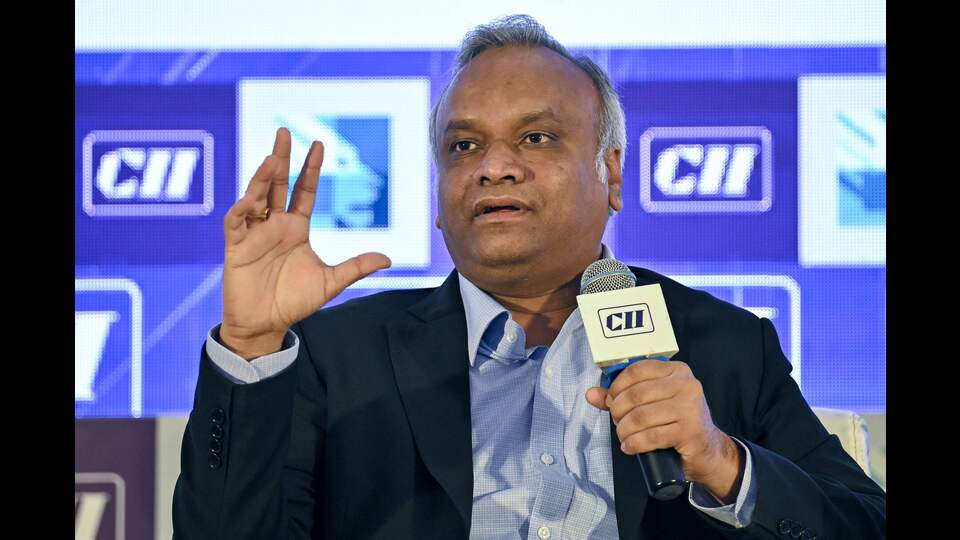
State rural development and panchayati raj minister Priyank Kharge told reporters on Wednesday that a nationwide collective effort would be launched to oppose the law, which he said struck at the core of social justice. In a post on X, Kharge said the department of rural development and panchayat raj on Tuesday convened a roundtable discussion in New Delhi, involving more than 80 participants from across the country.
“Dept of RDPR led an important roundtable in Delhi with over 80 participants from across the country, including civil rights groups, economists, professors, sociologists, lawyers, former judges, NGOs, and MGNREGA workers,” Kharge wrote. “We came together to respond to the VB GRAM G Bill and its impact on rural livelihoods.”
Kharge underlined the centrality of NREGA to rural welfare. “MGNREGA was a guarantee that gave rural families confidence, dignity and stability,” he wrote, adding that the the roundtable agreed on a multi-pronged response, combining public mobilisation with legal action.
“We will focus on clearly explaining the law on the ground, breaking down what has changed and dispelling the misleading claims being pushed by the Central government,” he wrote.
Kharge said the law threatened the decentralised governance framework. “The new bill is fatal to Panchayat Raj. The central government is shirking its responsibility,” he said.
He added that the challenge would also move into the courts.
“We will also take this battle forward legally, examining constitutional violations and preparing challenges in court. We will work on all fronts, from villages to the corridors of justice,” Kharge said. “This will be collective, determined and uncompromising. The objective is clear. This Bill must be repealed. There is no other outcome.”
Members of Parliament including Shreyas Patel and G Kumar Nayak attended the discussions.
According to experts participating in the meeting, the Centre was already struggling to meet its financial commitments under NREGA and the new law could further reduce central funding.
“The central government was already gasping for breath when it was only covering half of the NREGA project itself. There is a possibility of further reduction in funding under the new act. The burden on state governments will increase further. We should fight at the grassroots level against this bill that is anti-village,” said an official in the know.
Deputy chief minister D K Shivakumar also criticised the Bill, linking the renaming of the scheme to a deeper dismantling of its intent. “If we see that Mahatma Gandhi’s name is being changed, it can be said that it is the beginning of the last days of the central government. The central government is killing this project,” he said.
Shivakumar warned that the revised cost sharing ratio would make the scheme unworkable for states across political lines. “The share ratio of the central and state governments in this project has been changed to 60:40. No state government, including the BJP ruled state governments, will bear this. Due to this, this project will completely fail in the future,” he said
The VB G Ram G law, passed by Parliament on December 18 and granted presidential assent on December 21, has been positioned by the Union government as an alternative framework to NREGA.
The law guarantees 125 days of wage employment per rural household, an increase from the previous mandate of 100 days, for adult members willing to undertake unskilled manual work.
Under Section 22, the funding pattern between the Centre and states has been fixed at 60:40. For North Eastern and Himalayan states, as well as Union Territories including Uttarakhand, Himachal Pradesh, and Jammu and Kashmir, the ratio is 90:10. Section 6 allows states to notify in advance up to 60 days in a financial year covering peak agricultural seasons of sowing and harvesting.


