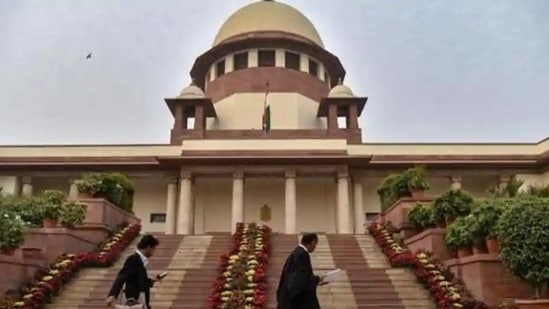
The Supreme Court on Wednesday ruled that after a constitutional amendment in 2018, state governments have no power to draw up their own lists of backward classes and that they must rely on the Centre to include or exclude any community for granting reservation.
By a 3-2 majority, a five-judge bench interpreted the 102nd constitutional amendment, whereby provisions were inserted to give constitutional status to the National Commission for Backward Classes (Article 338B) and for empower the President to notify the list of socially and educationally backward classes of state or Union territory (Article 342A).
While justices Ashok Bhushan and SA Nazeer maintained that the amendment act was confined to the list to be issued for central government jobs, justices L Nageswara Rao, Hemant Gupta and S Ravindra Bhat held that the scheme of the amendments has taken away the power of the state to identify backward classes. The majority dismissed the Centre’s understanding of the amendments. Attorney general KK Venugopal told the court that the 102nd amendment did not deprive state legislatures to enact law determining the Socially and Educationally Backward Classes and conferring benefits on them.
According to the top law officer, Article 15(4) and 16(4) of the Constitution were untouched by insertion of Article 342 and that the states will continue to exercise their power to identify SEBCs and give reservation even after the amendments.
{{/usCountry}}According to the top law officer, Article 15(4) and 16(4) of the Constitution were untouched by insertion of Article 342 and that the states will continue to exercise their power to identify SEBCs and give reservation even after the amendments.
{{/usCountry}}Several states, including Maharashtra, Punjab, Rajasthan, Tamil Nadu and Karnataka, also asserted their right under Articles 15(4) and 16(4) to make special provisions for SEBCs and give them benefits of quota.
Both the Centre and states urged the court to lend credence to the parliamentary select committee report of 2017 and a statement of Union minister Thawarchand Gehlot on the floor of Parliament in August 2017 that the amendments did not affect the rights of the state governments to notify backward classes for reservation.
But the majority judgment rejected this plea. “I am convinced that there is no reason to depart from the text which is in clear terms and rely upon the legislative history to construe Article 342 A contrary to the language...”
Stating that the states could only make suggestions with the President who will have the exclusive authority to notify the list of SEBCs, Justice Bhat added that once the list was notified, states could exercise their power under Article 15(4) and 16(4) to decide on extent of reservations, the kind of benefits, the quantum of scholarships, etc.