In March 2016, a bunch of transport department officials stood waiting on the side of the road leading to Jyothi Nivas College in Koramangala. For any bypasser, it was hard to tell what these officials were doing as they were letting all vehicles pass except for two-wheelers with pillion riders.
As the bikes would approach, the person sitting behind would gesture to the police, and the rider would be stopped and his keys taken away. This reporter and his colleague, too, were stopped similarly despite there being no violation.
Soon it was clear that some transport department personnel, who had spread out in the locality, were making two-wheeler taxi bookings on apps like Ola and Uber and then leading them straight into the place where their colleagues were seizing vehicles.
In a matter of a few days, hundreds of vehicles were seized and fined anywhere between ₹3000-5000.
“Uber does not have the requisite permission to operate bike taxis. After the raid last time, the company had told us that they would abide by the rules, but they have restarted the services,” Narendra Holkar, joint commissioner, of Karnataka transport department, said at the time.
In a statement on 21 March that year, Uber said that the bike taxi service, called uberMOTO, was essentially a bike pooling service and the company would not charge any service fee during the pilot run.
{{/usCountry}}In a statement on 21 March that year, Uber said that the bike taxi service, called uberMOTO, was essentially a bike pooling service and the company would not charge any service fee during the pilot run.
{{/usCountry}}But the government refused to entertain their request, according to an official privy to the matter.
Riders, who had just joined the ecosystem and made good use of their two-wheelers to earn an income, were left out cold as the crackdown on bike taxis continued. Bike taxis are still illegal in Bengaluru, touted as one of the biggest startup hubs in Asia, even though the government said that it will draft rules to allow these services to operate in the city.
Nearly seven years on, there are no rules for bike taxis.
“Internet business models are getting complicated and innovative day by day, and the ambiguity levels are also high. That is where the regulators are finding it challenging to understand, from crypto markets to gaming marketplaces, to NFTs to quick commerce,” Sreedhar Prasad, an internet business expert and ex-partner with KPMG, told HT.
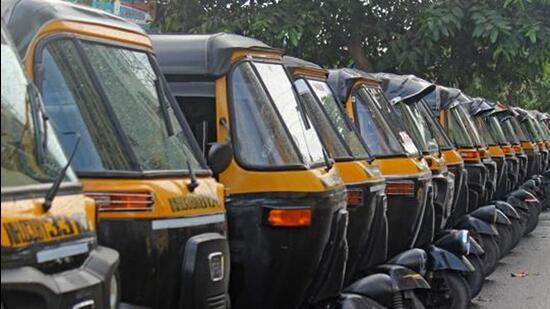
Companies like Ola, Uber and Rapido have now knocked on the court doors for relief after the transport department cracked down on auto rickshaw services on these platforms, alleging that they were charging higher than government-mandated fares.
“I cannot comment on this (government updating its mobility policy). The matter is already pending before the courts regarding the aggregator rules, and quite a few issues need to be resolved there,” a senior transport department official said, requesting anonymity.
The clash between app-based aggregators and law enforcement agencies reflects a dissonance between the emergence of technology and policies. This is not the first time that app-based aggregators locked horns with the government. In 2016, when they were taking off, the government had taken them to task over surge pricing, when these app-based aggregators hike their fares based on the time of the day and demand.
The aggregators have also drawn flak from cab drivers, who accused the likes of Ola and Uber of hiking their commissions when fuel prices have been rising, thus eating into their income.
The app-based aggregators, in turn, contend that their services help in reducing urban mobility woes, particularly in places where public transport is poor or non-existent. They also argue that the services have helped provide a livelihood to the cab drivers and that the higher charges not only translate into higher income for the ride-hailing firms but also bigger payouts to cab drivers.
Any quotes from Uber or Ola/Rapido on the matter?
“It’s time the larger companies avoid business model or revenue model issues with the regulators. It has been over a decade that these companies are operating and India has been raising considerable capital, and now it cant be seen that the government doesn’t accept the company’s business model. When a city runs on all these enabling startups, if one of the established services doesn’t work, and that too with less notice, It impacts the city,” Prasad said.
According to the Global Startup Ecosystem Report, the Asian tech start-up community that was earlier dominated by Beijing, Singapore, Hong Kong and Korea is now seeing a shift in fortunes in favour of cities like Bengaluru, Mumbai and Delhi, which ranks 22, 36 and 26 respectively on the start-up ecosystem globally.
With Global Investors Meet (GIM) barely a month away, the recent crackdowns by the transport department are unlikely to be perceived well by potential investors.
The government has 15 days to decide the minimum fares for aggregators-based auto-rickshaw services, and the court has allowed the capping of commission or convenience fees at 10% (excluding GST).
“Commission caps threaten the viability of this vibrant e-hailing sector, which will impact the tens of thousands of auto drivers who rely on it for their livelihoods and will result in the shrinking of this fledgling category. We will continue to engage with the government to find ways of regulating the sector in a way that allows for riders, drivers, and platforms to benefit from technology that has truly transformed urban mobility,” an Uber spokesperson said in a statement on Friday.
The industry estimates that there are over 100,000 auto rickshaws attached to all three major app-based aggregators and over 2.5 million riders.
One person associated with an aggregator said that the earnings for the government through taxes from these aggregators is around ₹100 crore.
Prashanth Prakash, the Karnataka Startup Vision Group chairman and venture capitalist, said that the policies of the government are invariably behind the technology.
“These kinds of services provide some degree of convenience new mechanisms and innovations, and the law and policy have to keep pace with that,” he said. “Karnataka has largely kept pace with it (startups),” he added.