New York city’s labyrinthine subway system “was a major disseminator” of coronavirus disease (Covid-19) infections, according to an economist from the Massachusetts Institute of Technology (MIT) who used daily ridership data at different stations and infection trends in these areas.
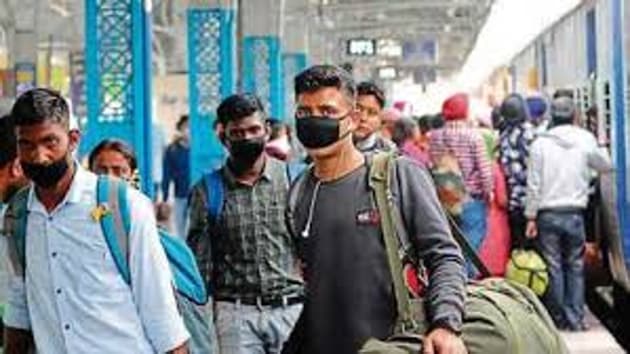
The finding, submitted to American nonprofit research agency National Bureau of Economic Research (NBER), underscores the threat of infection in public transport where people are prone to being in close proximity and touching several surfaces through which an infection could spread.
“The near shut-off of subway ridership in Manhattan – down by over 90% at the end of March – correlated strongly with a substantial increase in the doubling time of new cases in this borough,” Jeffrey E Harris wrote in the working paper.
To establish causation, Harris cites the Gosce model , which adjusts the model used for predicting epidemics to include factors that are unique to mass mobility: people sharing space in a confined setting – such as a bus or a metro train – over a particular period of time during when they will be exposed to the virus.
“The Goscé model offers a number of insights that are immediately applicable to the data from the New York City Flushing subway line,” Harris wrote while using the example of a particular route. These, he added, are how: rate of disease transmission is related to number of trips and average number of stations per trip along the line; passengers who board from remote stations spend longer in a train and are thus increasing the time when infections can take place; crowded trains raise the average number of infections and trains with more stops are more likely to seed epidemic than express lines with fewer halts.
{{/usCountry}}“The Goscé model offers a number of insights that are immediately applicable to the data from the New York City Flushing subway line,” Harris wrote while using the example of a particular route. These, he added, are how: rate of disease transmission is related to number of trips and average number of stations per trip along the line; passengers who board from remote stations spend longer in a train and are thus increasing the time when infections can take place; crowded trains raise the average number of infections and trains with more stops are more likely to seed epidemic than express lines with fewer halts.
{{/usCountry}}“An entire subway line, rather than the individual stations or subway cars, is the appropriate unit of analysis,” he added.
Lara Gosce, now at University College London, used the model to establish a higher likelihood of people being infected with airborne disease when they had longer journeys through more crowded stations in the London Underground, in a paper published in the journal Environmental Health in 2018.
To roughly adapt this to the Delhi Metro’s context, someone boarding a metro train on the yellow line – the busiest network – at Gurugram’s Iffco Chowk for a journey till North Campus in Delhi is statistically more likely to catch an infection than someone who uses the violet line (with significantly less ridership) to go from Janpath to Nehru Place.
In New York’s case, Harris plotted infection hot spot along with data of how many people left or entered the subway stations in these boroughs to further establish the pattern.
“We know that close contact in subways is fully consistent with the spread of coronavirus, either by inhalable droplets or residual fomites left on railings, pivoted grab handles, and those smooth, metallic, vertical poles that everyone shares,” he said.
To tackle this problem, Haris added, authorities will need to look at staggered work hours (to reduce crowding), limits on the numbers of passengers per coach, enhanced ventilation and new technologies to determine which stations an infected person entered and exited.