
 E-Paper



Supreme Court allows retrospective levy of tax on minerals
The Supreme Court has allowed states to impose taxes on minerals and land holding minerals retroactively from April 1, 2005, impacting mining companies with significant financial liabilities.


The Supreme Court on Wednesday allowed states to impose taxes on minerals and land holding minerals, effective from April 1, 2005, a windfall for mineral-rich states in the country but a blow for mining companies, which now face the prospect of hefty financial liabilities due to the retrospective application of these taxes. Industry executives have said this could cost the industry ₹1.5 lakh crore to ₹2 lakh crore, and the Union government told the court that public sector undertakings would face a ₹70,000 crore-odd hit.
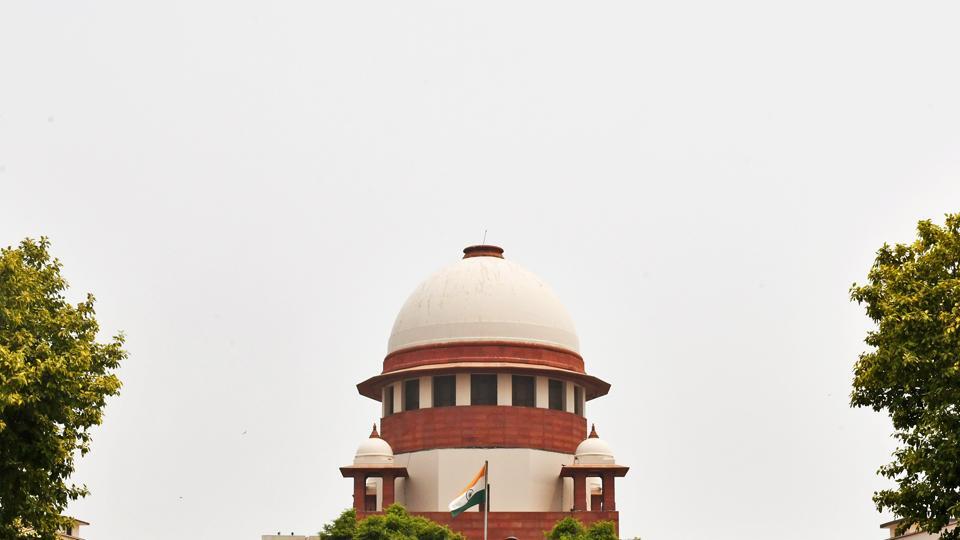
A nine-judge bench laid down specific conditions regarding the applicability of its July 25 ruling, which affirmed the legislative competence of states to levy taxes on minerals and mineral-bearing land in addition to the royalty imposed by the Centre. The verdict was rendered by 8-1 majority.
Bringing clarity to the potential financial implications for states and industries alike, the bench led by Chief Justice of India Dhananjaya Y Chandrachud ordered that states can impose levies with effect from April 1, 2005, marking the financial year following the Kesoram judgment of 2004.
It ordered that the mining companies will be required to make payments to the states over the next 12 years, commencing from April 1, 2026, a windfall for states such as Jharkhand, Odisha, Chhattisgarh and Rajasthan. The states cannot impose penalties or additional interest for past demands, the court said, offering some relief to the mining sector facing potentially massive financial obligations in the wake of the latest order.
While delivering its order, the bench rejected the request of the Centre and the mining companies that the July 25 judgment should be given prospective effect in the wake of serious repercussions of the judgment on the financial health of several public sector firms as well as the mining sector in general.
According to the bench, granting prospective effect to its July 25 ruling would mean virtually invalidating state laws on the subject and making the states liable to refund all amounts collected under those legislations. It would be “iniquitous” to apply the decision prospectively in cases of taxing statutes, which the court held, are incidences of sovereignty. “This would not be a constitutionally just outcome,” said the bench.
Instead, the court held that “a pragmatic solution to reconcile the financial interests of the states and the assesses” can be achieved by proscribing the states from demanding levies for the period before the Kesoram judgment. Furthermore, “equities will be balanced” if the state governments waive the outstanding interest accrued on the principal due from the assesses, it noted.
The Supreme Court’s decision to choose the financial year following the Kesoram judgment of 2004 as the cut-off for the retrospective imposition of state levies on minerals and mineral-bearing land is rooted in the significant legal principles established by that judgment. In the Kesoram judgment, a five-judge bench affirmed the states’ authority to impose levies on minerals and mineral bearing land. In ruling so, this judgment clarified a seven-judge bench verdict in the India Cements case in 1989 which had held in favour of the Centre’s exclusive authority to impose levies under the Mines and Minerals (Development and Regulation) Act, 1957 (MMDR Act).
The nine-judge bench judgment on July 25 upheld the Kesoram judgment while setting aside the ruling in the India Cements case. By selecting the financial year starting April 1, 2005, as the cut-off, the Supreme Court aimed to create a clear and reasonable temporal boundary that aligns with the legal precedent set by the Kesoram judgment in 2004.
The court order on Wednesday comes as a financial boon for states such as Jharkhand, Odisha, Uttar Pradesh, Chhattisgarh and Rajasthan that had enacted laws on mineral taxation, allowing them to recover substantial sums from mining companies. But it is likely that the decision to allow retrospective application might also lead to a wave of litigation.
At the legislative level, the ruling could also open the door for potential amendments to the MMDR Act by the central government. Given that the current Act does not limit states’ power to tax mineral rights, the Centre may consider revising the legislation to recalibrate the balance between state and central authority. Such amendments could introduce specific limitations or conditions under which states can impose levies on mineral resources, or even complete prohibition, to ensure uniformity across states.
The Wednesday order by the court followed the landmark ruling on July 25 when the Constitution bench ruled by 8-1 majority that royalty charged on mining is not a tax, but a form of contractual payment made by the miners to the Centre for the extraction of minerals. This distinction, the court said, allows states to impose an extra levy and surcharge on such mineral rights, providing them with an additional source of revenue.
The majority opinion was supported by justices Hrishikesh Roy, Abhay S Oka, JB Pardiwala, Manoj Misra, Ujjal Bhuyan, Satish Chandra Sharma and Augustine George Masih, with justice BV Nagarathna dissenting. Justice Nagarathna held that the Centre holds the exclusive right to tax mineral rights across the country.
The July 25 verdict stemmed from two conflicting rulings of the Supreme Court. In 1989, a seven-judge bench ruled in the India Cements case that the Centre held primary regulatory authority under the Mines and Minerals (Development and Regulation) Act, 1957 (MMDR Act) and that states could collect royalties but not impose additional taxes or cess on mining and mineral development. However, a five-judge bench in 2004, while hearing a similar dispute in the Kesoram case, noted a typographical error in the 1989 judgment, clarifying that “royalty is not a tax” but “cess on royalty is a tax”. Given these conflicting rulings, a nine-judge bench was set up to deliver an authoritative verdict.
Marking a significant shift in the financial autonomy of states regarding mineral resources, the nine-judge bench by 8-1 held that states possess the legislative competence to levy taxes on minerals and mineral-bearing land, in addition to the royalty imposed by the Centre.
Authored by the CJI, the majority judgment highlighted that while parliament and the Centre have the constitutional authority under the Union List to impose limitations on states’ power to tax mineral rights, the MMDR Act does not restrict states’ authority in this regard. Therefore, the states’ power to tax remains unaffected unless explicitly limited by Parliament. The ruling also clarified that the states’ right to tax mineral-bearing land, which falls exclusively under state jurisdiction, remains outside the purview of Parliament’s power to limit states’ taxation authority on mineral rights.
On that day, the Union government, along with a batch of mining companies, argued that the judgment should be applied prospectively to prevent confusion, legal challenges and associated administrative burdens. Conversely, the Jharkhand government advocated for retrospective application, prompting the bench to schedule a detailed hearing on July 31 to resolve the issue.
During the hearing on July 31, solicitor general Tushar Mehta (SG), appearing for the Centre, underscored the potential economic impact of the ruling, noting that mineral development is critical to various industries, including electricity generation, which heavily relies on coal. He expressed concerns that the retrospective application of the ruling could lead to a cascade of price increases across sectors, ultimately burdening consumers. The SG further highlighted that public sector undertakings (PSUs) could face liabilities running into thousands of crores, potentially three times the net worth of some companies.
As Mehta warned against the far-reaching consequences of a retrospective application, the bench agreed to consider the SG’s suggestion that neither the states should pursue retrospective levies, nor should entities that have paid under the old regime seek refunds, as a possible middle ground.
Senior advocates Abhishek Manu Singhvi, Mukul Rohatgi, Harish Salve and Arvind Datar, appearing for a host of mining companies, agreed with the Centre’s suggestion -- “no recoveries, no refunds”. The lawyers pressed that certainty in law is paramount and that after the companies and their contracts premised their obligations based on the previous position, altering them three decades later would prove severely counter-productive.
But senior advocate Rakesh Dwivedi, representing Jharkhand, on July 31 argued against prospective application, asserting that it would undermine the validity of state laws upheld by the court. He emphasised the need to balance the financial burden on industries by staggering or adjusting the interest component while ensuring states can recover what is due.
“It will be travesty of justice if this court were to say that the 1989 judgment in the India Cements will operate until yesterday while the nine-judge bench has affirmed the 2004 ruling in the Kesoram Industries Ltd. Let us not forget that this court has now ruled in favour of fiscal federalism,” argued Dwivedi. He added that instead of making the judgment prospective, the court ought to lighten up the financial burden on the industries by tackling the interest component, which could be more than the principal amount, given that the case remained pending for over two decades.
According to Dwivedi, one way to mitigate the burden on the industries was to keep the cut-off date for states to impose tax on mineral rights as January 15, 2004, when a five-judge bench in the Kesoram case ruled in favour of the states.
While reserving its order on July 31, the bench agreed to consider whether to set a cut-off date, such as the 2004 Kesoram judgment, to limit the retrospective impact. “We have to bring clarity,” the court had said while reserving its order in the matter.


