
 E-Paper



Media One ruling: Sealed cover procedures violate both principles of natural and open justice, says Supreme Court
Disapproving of the sealed cover procedure, a bench, headed by Chief Justice of India Dhananjaya Y Chandrachud, held that such a practice infringes the core of the principles of natural justice -- the right to a fair and reasonable hearing

 Prefer HTon Google


NEW DELHI Sealed cover procedures violate both principles of natural justice and open justice, the Supreme Court held on Wednesday, guiding the courts in the country to do away with the practice of relying on reports that are usually submitted by the Centre and states confidentially to help the courts reach final decisions.
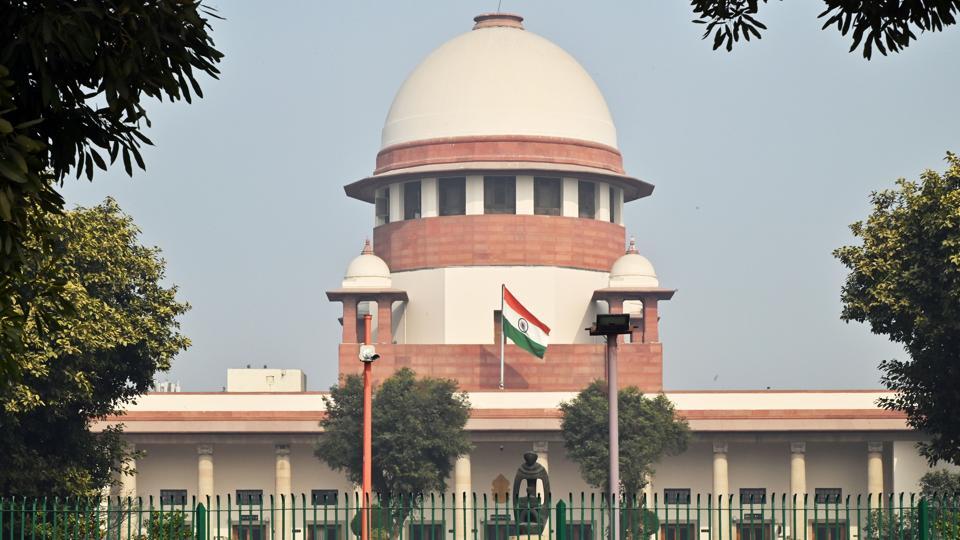
Disapproving of the sealed cover procedure, a bench, headed by Chief Justice of India Dhananjaya Y Chandrachud, held that such a practice infringes the core of the principles of natural justice -- the right to a fair and reasonable hearing.
“Secrecy broods partiality, corruption and other vices that are antithetical to a governance model that is premised on the rule of law,” said the bench, which also included justice Hima Kohli as it set aside the Kerala high court order affirming the Centre’s ban on Media One channel after relying on certain materials shown only to the judges in a sealed cover.
Noting that neither the Centre nor the high court disclosed even the summary of the reasoning for denying security clearance to the channel, the court rued that “the freedom of press which is protected under Article 19(1)(a) has effectively been trumped without providing them with an effective and reasonable avenue to challenge the decision”.
When relevant material is disclosed in a sealed cover, the bench said, there are two injuries that are perpetrated.
“First, the documents are not available to the affected party. Second, the documents are relied upon by the opposite party (which is most often the State) in the course of the arguments, and the court arrives at a finding by relying on the material. In such a case, the affected party does not have any recourse to legal remedies because it would be unable to (dis)prove any inferences from the material before the adjudicating authority,” it pointed out.
According to the bench, sealed cover procedure perpetuates a culture of secrecy and opaqueness, and places the judgment beyond the reach of challenge when the affected party would be unable to contradict errors, identify omissions, challenge the credibility of informants or refute false allegations.
Sealed cover procedure, added the court, also leads to a non-reasoned order, which again perpetuates the non-application of judicial mind in assessing the veracity of the inputs and the nexus of the reasons to the order cannot be adjudicated upon if the reasons are not disclosed.
It came down heavily both on the Centre and the high court for depriving the channel of the basic right to procedural fairness and natural justice. “MHA (the ministry of home affairs), by not disclosing the reasons for denying security clearance, has rendered MBL’s (Madhyam Broadcasting Ltd) procedural guarantees otiose. The summary of reasons for denying security clearance constitute the “core irreducible minimum” of the procedural guarantees under Article 14 (equality before law). By not disclosing the summary of reasons, MHA has undertaken an unreasonable and arbitrary means to fulfil its purpose,” it said.
The bench noted that the procedure followed by the high court left the channel in a maze where it was attempting strenuously to fight in the dark. “The non-disclosure of reasons for denial of security clearance to the appellants and the disclosure solely to the court in a sealed cover has restricted the core of the principles of the natural justice -- the right to a fair and reasonable proceeding,” it said.
Instead of sealed cover procedure, the Supreme Court rooted for public interest immunity (PII) proceedings, where the material sought to be kept confidential by the State is removed from the process of adjudication so that neither any party nor the adjudicator can rely on such material.
The bench called PII a “less restrictive tool” that allows the court to peruse the material and decide whether it should be kept away from the process of adjudication. At the same time, the court said the constitutional principle of procedural guarantees would require the appointment of an amicus curiae to balance concerns of confidentiality with the need to preserve public confidence in the objectivity of the justice delivery process. It said the amicus shall represent the interest of the applicant seeking disclosure of the material and would also get access to the secret documents to be able to assist the court effectively.
In certain cases, the bench held, the courts could adopt the course of action of redacting the confidential portions of the document and providing a summary of the contents of the document instead of opting for the sealed cover procedure to fairly exclude the document from the proceedings on a successful public interest immunity claim. In all the cases, the court must pass a reasoned order for allowing or dismissing the claim in open court, said the bench, adding the redacted material from the reasoned order shall be preserved in the court records which may be accessed by the courts in future, if the need arises.
“While it would be beyond the scope of this judgment to lay down the possible situations when the sealed cover procedure can be used, it is sufficient to state that if the purpose could be realised effectively by public interest immunity proceedings or any other less restrictive means, then the sealed cover procedure should not be adopted,” concluded the top court.



